

This year is on course to be one of the hottest since measurements began and Europe saw its joint second warmest June on record. While the global soaring temperature is heavily impacting water resources, it is crucial to address the leakages in pipes and transmission mains. In some European countries almost half of the channeled water is lost before it reaches the tap.
A high share of the losses happen in large diameter mains crossing rural areas, where companies have trouble monitoring them due to traditional field surveys being costly and time consuming.
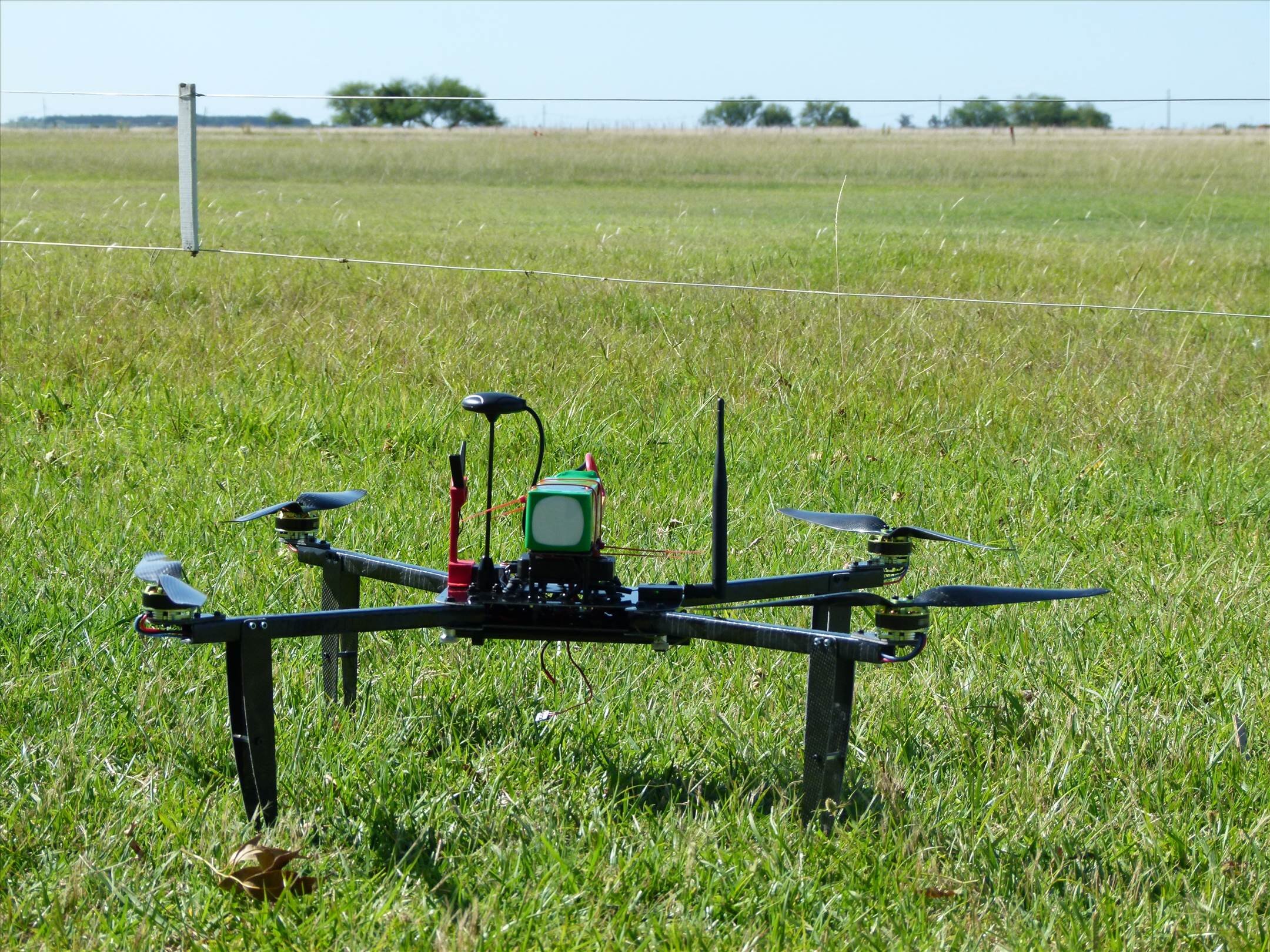
European researchers have therefore developed a surveillance service using planes—to survey wide areas—and drones –- for sites difficult to access—equipped with multispectral and infrared cameras. To analyze the data, they used the so-called triangle method. It is quite a pioneering approach to detecting water leaks, which combines surface temperature measures and a vegetation index.
It is based on the fact that leaks lead to lower surface temperatures, which can be detected by a thermal infrared camera. However, the thermal response of vegetated soils is different from the bare ones, making it difficult to obtain an unequivocal answer in terms of moisture content and potential water loss. The researchers therefore added a parameter measuring the vegetation cover fraction, which is inferred by hyperspectral cameras, to get a temperature-dependent humidity scale which varies according to the vegetation.
The system has been developed under the EU project WADI, coordinated by youris.com. Its executive director Elena Gaboardi shares the most important final results of the study.
Why is this technology financially competitive?
Limiting water leaks curbs the operational costs of the utilities, including the energy costs for pumping water, while increasing the amount of water that can be sold. This, in turn, limits the risk of raising prices for the customers.
Compared to competing technologies, the WADI system’s economic benefit lies in the efficiency of operations: it can monitor complex networks and long pipes (50 to 90 km/h depending on the use of drones or planes) and, as it’s airborne, can reach inaccessible or secluded locations with all kind of terrain. Moreover, the cost of conventional ground detection techniques ranges from 1,000 to 5,000 euro per kilometer, while the airborne technology ranges from 50 to 200 euro per kilometer.
What are the main advantages for the environment?
Besides the savings in power consumption for water extraction and distribution, the identification of water leaks would obviously lead to more available water resources. Ultimately the amount of chemicals used in water treatment plants for human water delivery would also be lower.
In this context, we applied an environmental and economic life cycle assessment and compared the results with the mainstream technology, which is the acoustic method. We took into account, for instance, the fuel consumed during the aircraft flights (MAV), the impact of manufacturing planes on some indicators such as freshwater eutrophication [as a consequence of the release of industrial wastewater, ed. note] and water depletion, the human toxicity indicator related to the mercury contained in the infrared detector of the cameras.
For the drone flights (UAV), we focused on the impact of batteries on the ozone, metal resources and human health. In particular, we considered the electricity consumption to charge them and the need to replace them during the drone’s lifetime.
It was estimated that applying the WADI techniques (both technologies (MAV and UAV) to 5% of European water distribution systems could potentially reduce 166.5 million kg of CO2/year, by cutting the energy consumption for the water supplying. In comparison to the carbon footprint associated with the MAV and UAV WADI units (270,000 kg CO2eq and 545 kg CO2eq respectively), the benefits are enormous.
You did two aerial campaigns in France and Portugal. What are the most important results from the field testing?
The campaign in France was the first test in a real environment. We validated our equipment and fine-tuned our measurement strategy. Afterwards, the two surveys in Portugal showed remarkably better results. The images collected during the UAV and MAV flights were processed and analyzed, and potential leakage events were identified. Each detection event was then classified as true positive/true negative /false positive /false negative and was associated to other parameters, namely: the technology used (UAV/MAV), the environmental conditions, the vegetation type and soil type, humidity, soil temperature, irrigation presence and precipitation in the ten days previous to the flight.
All in all the system proved able to detect water in the soil in approximately 70% of cases, while the performance of the technology in discovering actual water leaks was approximately 50%. Most importantly, we observed that the accuracy of the system in targeting true events has improved significantly over time, from one campaign to another. We are therefore confident that a larger baseline of cases would further improve the performance.
What are the best conditions for using the WADI technology?
The technology works best in agricultural zones with bare soils, crops at the early stage of development and mixed areas. It doesn’t perform as well in forest areas. Results also suggest that the solution work well in clay and sandy clay soils but not so much in silty clay soils.
The complexity or diameter of the pipes to be investigated and the type of technology used (UAV vs MAV) don’t affect performance. Weather conditions, on the contrary, may do so. For instance, the campaign in France was carried out after heavy rains and that made it difficult to detect leaks correctly.
The water utilities that tested WADI helped us in identifying the improvements needed and they may well continue to use the technology, thus contributing to its improvement.
On the technical side, the performances will need to be enhanced, especially on terrains with specific or abundant vegetation. Moreover, the time between the flight and the data analysis should be reduced and not take more than one month.
What will happen after the end of the research project? Will water utilities be able to use this technology? When?
The service is now at the prototype stage. A group of partners have prepared a roadmap for the development of a full service in the future, the horizon being about one year from the end of the project and 2022 for the commercialisation.
Citation:
Q&A: Airborne water leak detection using an innovative ‘triangle method’ (2020, July 16)
retrieved 16 July 2020
from https://phys.org/news/2020-07-qa-airborne-leak-triangle-method.html
This document is subject to copyright. Apart from any fair dealing for the purpose of private study or research, no
part may be reproduced without the written permission. The content is provided for information purposes only.







