Video forgery is becoming an epidemic. Blockchain technology can help in the battle against malicious video alteration. A blockchain police bodycam is incorruptible. Here is building a blockchain police bodycam PoC for $25.
Police bodycams are essential for modern police force, but they may be corrupted.
– Advertisement –
The evidence on a bodycam is frequently a critical differentiator in the justice process. It can be the big difference if some body spends the others of their life in jail or leaves the courtroom a free man. Lives are exactly in danger. The authenticity of bodycam videos must certanly be protected to the highest possible degree.
The importance of police bodycam videos is unquestionable — but is the danger of video corruption real? Yes, very.
Researchers are finding that:
– Advertisement –
This isn’t remote speculation, it’s already a serious problem.
Blockchain can ensure that the information is authentic.
Most people have at the least heard about the Bitcoin chances are, but blockchain technology may take many forms. A blockchain can be used to make certain that data isn’t changed or deleted.
Having data that can’t be changed in any manner is the usage we can apply specifically to police bodycams.
Bodycams can cost up to $2,000 per camera, placing a hefty burden on police forces that are already cash strapped. Is it possible to perform a blockchain on a low-cost low-power camera device?
The hardware.
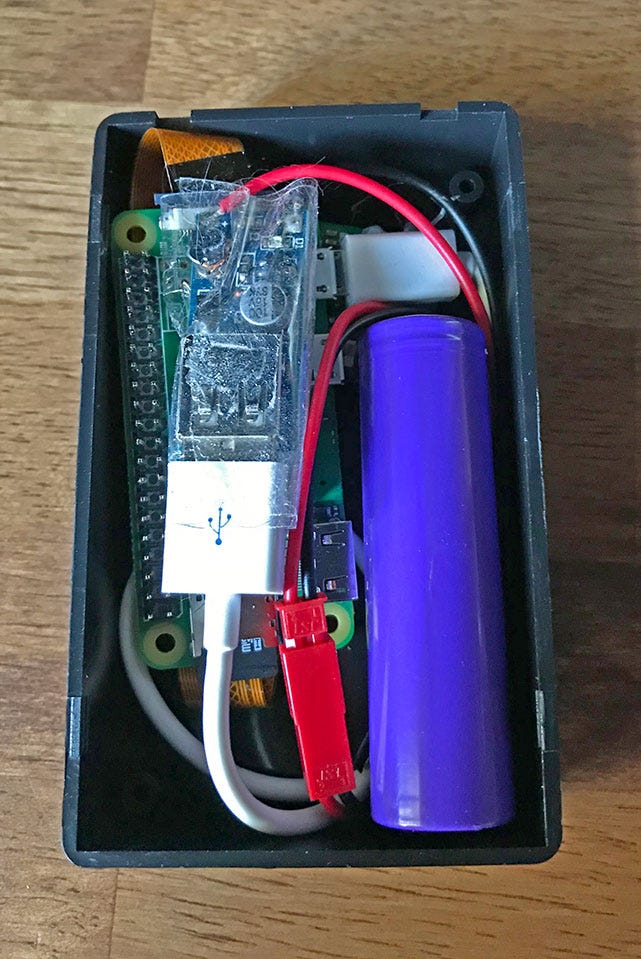
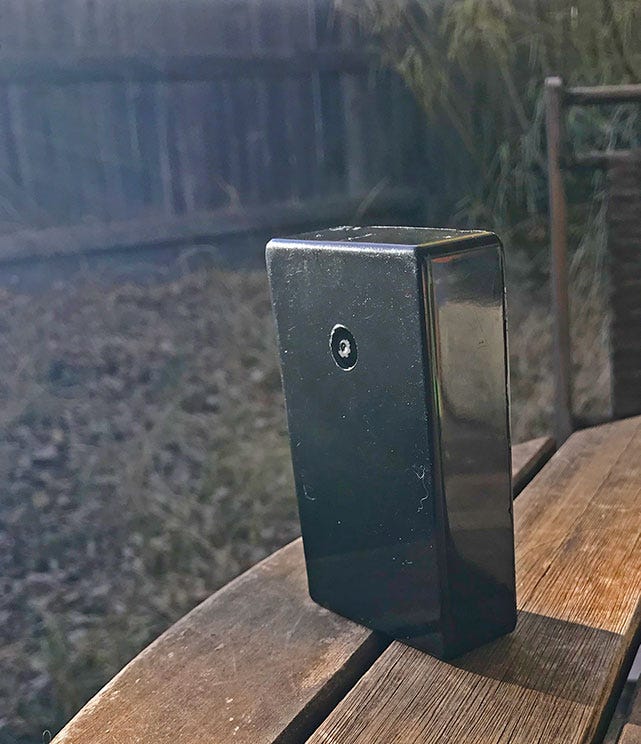
Here’s the apparatus we will be working together with. Our total cost: $25.00
This isn’t planning to produce a field ready piece of equipment, but that isn’t the purpose. We just need to prove it’s possible.
Using some hot glue, tape, a few extra wires, and some minor soldering, we’ve a functional device that just scarcely crams in to our project box.
Software and Blockchain.
- Raspbian Buster Lite Operating System
- FFMPEG Multimedia Framework
- RigidBit Blockchain (synced to Ethereum)
Installing and Configuring.
After a few hours of installing and configuring, we’re ready for the first video test at a 720p resolution with 30 fps.
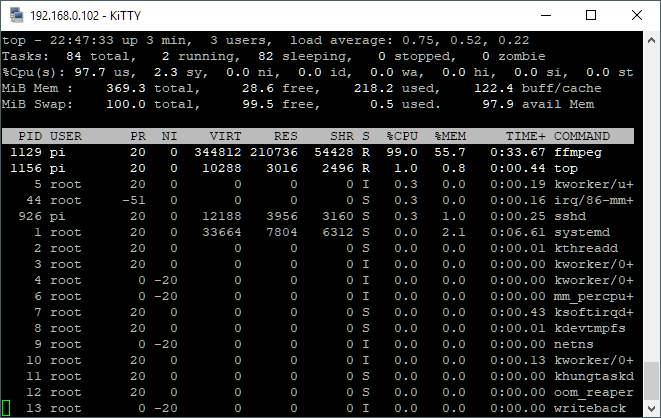
Uh oh, FFMPEG means — maxing out the CPU. 😲 We need to get the CPU way down, or this test will be a complete failure.
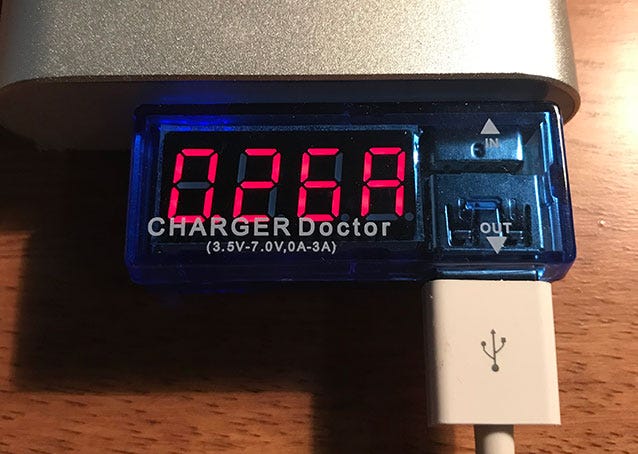
Our power is looking good, though. Maxing out at around 0.3A, we ought to be able to get a fair timeframe out of our 3200mAH battery.
Next, I tried 480p at 10fps. Still maxing out the CPU, and we’re not even running the blockchain yet. 😢
Then I remembered something. Doesn’t the Raspberry Pi have hardware x264? After some quick googling: Yes, and it works together with FFMPEG. 😃
Now to place it to the test.
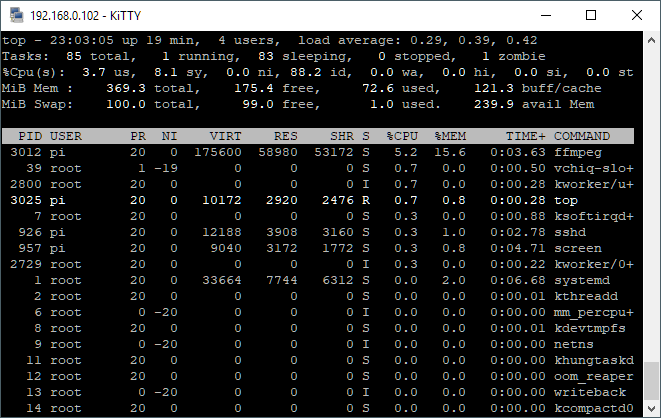
Running 720p at 30fps consumes only 5% of CPU; we have lots of room to spare! 🙌
The next thing is to get RigidBit running. Compiling is painfully slow, so it was left to perform overnight. At 4:25 am, the compile is completed — and (to my surprise) this didn’t require any modification. Thank you, Rust!
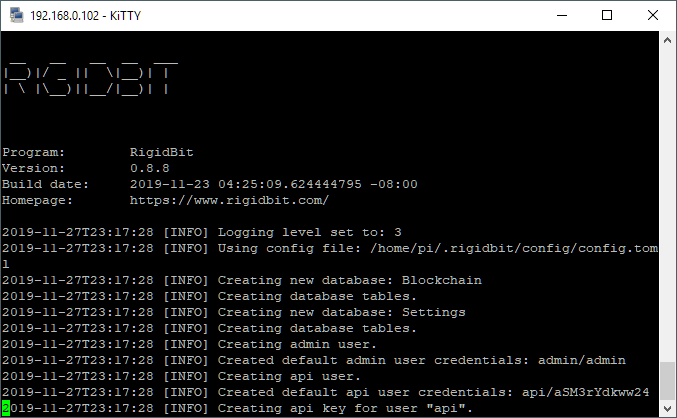
Now for the final test. Can our $10 Raspberry Pi handle the task of capturing video and storing it in a blockchain?
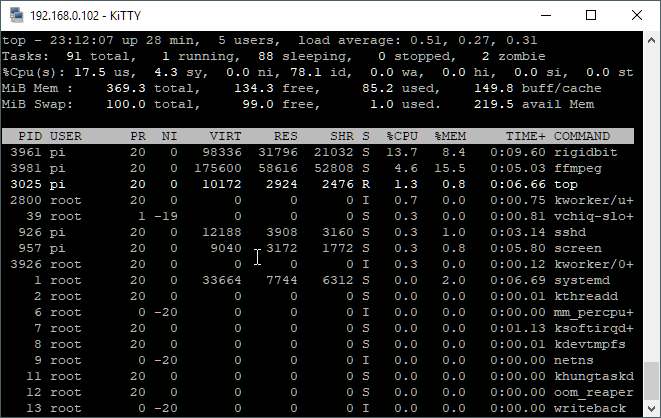
RigidBit hovers around 10% and FFMPEG at around 5%.
Success! Our camera’s video is now anchoring videos with Ethereum.
It’s maybe not pretty, however for $25, we’ve functional video capture being secured with a blockchain on the unit itself.
There is plenty of room for improvement.
The experiment here could be good enough for a security camera, but anyone who suggests duct-taping this to a officer should be fired immediately.
My experiment here is a proof of concept and isn’t even near to being ready for field deployment.
RigidBit requires an web connection to sync with Ethereum. Since cellular phones are acquireable, this isn’t a complete deal-breaker, but it’s maybe not ideal.
If we incorporate trusted hardware, we possibly may be able to achieve an acceptable amount of provability while only the need to sync with Ethereum at the start and end of a shift.
RigidBit has already been lightweight, nonetheless it can be stripped down much further since most of the features are not used. We could possibly strip it down enough to run on an MCU instead of a Raspberry Pi.
Raspberry Pis are excellent, but we would be able to get the fee and power utilization even lower by utilizing an SoC like an RTL8170 or an ESP32.
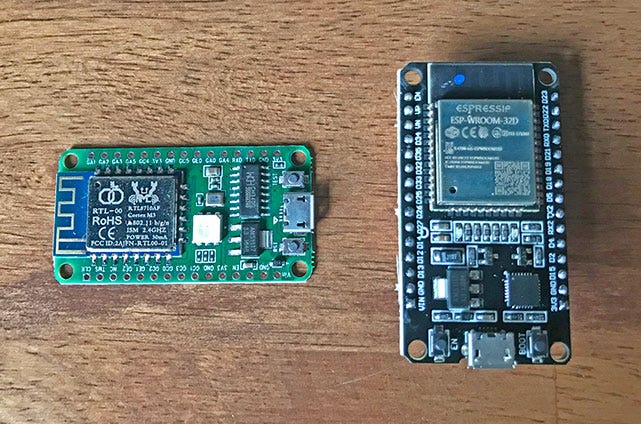
By combining every one of the above, we’re able to cut the device costs, reduce power usage, reduce the physical footprint, and eliminate the requirement for a full OS.
Additional use cases:
A blockchain police bodycam is just the start. There are plenty of other potential applications:
- Blockchain video security cameras for all public installations.
- Blockchain dash cameras for cars, trucks, and motorcycles.
- Blockchain black boxes for all types of mass transit.
Any place where data integrity is very important, blockchain can serve an essential role in providing absolute provability in a completely open and transparent way.
Thanks for reading! Please feel free to reply with any comments or questions.