

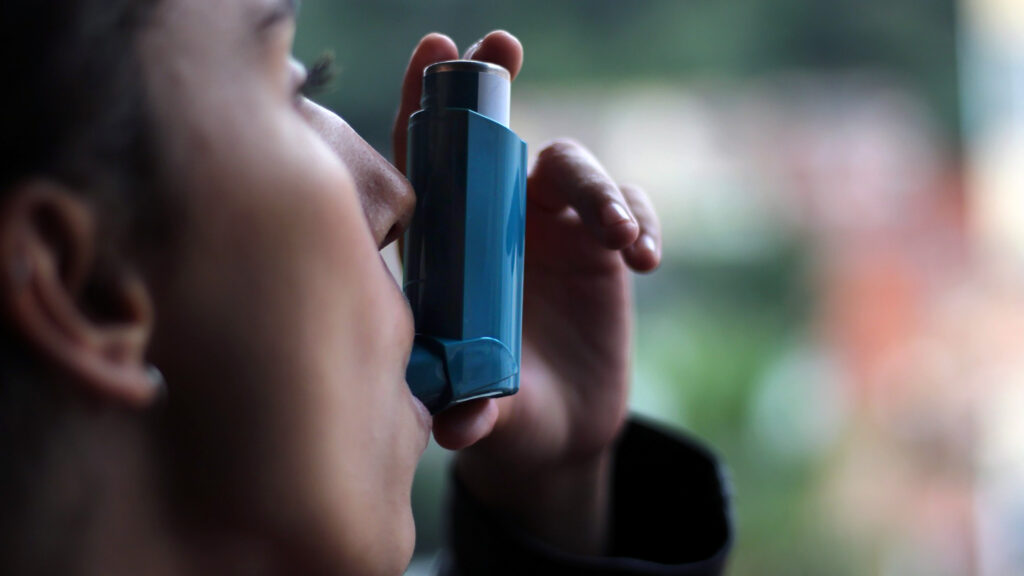
A growing body of research on Covid-19 suggests that the virus’ link to asthma is far more complex than experts might have anticipated.
Early in the pandemic, researchers racing to identify the conditions common among the sickest patients zeroed in on lung conditions, including asthma. A potential link seemed possible: The virus that causes Covid-19 can lead to severe lung inflammation, and other viruses can set off dangerous asthma attacks. But emerging research — including a recent retrospective analysis of Covid-19 patients in 10 hospitals — has complicated the picture of the connection between asthma and critical cases of Covid-19.
That analysis, which looked at data from more than 1,500 patients, found that Covid-19 patients with asthma were no more likely than patients without asthma to be hospitalized.
advertisement
“I was expecting asthma patients [with Covid-19] to possibly fare worse. So what was surprising was that we actually did not see that,” said study co-author Gayatri Patel, a physician and allergy and immunology fellow at Northwestern University. Her team’s paper and other studies will be critical for understanding the unique risk to the more than 25 million people in the U.S. with asthma, an umbrella term used to describe a diverse set of respiratory disorders marked by lung spasms, wheezing, and breathing difficulties.
But the study didn’t look at what experts said is a pressing question: Do people with different types of asthma have different levels of risk?
advertisement
“Not all asthmatics are the same,” said Sharon Chinthrajah, an allergist and researcher at Stanford’s Sean N. Parker Center for Allergy and Asthma Research.
There’s evidence to suggest that breaking the data down by asthma subtype could reveal different risk levels. Another recent study, this one conducted by public health researchers at Harvard, analyzed two asthma subtypes — allergic asthma and non-allergic asthma — as separate risk factors. The two disorders induce similar symptoms, but are set off by different triggers: allergic asthma flares up with exposure to allergens like pollen and mold, while non-allergic asthma is exacerbated by exercise, stress, cold weather, and more.
The population-based study, published as a pre-proof paper last month, analyzed medical records from 492,768 people registered in the U.K. Biobank and found that non-allergic asthma significantly heightened the likelihood of severe Covid-19, while allergic asthma did not.
Scientists are still trying to parse why the two groups face such different prognoses. Patel said one possible explanation involves ACE2 receptors, which are embedded in certain cells in the lungs, among other places in the body. The receptors act as gateways for SARS-CoV-2, the virus that causes Covid-19. Once it enters the lungs through these receptors, it inflicts enormous damage on the delicate tissues essential to absorbing oxygen. Some research suggests that ACE2 expression is lower in people with high levels of allergies or allergic asthma, potentially making their respiratory system less vulnerable to viral intrusion. At the same time, some research shows that’s not the case for non-allergic asthmatics, who might actually have an increased expression of ACE2 receptors, experts said.
“Allergic asthma may actually decrease the rate of infection,” said Jonathan Spergel, a physician and chief of the Allergy Program at Children’s Hospital of Philadelphia. He said that allergic asthma accounts for most pediatric cases of asthma, and around half of adult cases.
Further complicating the question of risk: how severe a person’s asthma is, and whether they take medications to keep it in check.
As with asthma itself, scientists aren’t yet clear on the role medications might play in Covid-19 severity. Some experts said that steroids commonly used to treat asthma might be protective, since they combat inflammation. Chinthrajah said it’s also possible that steroids could decrease the expression of ACE2 receptors, potentially guarding the respiratory system against infiltration from the virus.
Hyacinth Empinado / STAT
But other experts said it’s also possible steroids might actually have the opposite effect, increasing susceptibility to the virus by suppressing the body’s immune response.
“The question that has kind of floated around with asthmatics and Covid is whether that dampening of the immune system would increase or reduce susceptibility to infection, and whether it would increase or reduce the severity of the injury,” said Enid Neptune, a clinician and asthma researcher at Johns Hopkins.
The study from Patel and her colleagues found, perhaps anticlimactically, that corticosteroid usage did not significantly increase or decrease the risk of hospitalization among asthmatics with Covid-19.
“I think the biggest thing that we can do with this data is provide reassurance [to patients] that staying on your inhaled corticosteroids does not appear to increase your risk of severe Covid-19,” Patel said.
Another question raised by that study: why asthmatics were significantly overrepresented in the study’s cohort of individuals diagnosed with Covid-19. About 9% of the U.S. population has asthma, but 14% of the Covid-19 patients enrolled in the study were asthmatic.
Spergel said that could be due to the fact that asthmatics might be more likely to undergo Covid-19 testing, since they regularly experience symptoms — like coughing and difficulty breathing — that are associated with the virus. A higher rate of testing would logically turn up a higher rate of cases, he added.
Chinthrajah said there is a need for far larger studies to determine the “true incidence” of Covid-19 in asthmatics and the potential risks associated with it. Studies with thousands of patients would allow researchers to parse the potential risks with more nuance, such as whether asthma type, severity, medication use, or age influence risk. Those studies would also allow researchers to measure how risk might differ by geography, race, and ethnicity.
Patel and her colleagues did find stark racial disparities in their study, which showed that Black patients were both more likely to have severe Covid-19 and to suffer from asthma. Neptune, the Johns Hopkins researcher, said the latter finding was in line with historically “alarming” rates of asthma in Black communities.
“The fact that Covid had a disproportionate effect in the African American population almost guaranteed that asthma was going to rise to the forefront as being kind of a comorbidity of concern,” she said.
There’s a need for more research into whether other conditions that are common in people with asthma factor into why Black people are dying from the virus at heightened rates. Patel said she and her colleagues analyzed other conditions among the patients with asthma and found that obesity, hypertension, sleep apnea, and a slew of other conditions were more prevalent among asthmatics.
“It was interesting to see that asthma patients, despite them having increased comorbidities, did not have an increased risk of hospitalization,” she said. “That is something that we would like to investigate further — as to what role asthma could be playing among these different comorbidities.”
Chinthrajah said she is confident more research can resolve that question and the other remaining riddles around the connection between Covid-19 and asthma.
“We all feel compelled to find answers,” she said.







