

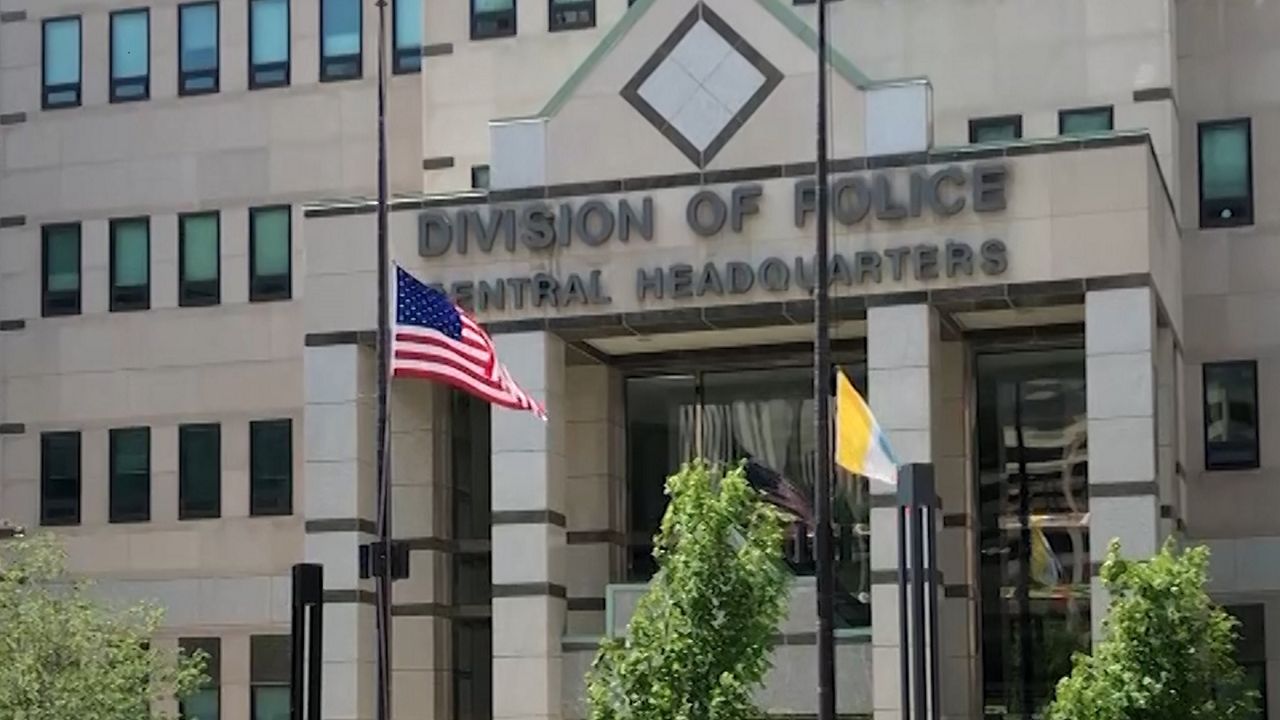
OHIO — A social science researcher is looking to partner with the Columbus Police Department in an effort to improve the recruitment and hiring of new officers, while addressing challenges with current officer perceptions and behavior towards African American males.
Dr. D. Christopher Scott has spent plenty of time researching and studying educator perceptions of African American males in grades K-12, especially in Northwest Ohio. But now the former teacher and principal is wanting to take that a step further by using his research to discover police officer perceptions of African American males and how it influences their behavior during encounters.
Police reform is something citizens across the country are calling for now. As that continues, scholar and researcher Dr. D. Christopher Scott is looking to make change of his own by implementing a tool that would survey Columbus Police Officers. The idea is to determine the perceptions of Black males and the type of behavior officers may exhibit towards them during encounters.
Dr. Scott’s previous research has already shown that educators, specifically in Northwest Ohio, have negative perceptions of Black males.
“The overall perceptions of African American males that we, we saw to have statistical value, is mean, abusive, threatening, not intelligent, vain, violent, belligerent, not ambitious, aggressive, lazy, irresponsible…having a propensity to engage in crime,” he said.
Taking this into consideration and knowing that almost 80 percent of educators in America are white females and almost 80 percent of police officers are white males, Scott says this poses a huge problem.
“The two most important entities in our community structure in America are dominated by two groups of people that are most likely to discriminate against or marginalize African American males,” Scott said.
Scott said if this new data can be collected and analyzed, they could quickly tell the potential behavior of all officers and whether they’d be more likely to stigmatize or marginalize African American males.
For those who may signal negative perceptions and behavior, Scott said, “We already know that we have to run that individual to a rigorous psychological test or evaluation to determine where their issues live.” But it would also give him and other researchers a chance to help the Columbus Police Department modify their recruitment, application, and hiring process.
When asked if there might be a concern or fear about the study being done, Scott said, “If we did a study like that, we estimate that there can be upwards of 50, 60 and even 70 percent of our police force who are likely to stigmatize marginalize, and actually exert violence upon people of color.”
Right now, Dr. Scott doesn’t fully believe that the system is ready to embrace the results of such a study, but if given the chance to do it, the goal would be to inform the research and policy reform locally and nationally.
Dr. Scott is currently waiting to hear back from the safety director who helps to oversee the Columbus Police Department to see if the partnership can be formed and the study can be done.







