

Years before NASCAR banned the Confederate flag, the auto racing giant tried to distance itself from the highly divisive symbol that Sports Illustrated had noted was “as easy to find at NASCAR races as cutoff jeans, cowboy hats and beer.”
In 2015, NASCAR and racetrack officials asked fans to stop displaying the flag at racing events after photos emerged showing the man who shot and killed nine Black people at a Charleston church posing with it in the months leading up to the massacre.
Three years before that, officials canceled plans for the “General Lee” — a bright orange car from the “Dukes of Hazard” TV show that had a large Confederate flag on its roof — to drive a parade lap around Phoenix International Raceway to kick off a Sprint Cup Series race. Officials indicated they worried about a negative reaction to the flag, a popular symbol among white supremacists.
“The image of the Confederate flag is not something that should play an official role in our sport as we continue to reach out to new fans and make NASCAR more inclusive,” NASCAR spokesman David Higdon said in a prepared statement at the time.
Journalist Mark Alesia pointed out in The Indianapolis Star in 2015 that the flag had created challenges for a company trying to grow its fan base and attract a wider array of corporate sponsors. The vast majority of NASCAR fans are white and many live in the South, where NASCAR originated.
“Exclusion, real or perceived, is a problem for NASCAR, a sport that has had marked declines in ticket sales and attendance over the past 10 years,” Alesia wrote.
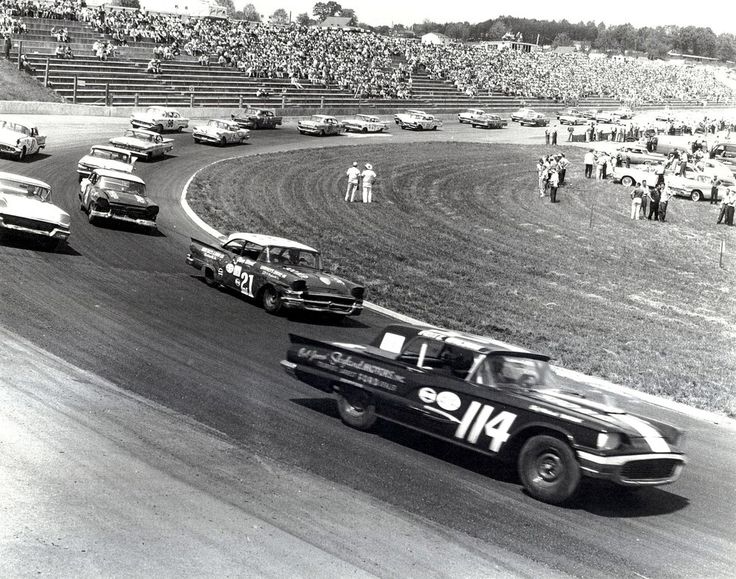
A look at the academic research offers another view of the auto racing company. Published studies show NASCAR’s ties to the flag were intentional, meant to ensure its long-term success. In its early years, the company used the flag and what it represented to sell tickets and, as one paper notes, it “helped cement the adoption of NASCAR stock car racing by Southern working-class fans.”
Below, we’ve summarized three academic papers that look at NASCAR’s historical relationship with the Confederate flag, including the ways in which that relationship has been an asset and a hindrance. While these are older papers, they offer valuable insights and context.
———–
NASCAR: Checkered Flags Are Not All That Are Being Waved
Lee, Jason W.; Bernthal, Matthew J.; Whisenant, Warren A.; Mullane, Susan. Sport Marketing Quarterly, 2010.
In this paper, researchers look at how the presence of Confederate flags at NASCAR races and events affects its brand image. A key takeaway: NASCAR’s historical relationship with the flag makes it challenging to attract new fans at a time when event attendance and TV ratings have fallen.
“Being stereotypically branded as having a ‘Southern white male’ following and perceived by many consumers and media as being largely the domain of the ‘redneck’ and ‘good ol’ boy’ fan, NASCAR has made efforts to distance itself from such a pigeon-holed view, citing its rapid expansion and diversification efforts,” write the authors, led by Jason W. Lee, a professor of sport management at the University of North Florida.
“For those who view the flag as a symbol of racial oppression, the presence of the flag at NASCAR events likely contributes to their stereotyping of NASCAR as a ‘redneck’ sport,” Lee and his colleagues continue. “To the extent that potential sponsors hold this view, NASCAR’s full sponsorship revenue potential may go unrealized. To the extent that media members hold this view, NASCAR is likely to receive negative publicity in the form of this stereotyping. To the extent that potential new market segments hold this view (e.g., African-Americans), it is unlikely that they will embrace the sport, limiting NASCAR’s future growth. Clearly, if NASCAR wants to change this image, it must consider banning the flag from its events and/or engaging in other activities (e.g., banning it from certain prominent track locations, instituting a specific size restriction) to distance itself from it.”
The authors write that NASCAR’s TV ratings in 2009 declined about 4.5% from the prior year while viewership slid by 6.4%. In 2010, attendance dropped in nine of the first 10 Sprint Cup races and some racetracks experienced double-digit percentage losses. “These declines in television ratings and attendance serve to highlight the importance that NASCAR must continue to place on effectively attracting new fans in order to continue its long history of growth and success,” Lee and his colleagues explain.
NASCAR Stock Car Racing: Establishment and Southern Retrenchment
Shackleford, Ben. The International Journal of the History of Sport, 2011.
This paper discusses NASCAR’s early years, including how the use of Confederate flags helped cultivate a loyal fan base in the South. The author, historian Ben Shackleford, writes:
“As NASCAR stock car racing began to consolidate in the South during the mid-1950s, a fresh wave of nostalgia celebrating the centennial of the Confederate States of America brought symbols and discussion of the Confederacy into the public sphere. Racetrack promoters brought this symbolism to NASCAR racing to sell tickets. Beginning in 1958, events began to carry names evoking the romanticism and racial legacy of the ‘lost cause’. Thus events known as the ‘Rebel 300’, ‘Dixie 400’, ‘Mason-Dixon 200’, ‘Volunteer 300’ and ‘Southeastern 250’ came into being during the era of greatest racial tension across the southeast. In keeping with this trend, during the late 1950s and early 1960, photographs of stock car races began to show more Confederate battle flags flying among infield fans; victory lane ceremonies now sometimes featured ‘Confederate honor guards’ in grey uniforms sporting the confederate battle flag and race queens dressed as Southern Belles. Though perhaps simply a nostalgic ploy staged by promoters to sell more tickets, the presence of these symbols in conjunction with political pressure from outside the region, and an increasingly regional schedule of events, helped cement the adoption of NASCAR stock car racing by Southern working-class fans.”
Old Times There Are Not Forgotten: Sport, Identity, and the Confederate Flag in the Dixie South
Newman, Joshua I. Sociology of Sport Journal, 2007.
Researcher Joshua I. Newman of Florida State University examines how the Confederate flag has been “regenerated through its omnipresence in the South’s most recognizable consumer and spectator spaces, such as NASCAR and intercollegiate football.” While Newman focuses on the University of Mississippi’s football team, the Ole Miss Rebels, he discusses the Confederate flag as a cultural symbol across sports in the South.
He also notes the flag has taken on new meanings as it has made its way to sporting events across the U.S. and internationally.
“While for decades the Confederate flag has mainly acted as a symbol of spectator identity in the local sporting cultures of the American South, the sign has recently come to represent White supremacy in international sporting spectacles,” Newman, a professor of media, politics, and cultural studies in FSU’s Department of Sport Management, writes. “The Confederate flag can now be found in non-Southern sporting spaces worldwide, such as at British Nationalist supporter group gatherings and in the grandstands of Spanish national team matches. Just as German and Italian football fans of yesteryear evoked the Nazi swastika as a symbolic gesture meant to intimidate their opponents, the Confederate flag seems to have emerged a new, softer symbol of racist ideology.”
Want more help reporting on NASCAR? We’ve created a tip sheet on covering NASCAR’s ties to the Confederate flag and conservative politics.







