

SPRINGFIELD, Mo. — Wastewater could help us understand more about the coronavirus in our communities.
The city of Springfield is teaming up with the Missouri Department of Health and the University of Missouri to test wastewater treatment plants for COVID-19.
Staff with the city of Springfield Environmental Services Department have been collecting samples for state research for a few weeks. The Missouri Department of Health is working with researchers at the University of Missouri on the project. The research will help determine how prevalent the spread of coronavirus may be in the community. The virus is shed in human feces, and other studies have shown a correlation between the number of reported cases in a community and the amount of coronavirus markers in wastewater.
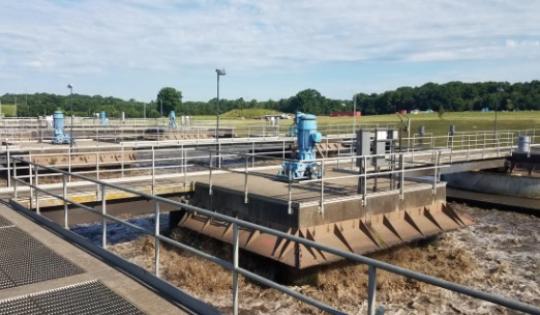
Researchers are testing samples from nine pilot wastewater treatment facilities, including the two in Springfield, and expect to analyze samples from up to 80 facilities a week starting in July. They collect the samples where wastewater first comes into the plant. Researchers are not looking for live virus or individual cases of COVID-19, but genetic markers in the wastewater that indicate the virus’ presence in the community.
“Are these markers trending up or taking down, because these markers can be present in people who are asymptomatic,” said Ron Petering, Springfield Environmental Services assistant director. “They have the virus, but they’re not really a case. We’re hopeful that this becomes a reliable piece of data for some health professionals to add to the other data that they’re using.”
The research project is funded through a Centers for Disease Control grant. Researchers first tested wastewater to determine if COVID-19 lived in wastewater for the safety of plant workers. In that research effort, they found no evidence of live coronavirus in wastewater, so they don’t believe workers are at risk.







