

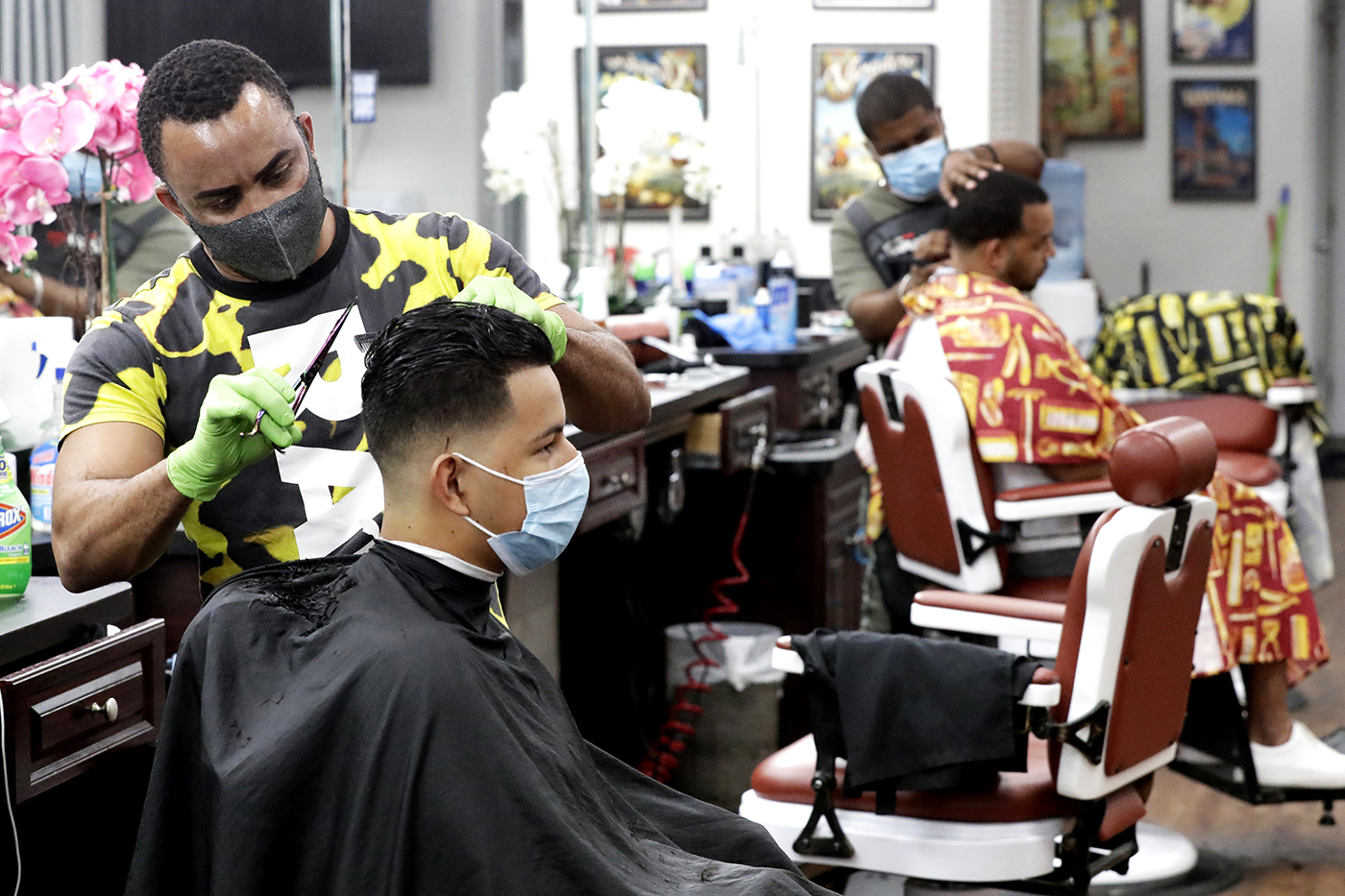
Even as states begin to reopen, a majority of U.S. residents oppose immediate measures—though such opposition is beginning to slide, and a crack along partisan lines is beginning to widen, according to new results of a national survey led by researchers from Northeastern, Harvard, Rutgers, and Northwestern universities. 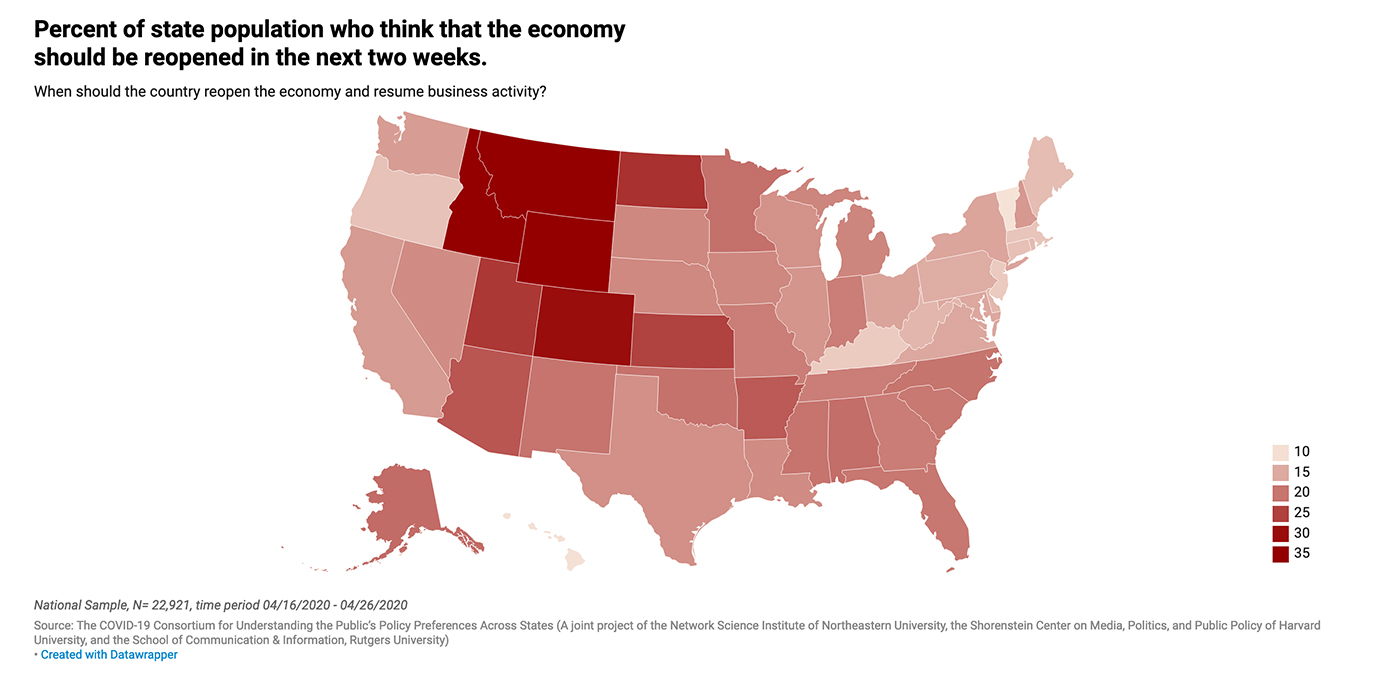 The report, published Friday, represents the second set of results from a survey that began in mid-April, and illustrates changes in behavior and attitudes as the pandemic wears on.

Researchers surveyed more than 20,000 people in all 50 states and the District of Columbia between May 2 and May 15. They found that the vast majority (89 percent) of Americans oppose the immediate reopening of state economies—though the figure slid 5 percent from late April, when 94 percent of people opposed immediate reopening.
And, though the figure still represents a majority of those surveyed, it masks a growing divide in attitudes between Republicans and Democrats in the country.
Support among Republicans for immediate reopening jumped from 9 percent in late April to 19 percent in early May, the survey shows. Support among Democrats, meanwhile, barely moved—from 2 percent in late April to 3 percent in early May.
The net effect of this shift is that a majority of Republicans now prefer reopening in four weeks or less, compared with over four in five Democrats preferring to wait six or more weeks, according to the report.

David Lazer, university distinguished professor of political science and computer and information sciences at Northeastern, holds joint appointments in the College of Social Sciences and Humanities and the Khoury College of Computer Sciences at Northeastern. Photo by Adam Glanzman/Northeastern University
“The partisan divide is worrisome,” said David Lazer, university distinguished professor of political science and computer and information sciences at Northeastern, and one of the researchers who conducted the study.
“We could get into a situation where the economy isn’t recovering because Democrats refuse to go out, and the pandemic isn’t ending because Republicans refuse to stay in,” he said.
A similar trend is emerging in the number of Americans who support or oppose public health policies to mitigate the spread of SARS-CoV-2, the coronavirus that causes COVID-19.
The widest gap was in support for the closure of non-essential businesses: 66 percent of Republicans support the measure, while 90 percent of Democrats do. The smallest gap was in support of restricting international travel: 94 percent of Republicans support the measure, and so do 96 percent of Democrats, according to the study.
When researchers calculated the average difference between Republicans and Democrats who support these and other public health policies, they found a 14-point difference overall. This is up from the average 8-point gap the researchers found in late April.
While this partisan gap is growing, Lazer and his colleagues emphasized that even the policies with the least support still have the approval of the majority of those surveyed—Republicans and Democrats alike.
The researchers also polled people in the U.S. on their attitude toward mail-in voting, as lawmakers and other officials start planning for November’s presidential election amid a pandemic that may prevent in-person voting.
They found that a majority (60 percent) of Americans support making it easier to vote by mail. Only 18 percent oppose the concept, and 24 percent neither supported nor opposed it.

This, too, shows signs of partisanship, though. Overall, 80 percent of Democrats support making it easier to vote by mail, and 5 percent of them oppose it. Among Republicans, 45 percent support such a measure, and 32 percent oppose it. Independents responded somewhere in the middle—56 percent support it, and 14 percent oppose it.
Finally, researchers found drastically stratified results when it came to the economic and consequences of the disease and the measures to slow its spread.
People with lower income and less education were more likely to have lost their jobs during this pandemic, the researchers found. Twenty-four percent of people who earn less than $35,000 annually reported losing their jobs, as compared to 13 percent of people who earn more than $100,000 annually.
Similarly, they found that only 14 percent of those earning less than $35,000 started working from home, compared to 56 percent of those earning more than $100,000.

“The dominant pattern seems to be that the affluent and educated have been able to retain their jobs and insulate themselves from the pandemic by working from home,” the researchers wrote in their report. “In contrast, the less affluent and educated have been much more likely to lose their jobs or, if still employed, having to continue working outside or their homes, with the associated increased risk of exposure to COVID-19.”
There were also “enormous” differences in the health concerns of different racial groups, Lazer said.
While 25 percent of white people indicated they were very concerned about being infected, 40 percent of Hispanic, 42 percent of African American, and 36 percent of Asian American respondents said that they were very concerned.
Another question about access to healthcare echoed these stratified results.
Seventeen percent of white people surveyed indicated they were very concerned about being able to receive healthcare, compared to 31 percent of Hispanic, 33 percent of African American, and 27 percent of Asian American people surveyed.
“These vast differences may not be shocking, given the coverage such disparities have received in the news,” Lazer said, “but these numbers are huge, and that matters. It’s really important to document these kinds of differences.”
For media inquiries, please contact Shannon Nargi at [email protected] or 617-373-5718.







