
GLOBAL RESEARCH SYNDICATE
No Result
View All Result
  • Login
  • Latest News
  • Consumer Research
  • Survey Research
  • Marketing Research
  • Industry Research
  • Data Collection
  • More
    • Data Analysis
    • Market Insights
  • Latest News
  • Consumer Research
  • Survey Research
  • Marketing Research
  • Industry Research
  • Data Collection
  • More
    • Data Analysis
    • Market Insights
No Result
View All Result
globalresearchsyndicate
No Result
View All Result
Home Data Collection

Hurricanes, typhoons and cyclones are becoming stronger, according to a new NOAA study

globalresearchsyndicate by globalresearchsyndicate
May 18, 2020
in Data Collection
0
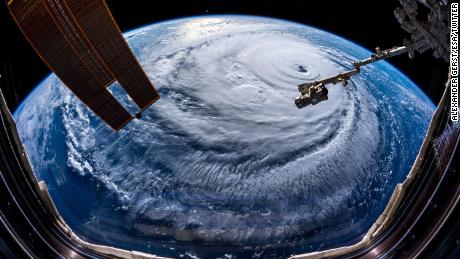
Hurricanes, typhoons and cyclones are becoming stronger, according to a new NOAA study
0
SHARES
6
VIEWS
Share on FacebookShare on Twitter

The study, released on Monday by researchers at the University of Wisconsin in Madison and the National Oceanic and Atmospheric Administration (NOAA), looked at nearly 40 years of satellite data of global storms.

Researchers found that the probability of storms reaching major hurricane status (category 3 or above on the Saffir-Simpson scale with winds in excess of 110 mph or higher), increased decade after decade.

“The change is about 8% per decade,” Jim Kossin, author of the study, told CNN. “In other words, during its lifetime, a hurricane is 8% more likely to be a major hurricane in this decade compared to the last decade.”

The new research builds upon previous studies that showed a likely increase in stronger storms as global oceans had warmed, but the data did not go back far enough to confidently asses the increase was due to man-made global warming and not natural cycles that can span decades. The latest findings add another 11 years to the data set, which allows for statistically significant trends to become clear.

“The signals really start to emerge beyond the internal climate variability noise when you look at (approximately) 40 years of data as opposed to their earlier study which looked at (approximately) 25 years of data,” Colorado State University hurricane researcher Phil Klotzbach, who was not involved in this study, told CNN in an email interview.

Kossin and his team’s research spanned the globe, showing that storms across the world are becoming stronger and thus more destructive, as the higher-end of the scale storms produce a disproportionate amount of damage and deaths.

“Almost all of the damage and mortality caused by hurricanes is done by major hurricanes (category 3 to 5),” Kossin said. “Increasing the likelihood of having a major hurricane will certainly increase this risk.”

The study reveals that global warming has increased sea surface temperature in regions where tropical cyclones form. The combination of these warm temperatures along with changes in atmospheric conditions, have allowed storms to more easily reach higher intensities.

Super Cyclone Amphan strengthens to new record

A current example of what the study says is happening more frequently can be found in the Bay of Bengal, where Super Cyclone Amphan has reached the top of the scale with winds equivalent to a category 5 hurricane on the Saffir-Simpson Scale.

The storm reached sustained winds of 270 kph (165 mph) on Monday, making it the strongest storm on record in the Bay of Bengal, according to data from the US Joint Typhoon Warning Center.

“Sea surface temperatures are much warmer than normal in the Bay of Bengal right now,” Klotzbach said. Warmer ocean temperatures are one of the main ingredients the new study pointed to in explaining the observed increase in storm strength.

Interestingly, this was one of the few locations on Earth where the authors did not see increased storm intensity.
Experts agree this hurricane season will be above-average, maybe even extremely active

“The trend we found is not very prominent in the Northern Indian Ocean, but that’s mostly because the data are so sparse there and it’s difficult for trends to be identified above all the noise,” Kossin said.

“I suspect if they extended the study to include 2018 and 2019, it would become significant,” Klotzbach said. “Last year was absolutely crazy in the North Indian Ocean, especially in the Arabian Sea.”

Evidence shows global warming is making tropical cyclones stronger

Finding trends in global tropical cyclones has traditionally suffered from inconsistent data records going back several decades, said Ryan Maue, a private industry meteorologist not involved in the recent research.

Scientists have long theorized that warmer oceans from human warming of the climate would likely result in stronger hurricanes and typhoons and climate models also show an increase going forward, but observations had not conclusively shown the increase thus far, mainly because of inconsistent and short data sets.

“Here, the authors apply an objective technique on four decades of satellite data to create a consistent record of global tropical cyclone intensity,” Maue said.

“Their results are consistent with the theory that increasing sea-surface temperatures are indeed increasing the intensity (but not frequency) of the strongest storms of at least major hurricane strength.”

While human-caused warming is likely fueling the increase, there are also natural cycles at play as well, which can increase or decrease storm frequency and intensity varying from basin to basin and from year to year, such as we see with El Niño and La Niña.
I am a CNN meteorologist. I used to be a climate crisis skeptic

“Like all aspects of climate, there is an element of natural variability at play,” Kossin said. “Our study does not formally disentangle the natural causes from the human-activity causes, and the trends we found are most likely due to a combination of both,”

While the exact causes are complicated, Maue said, this research increases confidence in climate models that show that global warming is, and will continue in the future, to increase tropical cyclone intensity.


Related Posts

How Machine Learning has impacted Consumer Behaviour and Analysis
Consumer Research

How Machine Learning has impacted Consumer Behaviour and Analysis

January 4, 2024
Market Research The Ultimate Weapon for Business Success
Consumer Research

Market Research: The Ultimate Weapon for Business Success

June 22, 2023
Unveiling the Hidden Power of Market Research A Game Changer
Consumer Research

Unveiling the Hidden Power of Market Research: A Game Changer

June 2, 2023
7 Secrets of Market Research Gurus That Will Blow Your Mind
Consumer Research

7 Secrets of Market Research Gurus That Will Blow Your Mind

May 8, 2023
The Shocking Truth About Market Research Revealed!
Consumer Research

The Shocking Truth About Market Research: Revealed!

April 25, 2023
market research, primary research, secondary research, market research trends, market research news,
Consumer Research

Quantitative vs. Qualitative Research. How to choose the Right Research Method for Your Business Needs

March 14, 2023
Next Post
Idiopathic Thrombocytopenic Purpura (ITP) Therapeutics Market To Reach USD 783 Million By 2026

Quats (Quaternary Ammonium Compounds) Market To Reach USD 1.63 Billion By 2027

Categories

  • Consumer Research
  • Data Analysis
  • Data Collection
  • Industry Research
  • Latest News
  • Market Insights
  • Marketing Research
  • Survey Research
  • Uncategorized

Recent Posts

  • Ipsos Revolutionizes the Global Market Research Landscape
  • How Machine Learning has impacted Consumer Behaviour and Analysis
  • Market Research: The Ultimate Weapon for Business Success
  • Privacy Policy
  • Terms of Use
  • Antispam
  • DMCA

Copyright © 2024 Globalresearchsyndicate.com

Welcome Back!

Login to your account below

Forgotten Password?

Retrieve your password

Please enter your username or email address to reset your password.

Log In
This website uses cookies to improve your experience. We'll assume you're ok with this, but you can opt-out if you wish. Cookie settingsACCEPT
Privacy & Cookies Policy

Privacy Overview

This website uses cookies to improve your experience while you navigate through the website. Out of these cookies, the cookies that are categorized as necessary are stored on your browser as they are essential for the working of basic functionalities of the website. We also use third-party cookies that help us analyze and understand how you use this website. These cookies will be stored in your browser only with your consent. You also have the option to opt-out of these cookies. But opting out of some of these cookies may have an effect on your browsing experience.
Necessary
Always Enabled
Necessary cookies are absolutely essential for the website to function properly. This category only includes cookies that ensures basic functionalities and security features of the website. These cookies do not store any personal information.
Non-necessary
Any cookies that may not be particularly necessary for the website to function and is used specifically to collect user personal data via analytics, ads, other embedded contents are termed as non-necessary cookies. It is mandatory to procure user consent prior to running these cookies on your website.
SAVE & ACCEPT
No Result
View All Result
  • Latest News
  • Consumer Research
  • Survey Research
  • Marketing Research
  • Industry Research
  • Data Collection
  • More
    • Data Analysis
    • Market Insights

Copyright © 2024 Globalresearchsyndicate.com



