
GLOBAL RESEARCH SYNDICATE
No Result
View All Result
  • Login
  • Latest News
  • Consumer Research
  • Survey Research
  • Marketing Research
  • Industry Research
  • Data Collection
  • More
    • Data Analysis
    • Market Insights
  • Latest News
  • Consumer Research
  • Survey Research
  • Marketing Research
  • Industry Research
  • Data Collection
  • More
    • Data Analysis
    • Market Insights
No Result
View All Result
globalresearchsyndicate
No Result
View All Result
Home Data Analysis

Monte Carlo Markov chains | Xi’an’s Og

globalresearchsyndicate by globalresearchsyndicate
May 12, 2020
in Data Analysis
0
Monte Carlo Markov chains | Xi’an’s Og
0
SHARES
5
VIEWS
Share on FacebookShare on Twitter

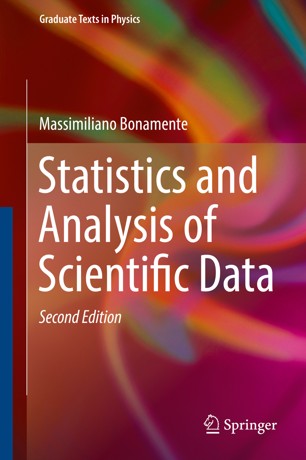
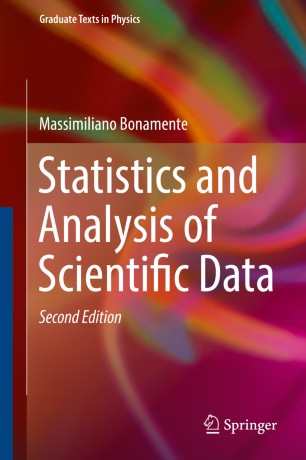
Darren Wraith pointed out this (currently free access) Springer book by Massimiliano Bonamente [whose family name means good spirit in Italian] to me for its use of the unusual Monte Carlo Markov chain rendering of MCMC.  (Google Trend seems to restrict its use to California!) This is a graduate text for physicists, but one could nonetheless expect more rigour in the processing of the topics. Particularly of the Bayesian topics. Here is a pot-pourri of memorable quotes:

“Two major avenues are available for the assignment of probabilities. One is based on the repetition of the experiments a large number of times under the same conditions, and goes under the name of the frequentist or classical method. The other is based on a more theoretical knowledge of the experiment, but without the experimental requirement, and is referred to as the Bayesian approach.”

“The Bayesian probability is assigned based on a quantitative understanding of the nature of the experiment, and in accord with the Kolmogorov axioms. It is sometimes referred to as empirical probability, in recognition of the fact that sometimes the probability of an event is assigned based upon a practical knowledge of the experiment, although without the classical requirement of repeating the experiment for a large number of times. This method is named after the Rev. Thomas Bayes, who pioneered the development of the theory of probability.”

“The likelihood P(B/A) represents the probability of making the measurement B given that the model A is a correct description of the experiment.”

“…a uniform distribution is normally the logical assumption in the absence of other information.”

“The Gaussian distribution can be considered as a special case of the binomial, when the number of tries is sufficiently large.”

“This clearly does not mean that the Poisson distribution has no variance—in that case, it would not be a random variable!”

“The method of moments therefore returns unbiased estimates for the mean and variance of every distribution in the case of a large number of measurements.”

“The great advantage of the Gibbs sampler is the fact that the acceptance is 100 %, since there is no rejection of candidates for the Markov chain, unlike the case of the Metropolis–Hastings algorithm.”

Let me then point out (or just whine about!) the book using “statistical independence” for plain independence, the use of / rather than Jeffreys’ | for conditioning (and sometimes forgetting in some LaTeX formulas), the confusion between events and random variables, esp. when computing the posterior distribution, between models and parameter values, the reliance on discrete probability for continuous settings, as in the Markov chain chapter, confusing density and probability, using Mendel’s pea data without mentioning the unlikely fit to the expected values (or, as put more subtly by Fisher (1936), “the data of most, if not all, of the experiments have been falsified so as to agree closely with Mendel’s expectations”), presenting Fisher’s and Anderson’s Iris data [a motive for rejection when George was JASA editor!] as a “a new classic experiment”, mentioning Pearson but not Lee for the data in the 1903 Biometrika paper “On the laws of inheritance in man” (and woman!), and not accounting for the discrete nature of this data in the linear regression chapter, the three page derivation of the Gaussian distribution from a Taylor expansion of the Binomial pmf obtained by differentiating in the integer argument, spending endless pages on deriving standard properties of classical distributions, this appalling mess of adding over the conditioning atoms with no normalisation in a Poisson experiment

P(X=4|mu=0,1,2) = sum_{mu=0}^2 frac{mu^4}{4!}exp{-mu},

botching the proof of the CLT, which is treated before the Law of Large Numbers, restricting maximum likelihood estimation to the Gaussian and Poisson cases and muddling its meaning by discussing unbiasedness, confusing a drifted Poisson random variable with a drift on its parameter, as well as using the pmf of the Poisson to define an area under the curve (Fig. 5.2), sweeping the improperty of a constant prior under the carpet, defining a null hypothesis as a range of values for a summary statistic, no mention of Bayesian perspectives in the hypothesis testing, model comparison, and regression chapters, having one-dimensional case chapters followed by two-dimensional case chapters, reducing model comparison to the use of the Kolmogorov-Smirnov test, processing bootstrap and jackknife in the Monte Carlo chapter without a mention of importance sampling, stating recurrence results without assuming irreducibility, motivating MCMC by the intractability of the evidence, resorting to the term link to designate the current value of a Markov chain, incorporating the need for a prior distribution in a terrible description of the Metropolis-Hastings algorithm, including a discrete proof for its stationarity, spending many pages on early 1990’s MCMC convergence tests rather than discussing the adaptive scaling of proposal distributions, the inclusion of numerical tables [in a 2017 book] and turning Bayes (1763) into Bayes and Price (1763), or Student (1908) into Gosset (1908).

[Usual disclaimer about potential self-plagiarism: this post or an edited version of it could possibly appear later in my Books Review section in CHANCE. Unlikely, though!]



This entry was posted on May 12, 2020 at 12:20 am and is filed under Books, Statistics, University life with tags Andrei Kolmogorov, Bayesian Analysis, Bayesian model comparison, book review, CHANCE, Gregor Mendel, iris data, irreducibility, JASA, Jeffreys priors, Kolmogorov axioms, Kolmogorov-Smirnov distance, MCMC, physics, population genetics, pot-pourri, recurrence, Richard Price, Ronald Fisher, Springer-Verlag, textbook, Thomas Bayes, W. Gosset. You can follow any responses to this entry through the RSS 2.0 feed.
You can leave a response, or trackback from your own site.

Related Posts

How Machine Learning has impacted Consumer Behaviour and Analysis
Consumer Research

How Machine Learning has impacted Consumer Behaviour and Analysis

January 4, 2024
Market Research The Ultimate Weapon for Business Success
Consumer Research

Market Research: The Ultimate Weapon for Business Success

June 22, 2023
Unveiling the Hidden Power of Market Research A Game Changer
Consumer Research

Unveiling the Hidden Power of Market Research: A Game Changer

June 2, 2023
7 Secrets of Market Research Gurus That Will Blow Your Mind
Consumer Research

7 Secrets of Market Research Gurus That Will Blow Your Mind

May 8, 2023
The Shocking Truth About Market Research Revealed!
Consumer Research

The Shocking Truth About Market Research: Revealed!

April 25, 2023
market research, primary research, secondary research, market research trends, market research news,
Consumer Research

Quantitative vs. Qualitative Research. How to choose the Right Research Method for Your Business Needs

March 14, 2023
Next Post
Plandemic Shows Why It Is Hard To Stop Conspiracy Theories Online

Plandemic Shows Why It Is Hard To Stop Conspiracy Theories Online

Categories

  • Consumer Research
  • Data Analysis
  • Data Collection
  • Industry Research
  • Latest News
  • Market Insights
  • Marketing Research
  • Survey Research
  • Uncategorized

Recent Posts

  • Ipsos Revolutionizes the Global Market Research Landscape
  • How Machine Learning has impacted Consumer Behaviour and Analysis
  • Market Research: The Ultimate Weapon for Business Success
  • Privacy Policy
  • Terms of Use
  • Antispam
  • DMCA

Copyright © 2024 Globalresearchsyndicate.com

Welcome Back!

Login to your account below

Forgotten Password?

Retrieve your password

Please enter your username or email address to reset your password.

Log In
This website uses cookies to improve your experience. We'll assume you're ok with this, but you can opt-out if you wish. Cookie settingsACCEPT
Privacy & Cookies Policy

Privacy Overview

This website uses cookies to improve your experience while you navigate through the website. Out of these cookies, the cookies that are categorized as necessary are stored on your browser as they are essential for the working of basic functionalities of the website. We also use third-party cookies that help us analyze and understand how you use this website. These cookies will be stored in your browser only with your consent. You also have the option to opt-out of these cookies. But opting out of some of these cookies may have an effect on your browsing experience.
Necessary
Always Enabled
Necessary cookies are absolutely essential for the website to function properly. This category only includes cookies that ensures basic functionalities and security features of the website. These cookies do not store any personal information.
Non-necessary
Any cookies that may not be particularly necessary for the website to function and is used specifically to collect user personal data via analytics, ads, other embedded contents are termed as non-necessary cookies. It is mandatory to procure user consent prior to running these cookies on your website.
SAVE & ACCEPT
No Result
View All Result
  • Latest News
  • Consumer Research
  • Survey Research
  • Marketing Research
  • Industry Research
  • Data Collection
  • More
    • Data Analysis
    • Market Insights

Copyright © 2024 Globalresearchsyndicate.com


