


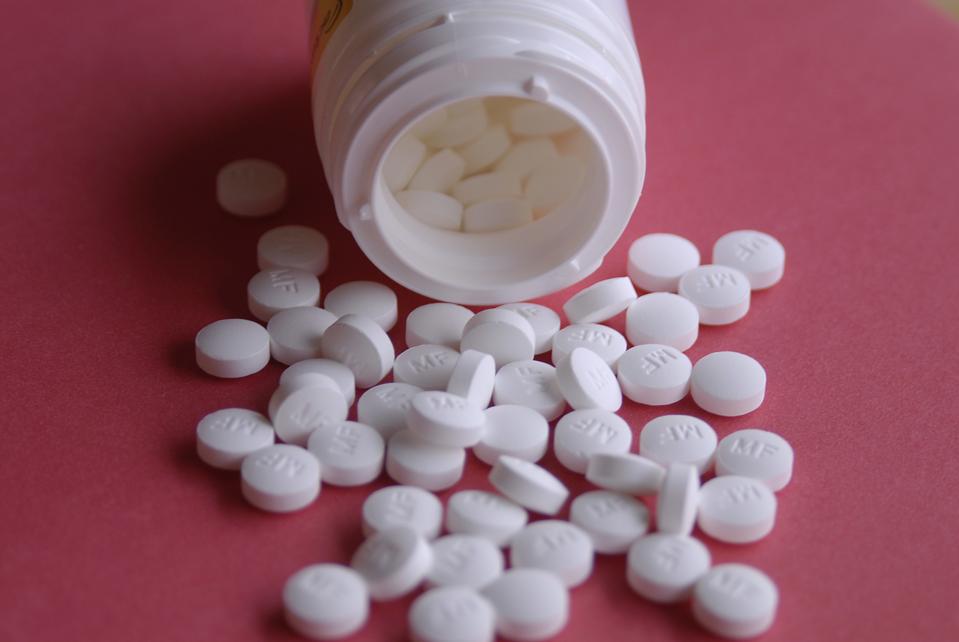
A new study done in mice has suggested that hydroxychloroquine or chloroquine, both drugs under … [+]
Corbis via Getty Images
Researchers have warned that hydroxychloroquine (HCQ) and chloroquine (CQ), two similar drugs repeatedly touted by President Trump to be promising treatments for COVID-19, may be deadly when combined with a common diabetes drug.
The new study was published yesterday online on scientific pre-print server BioRxiv and shows that 30-40% of mice treated with a combination of HCQ or CQ and diabetes drug metformin, died. Treatment with the same dose of either drug alone had no effect on the survival of the mice.
HCQ and CQ are typically used to treat malaria and autoimmune diseases such as rheumatoid arthritis and lupus, but have also shown some early promise in the treatment of certain types of cancer, with several clinical trials ongoing.
“Our interest in this combination arose because both drugs individually have been shown to have anti-tumor effects in pancreatic cancer,” read a statement from two of the authors of the paper: Chi Dang, director of the Ludwig Institute for Cancer Research and Anirban Maitra, scientific director of the Center for Pancreatic Cancer Research at MD Anderson Cancer Center. “To our utter surprise, both HCQ and CQ when combined with metformin resulted in a surprising death rate in 30-40% of mice. In contrast there were no deaths in the single treatment groups,” said the authors.
The work in the recently published study was done before the coronavirus outbreak, with the researchers testing HCQ/CQ and metformin for pancreatic cancer and coming up with this perhaps, serendipitous finding. Due to this, some of the mice had pancreatic tumors, however the drug combination proved fatal for the mice with and without pancreatic cancer, at a similar rate.
“Even in mice that did not have any tumors, we found this deleterious effect of the combination, underscoring that it is not dependent on the presence of a tumor,” said the authors.
Although no work has yet been done in humans to evaluate this interaction, there is also a plausible scientific reason by which these two drugs may negatively interact. Both of them affect a process called autophagy, which is where cells recycle proteins to enable them to make more.
“Autophagy literally stands for “self-eating” and is a form of “quality control” that most cells in our body engage in to recycle aging proteins so as to synthesize new ones. HCQ and CQ are both agents that inhibit autophagy and in fact this is the property that is important for its use in tumors like pancreatic cancer,” said the authors.
Metformin, on the other hand can actually induce autophagy, so it is possible that two drugs interfering with this recycling pathway at the same time could be toxic.
The researchers looked to see whether this process was disrupted in the mice dying after treatment with the combination and found increased numbers of autophagosomes (essentially recycling bins, containing cell proteins to be re-purposed), in the heart, liver and kidneys of the mice. They also designed the dosage of both drugs so that the amount they gave the mice should be proportional to how much humans typically receive.
“In this study we used a method called “allometric scaling” which uses the surface area of an average human being and an average mouse and uses this to identify comparable doses. Importantly this does not depend on the body weight which can lead to errors in estimation – most oncology therapeutics are actually calculated based on surface area,” said the authors.
So what do the researchers hope to achieve by publishing their work now?
“Our goal in communicating this work is not to scaremonger. We hope that the lethality we observed in mice will not translate to humans but instead there will be more “pharmacovigilance” or awareness regarding potential drug interactions between HCQ/CQ and metformin,” said the authors.
HCQ and CQ have been touted as a possible treatment for COVID-19, despite very scant and even conflicting evidence that it works for people with COVID-19, with some trials showing some promising effects of the drug and others showing no substantial benefit. Dozens of other trials are now up and running to properly evaluate HCQ/CQ in COVID-19, but the results of these studies will take time. Despite this, President Trump continues to mention it universally positively in his press briefings, yesterday even recommending that people take the drug.
“We have seen the escalating interest in HCQ for COVID-19, not only for therapy but now increasingly for prophylaxis following exposure to an infected family member or a patient. Because this drug is likely to be used in spades – either as part of a clinical trial or what we call “off label” – we wanted to get this information out at the earliest so that physicians treating COVID-19 patients are at least aware of this potential drug interaction,” said the authors.
Misuse of the drug has already resulted in at least one fatality, after man in Arizona died after ingesting fish tank cleaner containing CQ. Reports of poisoning were also been reported in Nigeria, a day after President Trump first mentioned it in one of his briefings.
“There is very good safety data on both drugs individually, as well as safety data on combination being used in patients who have autoimmune diseases like lupus and rheumatoid arthritis. However, patients with COVID-19 are a whole different ballgame and typically much sicker than the average population. We have to remember that COVID-19 has been associated with adverse effects on the heart and the blood vessels – how all of these play out in addition to the two drugs interacting with each other will need to be studied,” said the authors.
Last week, the CDC reported that people with underlying health conditions are at more risk of severe COVID—19. People with diabetes are included in their initial dataset and appear to be more likely to be hospitalized/need to go to ICU than people with no underlying conditions, but with such small numbers it is difficult to tell currently why exactly this is. The report also had no information about how many of these people were currently on medications of any sort, whether it be metformin or HCQ/CQ, so currently there is no human data to back up the interaction seen in mice. However, the authors of the new study stress that this work must be done as soon as possible.
“Right now, the drugs are being used in a completely patchwork way. We need a national database on every COVID-19 patient that is receiving HCQ or CQ – either as part of a clinical trial or off label,” We ask either the FDA or companies like Flatiron to create such a registry for HCQ/CQ usage in COVID-19,” said the authors, stressing that the databases should record all adverse events that patients experience, including those reported by patients themselves and any other medications that patients are on. “This will allow us to sift through potential adverse drug interactions like metformin and others,” they added.
There are also two major points to be taken into account when interpreting the new study. Firstly, the research was done in mice, not humans. Testing drugs on mice is an important step in the approval of all new treatments to go into human clinical trials and promising drugs which cause severe toxicities in mice, generally don’t make it into human trials. However, some drugs do behave differently in mice to in humans, so although this result is indicative that HCQ/CQ and metformin may be especially toxic when combined in people, evidence from humans is needed to make a definitive conclusion.
Secondly, the study has not yet been peer-reviewed by other scientists to check its credibility and accepted for publication in a scientific journal. Most of the time during peer review, other scientists suggest ways in which the results or methodology could be improved to further support a study’s claims, sometimes they challenge the conclusions of the study and request that the authors be more conservative about their claims. Less commonly, they uncover significant flaws in the study meaning that they think the research needs to be completely overhauled parts repeated, or conclusions drastically changed. Although it is impossible to tell what will happen with this study during peer review, the scientists involved are all very experienced with thousands of accepted scientific publications between them, so that their work would be inherently flawed with little-to-no merit at all is rather unlikely.
Neither the lack of peer review or that the work was done in mice necessarily affect the implications of the work, but they do mean that a small amount of additional caution is warranted when interpreting the results, as is the case with all scientific pre-prints and work done in mice without corresponding human studies.
Considering the considerable burden of COVID-19 currently, it is understandable why many people want to view HCQ/CQ as a magic bullet, an old, reasonably safe and cheap drug, capable of quickly helping people who are seriously ill with COVID-19. But, the bottom line is that there are several reasons why many scientists and physicians are urging caution with HCQ/CQ. It isn’t because they think the drug is useless, it’s just because there simply isn’t enough evidence to suggest it is useful just yet.
This could change in weeks or months from now, as the results of new trials come out. But, if the relationship between HCQ/CQ and metformin found in mice is similar in humans, it serves as somewhat of a cautionary tale that even in these extreme and unusual times, there is merit to stepping back and thinking about how drugs may affect different people in different ways and what may help one person, may harm another.







