

Sean Bisceglia is the CEO of Curion, the leading provider of consumer insights research and product testing for both global CPG’s and challenger brands in the food and beverage, personal care, fragrance, and home care categories.
Brands rely on consumer testing to analyze potential risks and rewards before launching a new product, a line extension or changing the way they market the brand. This typically takes place in a test kitchen or lab, where consumers participate in blind studies. The environment is clean and clinical.
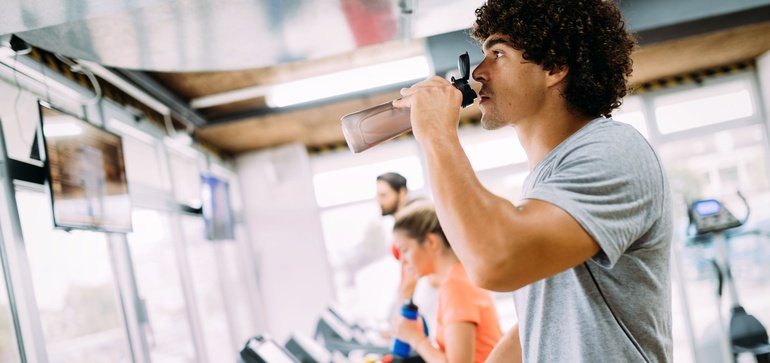
But with the advent of in-context testing, researchers can now take product testing to consumers where they live and relax, such as community gyms, popular bars, theaters, restaurants, senior living or anyplace consumers go to mingle, relax and work.
Would you rather taste a new craft beer in a test kitchen or relaxing on a sunny outdoor patio? Does popcorn taste the same way in a lab as it does in a living room while watching big screen TV? Does the tropical smell of sunscreen have the same appeal indoors as it does on the beach? Product testing out of the lab brings the experience to the consumer’s life, enabling researchers to understand the brand in context — always more real than central location testing. CLT)
According to Decision Analyst: “If the product is used in offices, it should be tested in offices by people who work in offices. If the product is typically used at home, it should be tested at home. If the product is consumed in restaurants, it should be tested in restaurants, and so on.

Sean Bisceglian
Courtesy of Curion
This kind of ‘real environment’ test will produce the most accurate results. For instance, for food products, an in-home usage test is always more accurate and predictive than a central location taste test.”
The on-demand future is here. People eat anytime, anywhere (think Uber Eats). They order online and get one-day delivery. Consumer expectations are “you bring it to me.” Example? They can click and get an LA-style fitness class brought right to the recumbent bike in their family room. For all these reasons and more, Curion decided to take product testing to consumers with our LifeLabs platform.
Responding to market disruption
Consumers drive change; the result of new technologies, cultural shifts and the rapid reversal of social norms. Let me put it another way. Everybody was on Facebook, until everybody was on Instagram. Everybody ate macaroni and cheese, until salt and fat became a health threat. Everybody smoked, until vaping replaced cigarettes. Now that’s in question. Everybody drank soda out of plastic bottles or cans. Now global awareness of how we pollute the oceans is changing the way we think about packaging.
What’s driving consumer preference? How do they consider brands? What can we expect?
Recent consumer research shows these alpha trends as we head into 2020:
-
Social media is driving a thirst for new products. “Food brands need to take bigger risks…innovate fast and frequently.”
-
Expect “new textures in food and beverage options.”
-
Brands need to step up food innovation such as what we’re seeing in the meat and dairy alternative categories.
-
We will continue to see Millennials and GenZ lead the charge to cut salt, sugar and fat. This opens the door to spicy, more exotic alternatives — a ‘hot’ topic for the younger demographic.
-
Anything packaged with plastic is at risk as consumers become more and more fixated on the environment. Brands will need to be meticulous in the ways they communicate their sustainability message — on pack and online.
In context research is the subject of “Thinking outside the booth.” The report states, “Moving sensory and consumer research from the standard sensory booth setting closer to where consumers actually purchase or consume the products being tested may thus increase a test’s ecological validity. It is well established that consumer responses to the same foods can differ depending on the setting or location where these foods are tested.”
Curion behavior scientists that run LifeLabs also conduct product studies in virtual reality rooms where consumers come in contact with mock-ups. This gives people the opportunity to see what a product might look like on a store shelf. We can track the purchasing process and evaluate how the product holds up against competitors as participants “shop.”
In context product testing at work
Recently, our group partnered with a leading shared office space provider. This was an ideal fit for our client, a popular protein bar brand in the health food industry that sought to understand how their nutrition bars stood up to the competition.
The shared office provider has 800+ locations in 124 cities and caters to over 400,000 members globally who fit our client’s target market.
Part of the research was to determine the differences between traditional lab testing in a CLC setting versus in context testing. Our mission was to understand how consumers’ responses might differ in a real-life context during meal times and in a more natural environment.
A pop-up CLC ran at a Chicago-area shared work office, set around snack breaks and lunch time, where office holders were invited to stop by and taste the blind coded products. They were also given a QR code to the online survey.
In place of compensation, as in a traditional CLC, a donation to charity was in made in their name. This eliminates consumers whose only motivation is the cash reward over having an interest in the actual product.
Results from the traditional study versus the LifeLabs study were compared to determine how context effects consumer perception.
Consumer preference between products were the same in each study. However, participants in the shared office test site showed far more enthusiasm for the experience and were far less critical of the products, compared to those in the standard CLC booth. Participants were more articulate and nuanced in their answers to the survey questions.
The advantages of contextual research
According to the many studies named in ScienceDirect, results imply that the more immersive the context is when studying consumer perceptions, “the closer a panelist’s responses may be to those obtained within the real-world.”
Curion has found that contextual research delivers a wealth of advantages, allowing brands to:
-
Get closer to the consumer in the environment of their chosen lifestyle.
-
Allow for natural biases.
-
Understand product usage in real time.
-
Gain context-rich insights on how every-day habits affect preference.
-
Test prototypes early before going into production.
-
Find the moments you own and the ones you don’t.







