


Coming from a marketing background and having worked in very competitive markets for several years, the recent Presidential Elections deployed the most cutting-edge marketing practices that I have seen in action. 
It was very evident that the top two brands – Gota and Sajith – were using data analytics in the campaign strategy and some of the best brains were at work using the most modern techniques in digital media.
The last move of one of the brands – ‘faked video’ – capped the entrenched rivalry that existed between the two power brands. It was a psychological war at its best, which is why physical violence was reported to be at the lowest.
Get the product right
Whilst many can argue on the brand expenditure that would have easily crossed the Rs. 5 billion mark, in my view the winner was the customer (in this case the voter), the logic being that because of the neck-to-neck projected market share from the research studies, it forced both candidates to develop cutting-edge products that were superior to the other.
In the world of marketing this can be similar to the war that exists between Dialog and Mobitel where both brands invest millions of rupees on research and new product development to ensure superiority.
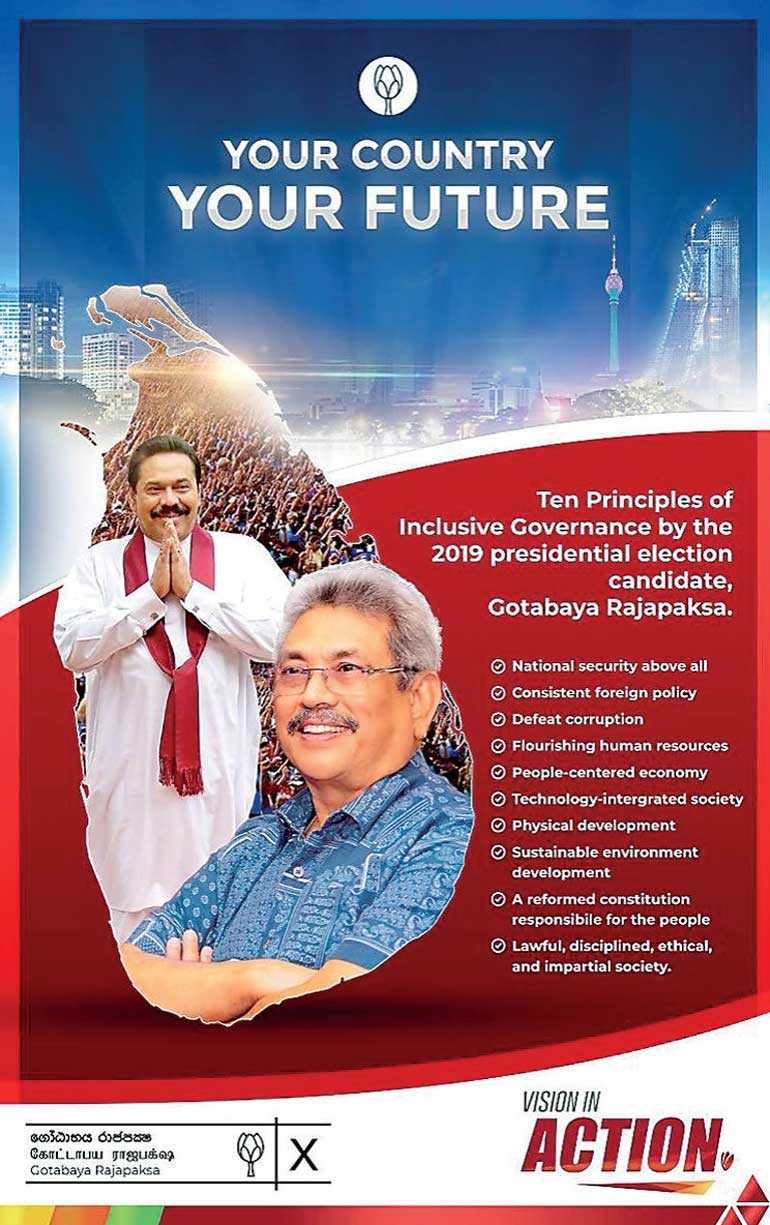
If I go to the specific brand Gotabaya, attributes include – Strong national security, consistency on foreign policy, corruption-free administration, people-oriented economy, technology-integrated society, create a discipline society and being environmentally responsible.
What was unique about the campaign was that the DNA of the brand was never changed even with the most ruthless attacks by the competitors. The lesson for marketing is that if one is practicing ‘strategic marketing’ you stick to your game plan irrespective of what competitors do.
In good brand marketing once the product features are determined based on research it remains consistent until the time is ripe for a re-launch. But tactically we use communication to fight competition – like the ‘Pad Man’ rhetoric. But, strong brands stick to the DNA, which is what brand Gota did.
Get the communication right
Once the product design is right, the challenge was then how to communicate and get the message across to the customers (in this case the voter). A combination of TV, radio, press, endorsements and alliances, sponsorships, organised meetings for the business community, digital media, and road shows across the country by way of meetings was driven on the basic theme ‘a man who will put the vision to action’.
Based on this strategic positioning, Sri Lanka saw a flawlessly-executed campaign that resulted in 52% of the votes being garnered and the brand getting selected for high office. By the way the campaign manager, Basil Rajapaksa, predicted the win by 10% almost three weeks before the elections. This was the second time voter behaviour was predicted by him. At the last Provincial Council Election too his prediction was spot on, which is again marketing at its best.
The debate – Consumer issue
The debate is if the 52% votes garnered by brand Gotabaya was due to the superior brand that was built with strategic marketing or was it a protest vote that was given due to the economic hardships the typical consumer was being challenged with.
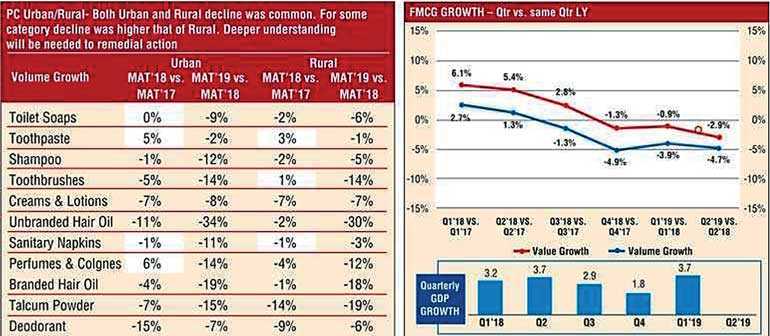
Once again getting into the specifics, way back in Q1-2018 the consumption registered at +2.7% in volume. 2018-Q2 GDP household consumption slowed down to +1.3%. From Q3 onwards, FMCG consumption at the household end declined in volume by -1.3% and -4.9% respectively which means people are absolutely cutting back on consumption due to financial issues.
Incidentally, it was at this time (10 February 2018) that the Provincial Council Elections were staged and 43% of the votes were won by SLPP. This announced to Sri Lanka the ruthless power of the Sri Lankan voter as it was the same voter that around three years back gave a resounding mandate to the Yahapalana regime.
Where Yahapalana went wrong
Sadly, Yahapalana did not do any changes to the product even after the voters’ warning on 18 February 2018.
By 2019 at the household end things were getting even tougher with the consumption of milk powder declining by almost 7%. There were categories like ‘soups’ where the penetration at household end had dropped by almost 8% (which was almost 400,000 homes).
The specific numbers were Q1 and Q2 – 2019, 3.7% household consumption volume continued to decline by -3.9% and a staggering -4.7% respectively. Toilet soap consumption declined by 9% on the urban and 6% in the rural. Toothpaste consumption has contracted by 2%, shampoos at a staggering -12% decline in the urban areas and -5% in the rural which is frightening as this means the quality of life was deteriorating.
We also saw a lifestyle categories like perfume and colognes declining by -14% in the urban market and -12% in the rural market, which is interesting, as the data should be the other way round with the urban markets not wanting to change their behaviour patterns due to social pressure. But the reality was different and it meant that the consumer was in deep trouble. Products like talcum powder registered a dip of 15% in the urban market whilst in rural Sri Lanka decline is greater at 19% and says it all. Hence the hypothesis that 16 November was a protest vote cannot be ruled out.
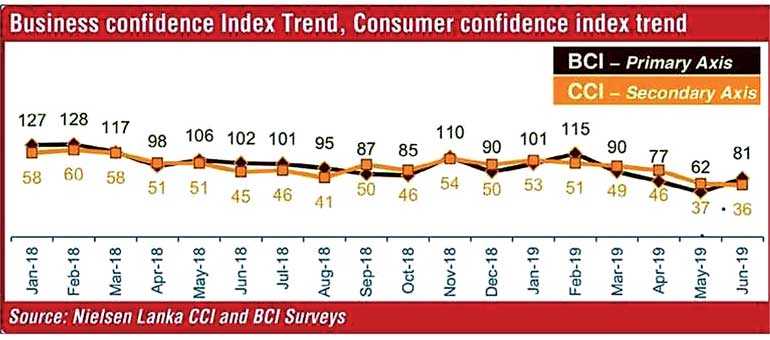
A similar decline was seen in the corporate sector too, with bottom lines under pressure and many were laying off people. The BCI dropped from 128 way back in 2018-January to an appalling 81 by June2019. The rising NPL among banks and financial institutions were a testimony that corporate Sri Lanka was in trouble. But sadly the Yahapalanaya Government was living in a world of its own and continued to go with ‘business as usual’ until it got kicked out on 16 November. Though many termed the brand war neck-to-neck, for many of us with an ear to the ground, the result was very clear.
Marketing won
Whilst we can debate if the 16 November decision by Sri Lanka was due to the burden that a Sri Lankan consumer is undergoing as against the power brand Gotabaya that was strategically developed, my analysis is that it was a combination of strong brand marketing and the housewife/organisation being under fire.
In simple words the essence is that that consumer had a serious consumer dissatisfaction and from all the competing brands ‘Gotabaya’ was purchased by 6.9 million voters, accounting for a 52% market share. In other words, marketing at its best. As per the words of the great Philip Kotler ‘identifying and anticipating consumer needs and developing a product better than competition’ was seen in action.
Political marketing
Where the use of ‘political marketing’ comes in for criticism is when a particular candidate resorts to socially non-acceptable tactics. This includes derogatory communication aimed at competitor brands like what we saw such as fake videos aimed at harming the credibility of the candidate, blocking of media for competitor political parties, below-the-line rivalry at meetings, voters not being allowed to vote, unlawful voting, etc., which was at its lowest in the last election.
A point to note is that this behaviour is not confined to political marketing, but happens across many consumer brands too. For instance, when a malted milk was launched once in Sri Lanka, the competitor bought up the key media belts on radio to block the new brand that was being launched, poached the competitor’s key employees, broke down the displays at the retail end, and pasted over the point of sale material, whilst adopting guerrilla tactics of promotions to undermine the competitor brand. Some companies even go to the extent of stalking the route plan of a sales representative’s itinerary, so that at the retail end you block retail space, which to my mind is somewhat similar to the marketing that is practiced during an election.
The second point where marketing as a discipline draws flak when used in politics is when a candidate fails to deliver on the promise made after being elected. Then it can be summed up that marketing of a political candidate to high office can be considered unethical and wrong.
Next step
Hence it is clear that brand Gotabaya has identified the consumer issues carefully and developed the product to address the burning needs. It was very effectively communicated and thereby won a 52% market share (votes) at the election.
Now we as a nation we must support the administration given that Sri Lanka is ranked last in the South Asian region with just a 2.6% GDP growth. Even Afghanistan has beaten us with a 2.7% GDP growth. Bangladesh is at a trailblazing performance of 8.1%, which is where we have to be.
[The writer is the President/CEO of a global Artificial Intelligence (AI) company on perception management – Clootrack for Sri Lanka, Maldives and Pakistan.]







