

Around the world, the race is on to find a treatment for the novel coronavirus. Research teams are poring over clinical papers and screening thousands of drugs and compounds for any hint of efficacy.
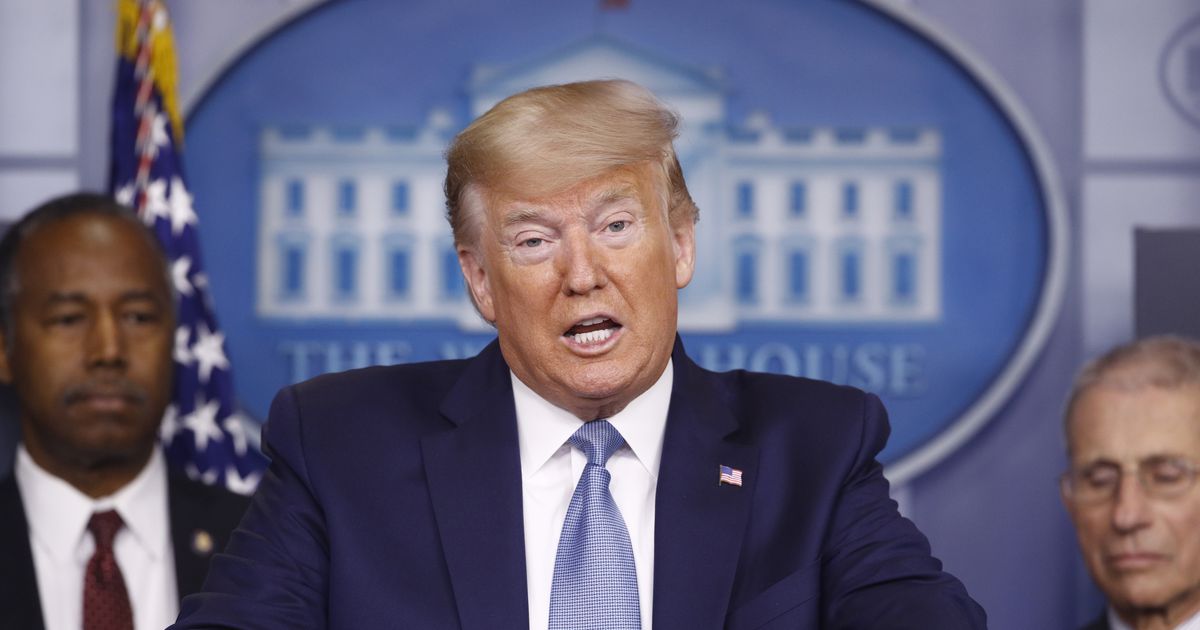
So far, no drugs have been approved specifically to fight COVID-19 in the U.S. But on Thursday, the White House pledged to fast-track potential treatments and vaccines.
“We have 10,000 scientists, doctors and others, and more than that, working around the clock to aid the American people in this fight against the coronavirus,” the Food and Drug Administration’s commissioner, Stephen Hahn, said at the White House press briefing.
/arc-anglerfish-arc2-prod-dmn.s3.amazonaws.com/public/IGVHJK5GJRBOTPRI6WVE6K43M4.JPG)
In interviews with The Dallas Morning News, several scientists said there is reason to hope that a treatment could become available before the end of this year. That would help society bridge the gap until a vaccine can be developed, tested and proven safe and effective over the next 12 to 18 months.
The earliest drugs to become available are likely to be those already FDA-approved for other uses.
Anti-malaria drugs
Leading candidates are the anti-malaria drug chloroquine and its less toxic derivative hydroxychloroquine.
At a White House press briefing Friday, President Donald Trump proclaimed himself “a big fan” of the drug, saying he felt good about its potential. But Dr. Anthony Fauci, director of the National Institute of Allergy and Infectious Diseases, said there was only anecdotal evidence that it could work against COVID-19, the illness caused by the new coronavirus.
Used since the 1950s, hydroxychloroquine has been proven safe for patients with malaria and autoimmune conditions such as lupus and rheumatoid arthritis.
/arc-anglerfish-arc2-prod-dmn.s3.amazonaws.com/public/5OP743GBUNGKHDZONU53NWB6TI.JPG)
Two recent studies have boosted interest in hydroxychloroquine, and hospitals including UT Southwestern Medical Center in Dallas have started to stock up on it. Hydroxychloroquine helped prevent the coronavirus from infecting cells in the lab, according to a study published in the journal Cell Discovery.
Patients treated with a combination of hydroxychloroquine and the antibiotic azithromycin recovered more quickly than those who did not receive the drug combination — in around three to six days, according to a small trial reported on last week by French researchers.
It’s too early to know how well hydroxychloroquine will work, experts say. “The studies are interesting, but they’re not conclusive,” said Dr. Susan McLellan, medical director of the biocontainment treatment unit at the University of Texas Medical Branch in Galveston.
She said the public will be hearing about many such promising treatments before researchers gather enough data to show that any one works better than another. As an example, she pointed to the drug ZMapp, which was developed to fight the Ebola virus. The drug generated excitement early on but was eventually dropped from clinical trials in favor of therapies that proved more potent.
The World Health Organization announced last week that chloroquine would be part of a massive international treatment study, and the University of Minnesota began enrolling volunteers in a trial to see if hydroxychloroquine can prevent or improve COVID-19 symptoms in those exposed to the virus.
Survivors’ blood
Another therapy from the past that is attracting renewed interest is convalescent plasma. As part of this therapy, doctors gather antibodies from people who have recovered and administer them to those who are ill or at high risk of falling ill.
Patients who recover from COVID-19 would be asked to donate blood. Researchers would screen their blood for antibodies to the virus and pool those antibodies into a serum that would be given intravenously.
The treatment dates back more than 100 years. It was used during the 1918 flu pandemic and against measles, polio and mumps. It has also shown some effectiveness against SARS, reducing hospital stays and lowering mortality rates in some patients. More recently, doctors used it to treat an American aid worker, who recovered from Ebola in 2014.
The FDA would be likely to approve the approach quickly because intravenous plasma is routinely administered to patients with autoimmune diseases, as well as to prevent infections such as rabies and hepatitis B, said Dr. Arturo Casadevall, chair of molecular microbiology and immunology at the Bloomberg School of Public Health at Johns Hopkins University.
Casadevall wrote a piece about the approach that was published in the Wall Street Journal in late February and a commentary in a scientific journal earlier this month. Since then, he has been inundated with interest from clinicians, researchers and patients.
He is working with 20 centers, he said, including the Baylor College of Medicine in Houston and Montefiore Medical Center in New York City. Each site would collect and administer serum locally, although areas with surpluses could ship it to parts of the country with fewer convalescent patients.
The serum could be available within weeks, said Casadevall, once a hospital’s internal review board approves the protocol. “Frankly, it’s the only option that we have right now that has a reasonable chance of working,” he said.
/arc-anglerfish-arc2-prod-dmn.s3.amazonaws.com/public/UUHECMQW7ZBXNP56XBPRX72OTQ.JPG)
Hahn, the FDA commissioner, on Thursday called convalescent plasma “a pretty exciting area” and said the FDA was “really pushing hard to try to accelerate that.” He added that the FDA would have more information on convalescent plasma in two weeks.
The announcement surprised Casadevall, who has a proposal before the FDA but had not heard from anyone. “It is totally possible that they just haven’t heard of us in the middle of this emergency,” he said.
Attacking ‘spike’
At Washington University in St. Louis, Dr. Michael Diamond is moving a few steps beyond convalescent plasma to find something more potent. His team is among as many as 50 groups worldwide that are screening known human antibodies against the novel coronavirus.
The teams are hunting for a molecule that would attach to and disable a protein on the virus’s surface called “spike.” That protein allows the virus to enter human cells and replicate inside them. Once the teams identify the most potent antibodies, they would be cloned and pooled into a drug cocktail.
Many teams are working in parallel because “we’ve got to find the best one the fastest way possible,” Diamond said. If all goes well, he said, a new therapy could be available within a year.
More to come
Meanwhile, hospitals are setting up clinical trials to test experimental drugs that have yet to be FDA-approved.
Dr. Mamta Jain, a physician at UT Southwestern, is investigating two such compounds: remdesivir and sarilumab. Remdesivir, from the California drug-maker Gilead, was developed to fight the Ebola virus. Preliminary evidence suggests it can reduce the novel coronavirus’s ability to replicate, Jain said.
/arc-anglerfish-arc2-prod-dmn.s3.amazonaws.com/public/XVSP3KOWR5BSROMVEBOJ4A4WTQ.jpg)
The drug was given to the first U.S. COVID-19 patient, a 35-year-old man in Washington state, just as he began to need supplemental oxygen, according to a case study published this month in the New England Journal of Medicine. The patient recovered.
The trial, sponsored by Gilead, will look at remdesivir’s effectiveness in patients who need supplemental oxygen. Many other groups, including the National Institutes of Health and the World Health Organization, have launched their own remdesivir trials.
UT Southwestern is also one of several sites working with Regeneron Pharmaceuticals to evaluate the compound sarilumab, which may help reduce lung inflammation in patients who are seriously ill.
Sarilumab and remdesivir could be approved within months if they are shown to be effective, Jain said.
These developments leave clinicians with little to give their patients right now — but with hope that they will have more to offer soon.
“We can’t push the panic button,” Jain said. “I want to be involved in trying to collect data for a cure, because that’s how we can solve the problem.”
Anna Kuchment is a science writer at The Dallas Morning News and a contributing editor at Scientific American.







