

What does authenticity mean in a digital age? The question sits at the center of Kevin Nguyen’s first novel, “New Waves,” which begins as a workplace caper before spinning out like the fractals in a Mandelbrot set. Narrated by a young tech worker named Lucas, the book unfolds primarily in 2009 in Manhattan, although time and place remain, if not fluid, then difficult to grasp.
Lucas and his friend Margo, an ace programmer, download a database of user information from their employer, a messaging service called Nimbus, in retribution for Margo having lost her job. “[I]t’s not stealing,” she argues, insisting that copying does not amount to larceny. That this is a semantic argument is precisely the idea.
For Nguyen, the appropriation of the data sets in motion a variety of plot lines in which nothing is as it appears. Take Margo: Although she initiates the action, she is not long for the novel’s world. “There was no way to know then,” Lucas confides at the close of the first chapter, “that, in a matter of months, Margo would be dead.”
“New Waves,” then, is a novel of indirection, one that attempts to track, through Lucas’ efforts to make sense of both himself and Margo’s death, the floating quality of our contemporary condition — in which we are actual and virtual entities at once.
Listening to Margo’s voice on a series of WAV files, Lucas explains, is “less like hearing a ghost and more like witnessing a message from an astral plane, a different dimension, the future. … [S]he’d occasionally screw up on the recording — she’d misspeak and the tone of her voice would break, maybe she’d laugh a little to herself before starting over — and in those moments, I couldn’t help but think that she was alive.”
Every one of us knows someone who has died but left a digital trace: MP4s, archived messages, social media profiles. “I’ve noticed,” Zadie Smith has written, “… that when a teenager is murdered, at least in Britain, her Facebook wall will often fill with messages that seem not quite to comprehend the gravity of what has occurred. … What’s the difference, after all, if all your contact was virtual?”
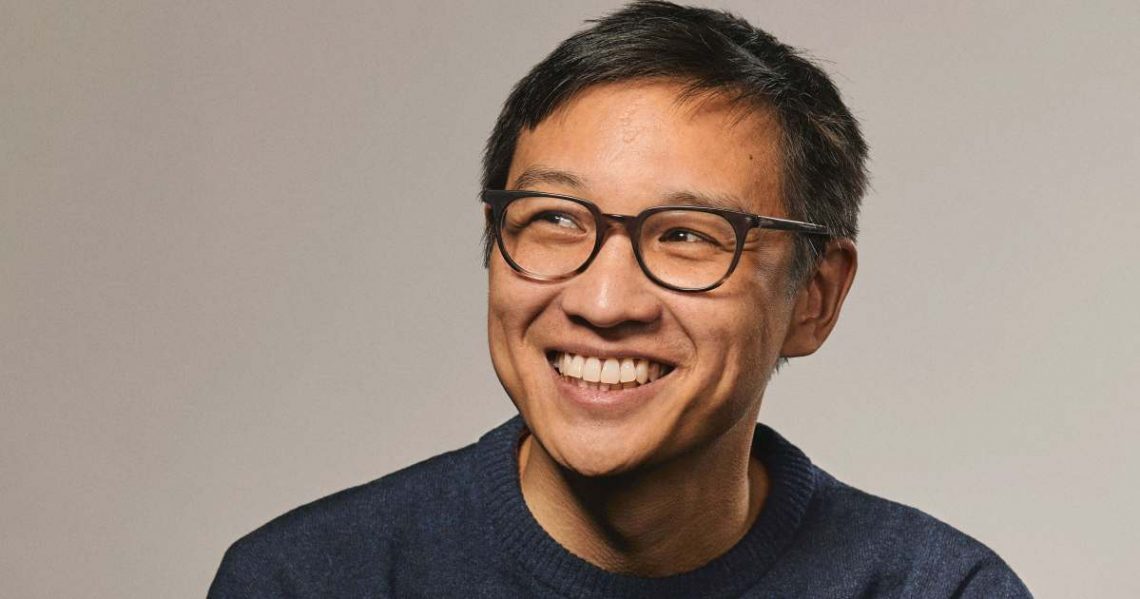
Smith is writing from the perspective of what she calls a “Person 1.0” — raised in an analog world. Nguyen is Person 2.0. Features editor at the Verge and a former editor at GQ, he has said he began to work on what would become “New Waves” using the Notes app on his phone. He is, as they say, a digital native.

As a consequence, “New Waves” manages to be both knowing and cutting, a satire of internet culture that is also a moving portrait of a lost human being. Lucas is a loner who spends his weekends sneaking from one film to another in the neighborhood multiplex. His apartment looks like a dorm room — dirty clothes on the floor and empty beer cans by the bed. His jobs, first at Nimbus and then with another start-up called Phantom (think Snapchat for SMS, a text-based platform from which messages disappear), involve fielding queries for tech support.
Margo was his one source of human contact — until he meets Jill, a novelist who knew Margo from a science fiction listserv. His relationship with Jill drives much of the plot, but “New Waves” is not a love story. For Nguyen, rather, romance is one more source of disconnection, one more landscape in which reality is distorted by desire.
To illustrate the point, he develops another narrative around the problems faced by Phantom, an app idealistically created so that “[g]overnment or corporate whistleblowers could communicate in secret to journalists” but mostly used by teens and adulterers to sext. That’s a vivid symbol of a tech universe gone astray (best intentions and all) — or it would be, were Nguyen interested in allegory. The strength of the novel is that he has something more expansive in his sights.
The book functions not unlike the digital culture it is satirizing, with shifts in style and form and voice. (In a move reminiscent of Sigrid Nunez’s “The Friend” or Kevin Barry’s “Beatlebone,” he has Jill narrate the penultimate chapter before returning to Lucas’ point-of-view.) Nguyen deftly introduces certain elements — Margo’s death, say — then drops them for pages before returning again. The effect is similar to reopening a browser window, or a forgotten tab.
“Sometimes,” Jill admits, “I’d hit the BACK button on my browser as many times as I could to retrace my steps. It was like traveling back in time, if time travel made you feel bad about how you’d wasted a perfectly good day.” In other words, actual time is consumed by virtual time travel; the online steals from the real.
Most essentially, Nguyen uses Lucas’ voice, his frame of reference, to make subtle arguments about the primacy of digital. Inverting the tendency to play coy with tech while grounding us in what we might call legacy culture, he cites platforms such as Facebook and Craigslist by name. Books and movies, on the other hand, are referenced by clues. Joan Didion’s “The Year of Magical Thinking” is “a famous memoir by a famous California writer, whose famous New York writer husband had died of a heart attack.” Spike Lee’s “Do the Right Thing” is “that one movie that Jill had never seen but always meant to. What was it called? The one about the heat wave? It didn’t matter.”
It makes for an engaging treasure hunt but also functions as a painful reminder that in a universe of networks, the most necessary bits of information are keywords, as well as the services through which they are deployed. We don’t need to remember titles — or, for that matter, anything — because the machines can remember it for us.
And yet, as Nguyen observes, data is not neutral. “[W]e never ask,” he writes, “about the person who wrote the algorithm. … No biases or fallibility should be allowed to infiltrate it, even if the authors themselves are biased and fallible (and they always are).”
“New Waves” is also fallible in places; it can push too many hot buttons (a subplot on HR and workplace harassment feels especially tacked on), and Nguyen doesn’t know how to wrap it up. But that too is consistent with the ethos of the internet. What is digital life, after all, if not a story with too many elements, an open-ended narrative? “She might not respond at all,” Lucas thinks of his correspondence with Jill: “we might not speak for a long time, or maybe never again.” That this is accurate in both virtual and actual terms is what Nguyen means for us to know.
Ulin is the former book editor and book critic of the Times.
Kevin Nguyen
One World: 306 pp, $27






