
GLOBAL RESEARCH SYNDICATE
No Result
View All Result
  • Login
  • Latest News
  • Consumer Research
  • Survey Research
  • Marketing Research
  • Industry Research
  • Data Collection
  • More
    • Data Analysis
    • Market Insights
  • Latest News
  • Consumer Research
  • Survey Research
  • Marketing Research
  • Industry Research
  • Data Collection
  • More
    • Data Analysis
    • Market Insights
No Result
View All Result
globalresearchsyndicate
No Result
View All Result
Home Data Analysis

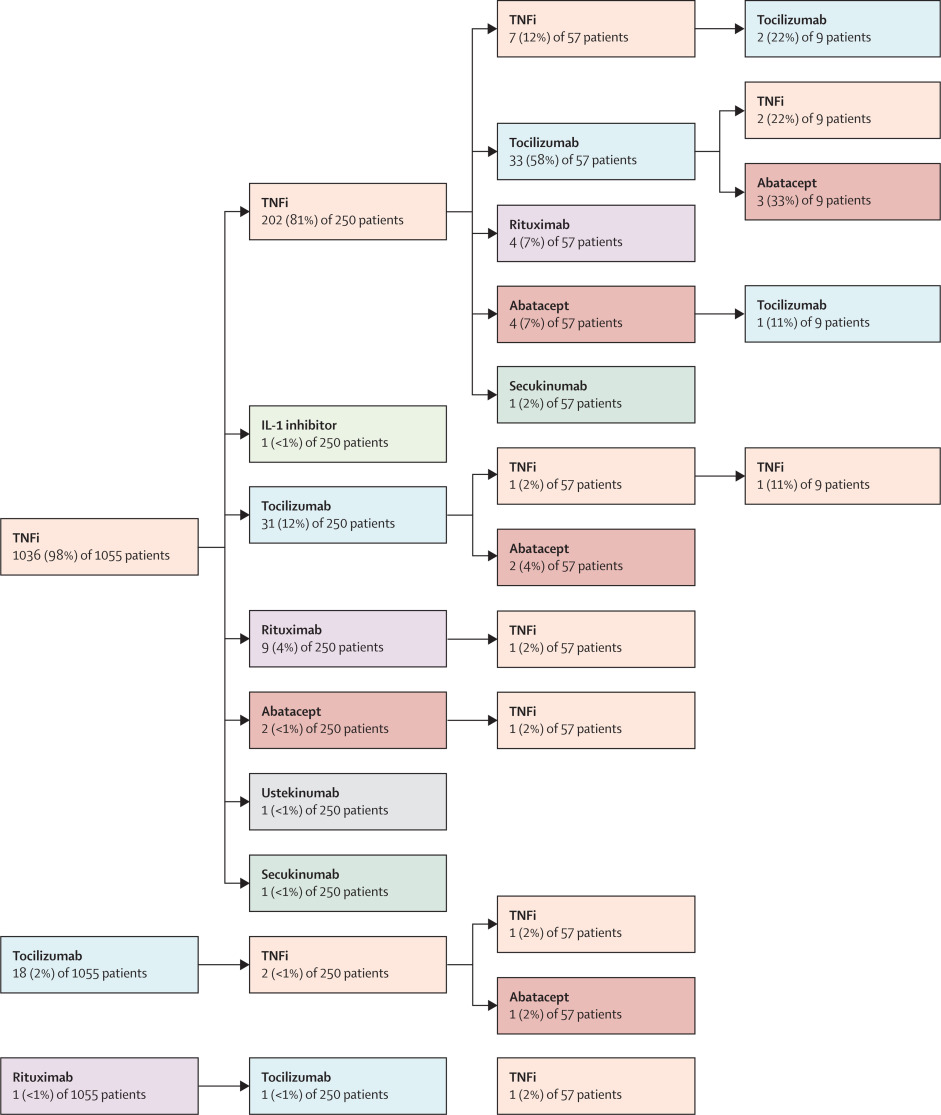
Frequency of biologic switching and the outcomes of switching in children and young people with juvenile idiopathic arthritis: a national cohort study

globalresearchsyndicate by globalresearchsyndicate
March 10, 2020
in Data Analysis
0
Frequency of biologic switching and the outcomes of switching in children and young people with juvenile idiopathic arthritis: a national cohort study
0
SHARES
5
VIEWS
Share on FacebookShare on Twitter

Active joint count (71 joints) Baseline 5·3 (0·5) 5·0 (0·9) 0·77 6 months 2·3 (0·3) 2·7 (0·8) 0·61 Difference

*

* From time of initiation of second biologic to 6 months thereafter, accounting for baseline values.

−2·9 (0·5)

†

† Significant change in variable between baseline and 6 months (p<0·05).

−2·2 (1·0)

†

† Significant change in variable between baseline and 6 months (p<0·05).

.. Unadjusted β coefficient (95% CI) −0·5 (−1·8 to 0·9) 1 (ref) 0·51 Propensity quintile adjusted β coefficient (95% CI)

‡

‡ Propensity quintile adjusted for the following variables at the time of initiation of second biologic: second biologic start year (before 2010, 2010–2015, or 2016–2018), time since initiation of first biologic, gender, ILAR category, age, disease duration, concomitant methotrexate, concomitant steroids, active joint count, limited joint count, physician’s global assessment of overall disease activity, patient (or parent) evaluation of overall wellbeing, CHAQ, pain, erythrocyte sedimentation rate, C-reactive protein concentration, and JADAS-71 score.


−0·6 (−2·9 to 1·8) 1 (ref) 0·64 Limited joint count (71 joints) Baseline 4·5 (0·5) 3·8 (0·8) 0·47 6 months 3·3 (0·5) 2·4 (0·9) 0·43 Difference

*

* From time of initiation of second biologic to 6 months thereafter, accounting for baseline values.

−1·2 (0·6)

†

† Significant change in variable between baseline and 6 months (p<0·05).

−1·4 (1·2)

†

† Significant change in variable between baseline and 6 months (p<0·05).

.. Unadjusted β coefficient (95% CI) 0·7 (−1·6 to 2·9) 1 (ref) 0·55 Propensity quintile adjusted β coefficient (95% CI)

‡

‡ Propensity quintile adjusted for the following variables at the time of initiation of second biologic: second biologic start year (before 2010, 2010–2015, or 2016–2018), time since initiation of first biologic, gender, ILAR category, age, disease duration, concomitant methotrexate, concomitant steroids, active joint count, limited joint count, physician’s global assessment of overall disease activity, patient (or parent) evaluation of overall wellbeing, CHAQ, pain, erythrocyte sedimentation rate, C-reactive protein concentration, and JADAS-71 score.

0·2 (−2·6 to 3·0) 1 (ref) 0·89 Physician’s global assessment of disease activity (VAS 0–10 cm) Baseline 3·1 (0·2) 3·8 (0·4) 0·11 6 months 1·8 (0·2) 2·5 (0·4) 0·081 Difference

*

* From time of initiation of second biologic to 6 months thereafter, accounting for baseline values.

−1·4 (0·2)

†

† Significant change in variable between baseline and 6 months (p<0·05).

−1·3 (0·5)

†

† Significant change in variable between baseline and 6 months (p<0·05).

.. Unadjusted β coefficient (95% CI) −0·6 (−1·4 to 0·2) 1 (ref) 0·17 Propensity quintile adjusted β coefficient (95% CI)

‡

‡ Propensity quintile adjusted for the following variables at the time of initiation of second biologic: second biologic start year (before 2010, 2010–2015, or 2016–2018), time since initiation of first biologic, gender, ILAR category, age, disease duration, concomitant methotrexate, concomitant steroids, active joint count, limited joint count, physician’s global assessment of overall disease activity, patient (or parent) evaluation of overall wellbeing, CHAQ, pain, erythrocyte sedimentation rate, C-reactive protein concentration, and JADAS-71 score.

−0·7 (−1·7 to 0·3) 1 (ref) 0·16 PtGE (VAS 0–10 cm) Baseline 4·1 (0·2) 4·6 (0·5) 0·43 6 months 2·9 (0·2) 3·8 (0·6) 0·089 Difference

*

* From time of initiation of second biologic to 6 months thereafter, accounting for baseline values.

−1·2 (0·3)

†

† Significant change in variable between baseline and 6 months (p<0·05).

−0·7 (0·6)

†

† Significant change in variable between baseline and 6 months (p<0·05).

.. Unadjusted β coefficient (95% CI) −0·8 (−1·8 to 0·3) 1 (ref) 0·14 Propensity quintile adjusted β coefficient (95% CI)

‡

‡ Propensity quintile adjusted for the following variables at the time of initiation of second biologic: second biologic start year (before 2010, 2010–2015, or 2016–2018), time since initiation of first biologic, gender, ILAR category, age, disease duration, concomitant methotrexate, concomitant steroids, active joint count, limited joint count, physician’s global assessment of overall disease activity, patient (or parent) evaluation of overall wellbeing, CHAQ, pain, erythrocyte sedimentation rate, C-reactive protein concentration, and JADAS-71 score.

−0·8 (−2·1 to 0·4) 1 (ref) 0·19 CHAQ score (range 0–3) Baseline 1·03 (0·07) 1·10 (0·13) 0·63 6 months 0·89 (0·07) 1·02 (0·15) 0·40 Difference

*

* From time of initiation of second biologic to 6 months thereafter, accounting for baseline values.

−0·14 (0·06)

†

† Significant change in variable between baseline and 6 months (p<0·05).

−0·08 (0·14)

†

† Significant change in variable between baseline and 6 months (p<0·05).

.. Unadjusted β coefficient (95% CI) −0·1 (−0·3 to 0·2) 1 (ref) 0·52 Propensity quintile adjusted β coefficient (95% CI)

‡

‡ Propensity quintile adjusted for the following variables at the time of initiation of second biologic: second biologic start year (before 2010, 2010–2015, or 2016–2018), time since initiation of first biologic, gender, ILAR category, age, disease duration, concomitant methotrexate, concomitant steroids, active joint count, limited joint count, physician’s global assessment of overall disease activity, patient (or parent) evaluation of overall wellbeing, CHAQ, pain, erythrocyte sedimentation rate, C-reactive protein concentration, and JADAS-71 score.

−0·04 (−0·3 to 0·2) 1 (ref) 0·80 Pain (VAS 0–10) Baseline 4·6 (0·3) 4·5 (0·5) 0·89 6 months 3·6 (0·2) 3·9 (0·5) 0·58 Difference

*

* From time of initiation of second biologic to 6 months thereafter, accounting for baseline values.

−1·0 (0·3)

†

† Significant change in variable between baseline and 6 months (p<0·05).

−0·6 (0·6)

†

† Significant change in variable between baseline and 6 months (p<0·05).

.. Unadjusted β coefficient (95% CI) −0·3 (−1·4 to 0·7) 1 (ref) 0·51 Propensity quintile adjusted β coefficient (95% CI)

‡

‡ Propensity quintile adjusted for the following variables at the time of initiation of second biologic: second biologic start year (before 2010, 2010–2015, or 2016–2018), time since initiation of first biologic, gender, ILAR category, age, disease duration, concomitant methotrexate, concomitant steroids, active joint count, limited joint count, physician’s global assessment of overall disease activity, patient (or parent) evaluation of overall wellbeing, CHAQ, pain, erythrocyte sedimentation rate, C-reactive protein concentration, and JADAS-71 score.

−0·4 (−1·7 to 0·8) 1 (ref) 0·50 Erythrocyte sedimentation rate (mm/h) Baseline 18 (1·7) 16 (3·5) 0·73 6 months 12 (1·1) 9 (2·4) 0·21 Difference

*

* From time of initiation of second biologic to 6 months thereafter, accounting for baseline values.

−5·4 (1·6)

†

† Significant change in variable between baseline and 6 months (p<0·05).

−7·2 (3·7)

†

† Significant change in variable between baseline and 6 months (p<0·05).

.. Unadjusted β coefficient (95% CI) 2·7 (−1·8 to 7·2) 1 (ref) 0·24 Propensity quintile adjusted β coefficient (95% CI)

‡

‡ Propensity quintile adjusted for the following variables at the time of initiation of second biologic: second biologic start year (before 2010, 2010–2015, or 2016–2018), time since initiation of first biologic, gender, ILAR category, age, disease duration, concomitant methotrexate, concomitant steroids, active joint count, limited joint count, physician’s global assessment of overall disease activity, patient (or parent) evaluation of overall wellbeing, CHAQ, pain, erythrocyte sedimentation rate, C-reactive protein concentration, and JADAS-71 score.

2·4 (−4·8 to 9·7) 1 (ref) 0·51 C-reactive protein concentration (mg/L) Baseline 14 (2·2) 6·9 (2·2) 0·10 6 months 7·6 (1·3) 4·2 (1·6) 0·20 Difference

*

* From time of initiation of second biologic to 6 months thereafter, accounting for baseline values.

−6·5 (2·0)

†

† Significant change in variable between baseline and 6 months (p<0·05).

−2·6 (2·7)

†

† Significant change in variable between baseline and 6 months (p<0·05).

.. Unadjusted β coefficient (95% CI) 1·2 (−3·2 to 5·7) 1 (ref) 0·58 Propensity quintile adjusted β coefficient (95% CI)

‡

‡ Propensity quintile adjusted for the following variables at the time of initiation of second biologic: second biologic start year (before 2010, 2010–2015, or 2016–2018), time since initiation of first biologic, gender, ILAR category, age, disease duration, concomitant methotrexate, concomitant steroids, active joint count, limited joint count, physician’s global assessment of overall disease activity, patient (or parent) evaluation of overall wellbeing, CHAQ, pain, erythrocyte sedimentation rate, C-reactive protein concentration, and JADAS-71 score.

0·9 (−6·6 to 8·4) 1 (ref) 0·82 JADAS-71 score Baseline 13 (0·8) 14 (1·4) 0·68 6 months 7·3 (0·6) 9·4 (1·3) 0·10 Difference

*

* From time of initiation of second biologic to 6 months thereafter, accounting for baseline values.

−5·9 (0·8)

†

† Significant change in variable between baseline and 6 months (p<0·05).

−4·5 (1·6)

†

† Significant change in variable between baseline and 6 months (p<0·05).

.. Unadjusted β coefficient (95% CI) −1·9 (−4·3 to 0·5) 1 (ref) 0·12 Propensity quintile adjusted β coefficient (95% CI)

‡

‡ Propensity quintile adjusted for the following variables at the time of initiation of second biologic: second biologic start year (before 2010, 2010–2015, or 2016–2018), time since initiation of first biologic, gender, ILAR category, age, disease duration, concomitant methotrexate, concomitant steroids, active joint count, limited joint count, physician’s global assessment of overall disease activity, patient (or parent) evaluation of overall wellbeing, CHAQ, pain, erythrocyte sedimentation rate, C-reactive protein concentration, and JADAS-71 score.

−2·2 (−5·8 to 1·4) 1 (ref) 0·23 Proportion of patients who achieved ACR Pedi 90 (%)

§

§ For ACR Pedi 90 and minimal disease activity outcomes, patients who stopped biologic therapy before the 6-month outcome measurements were completed were classified as non-responders and those who stopped because they had achieved remission were classified as responders.

6 months (95% CI) 24% (17 to 31) 13% (2 to 25) .. Unadjusted OR (95% CI) 2·1 (0·7 to 6·2) 1 (ref) 0·17 Propensity quintile adjusted OR (95% CI)

‡

‡ Propensity quintile adjusted for the following variables at the time of initiation of second biologic: second biologic start year (before 2010, 2010–2015, or 2016–2018), time since initiation of first biologic, gender, ILAR category, age, disease duration, concomitant methotrexate, concomitant steroids, active joint count, limited joint count, physician’s global assessment of overall disease activity, patient (or parent) evaluation of overall wellbeing, CHAQ, pain, erythrocyte sedimentation rate, C-reactive protein concentration, and JADAS-71 score.

2·5 (0·8 to 7·9) 1 (ref) 0·11 Proportion of patients who achieved minimal disease activity (%)

§

§ For ACR Pedi 90 and minimal disease activity outcomes, patients who stopped biologic therapy before the 6-month outcome measurements were completed were classified as non-responders and those who stopped because they had achieved remission were classified as responders.

6 months (95% CI) 31% (23 to 38) 23% (9 to 37) .. Unadjusted OR (95% CI) 1·5 (0·7 to 3·5) 1 (ref) 0·31 Propensity quintile adjusted OR (95% CI)

‡

‡ Propensity quintile adjusted for the following variables at the time of initiation of second biologic: second biologic start year (before 2010, 2010–2015, or 2016–2018), time since initiation of first biologic, gender, ILAR category, age, disease duration, concomitant methotrexate, concomitant steroids, active joint count, limited joint count, physician’s global assessment of overall disease activity, patient (or parent) evaluation of overall wellbeing, CHAQ, pain, erythrocyte sedimentation rate, C-reactive protein concentration, and JADAS-71 score.

1·6 (0·6 to 3·8) 1 (ref) 0·33

Related Posts

How Machine Learning has impacted Consumer Behaviour and Analysis
Consumer Research

How Machine Learning has impacted Consumer Behaviour and Analysis

January 4, 2024
Market Research The Ultimate Weapon for Business Success
Consumer Research

Market Research: The Ultimate Weapon for Business Success

June 22, 2023
Unveiling the Hidden Power of Market Research A Game Changer
Consumer Research

Unveiling the Hidden Power of Market Research: A Game Changer

June 2, 2023
7 Secrets of Market Research Gurus That Will Blow Your Mind
Consumer Research

7 Secrets of Market Research Gurus That Will Blow Your Mind

May 8, 2023
The Shocking Truth About Market Research Revealed!
Consumer Research

The Shocking Truth About Market Research: Revealed!

April 25, 2023
market research, primary research, secondary research, market research trends, market research news,
Consumer Research

Quantitative vs. Qualitative Research. How to choose the Right Research Method for Your Business Needs

March 14, 2023
Next Post
Women who were tall and lean in childhood more at risk of endometriosis – study | Society

Women who were tall and lean in childhood more at risk of endometriosis – study | Society

Categories

  • Consumer Research
  • Data Analysis
  • Data Collection
  • Industry Research
  • Latest News
  • Market Insights
  • Marketing Research
  • Survey Research
  • Uncategorized

Recent Posts

  • Ipsos Revolutionizes the Global Market Research Landscape
  • How Machine Learning has impacted Consumer Behaviour and Analysis
  • Market Research: The Ultimate Weapon for Business Success
  • Privacy Policy
  • Terms of Use
  • Antispam
  • DMCA

Copyright © 2024 Globalresearchsyndicate.com

Welcome Back!

Login to your account below

Forgotten Password?

Retrieve your password

Please enter your username or email address to reset your password.

Log In
This website uses cookies to improve your experience. We'll assume you're ok with this, but you can opt-out if you wish. Cookie settingsACCEPT
Privacy & Cookies Policy

Privacy Overview

This website uses cookies to improve your experience while you navigate through the website. Out of these cookies, the cookies that are categorized as necessary are stored on your browser as they are essential for the working of basic functionalities of the website. We also use third-party cookies that help us analyze and understand how you use this website. These cookies will be stored in your browser only with your consent. You also have the option to opt-out of these cookies. But opting out of some of these cookies may have an effect on your browsing experience.
Necessary
Always Enabled
Necessary cookies are absolutely essential for the website to function properly. This category only includes cookies that ensures basic functionalities and security features of the website. These cookies do not store any personal information.
Non-necessary
Any cookies that may not be particularly necessary for the website to function and is used specifically to collect user personal data via analytics, ads, other embedded contents are termed as non-necessary cookies. It is mandatory to procure user consent prior to running these cookies on your website.
SAVE & ACCEPT
No Result
View All Result
  • Latest News
  • Consumer Research
  • Survey Research
  • Marketing Research
  • Industry Research
  • Data Collection
  • More
    • Data Analysis
    • Market Insights

Copyright © 2024 Globalresearchsyndicate.com