

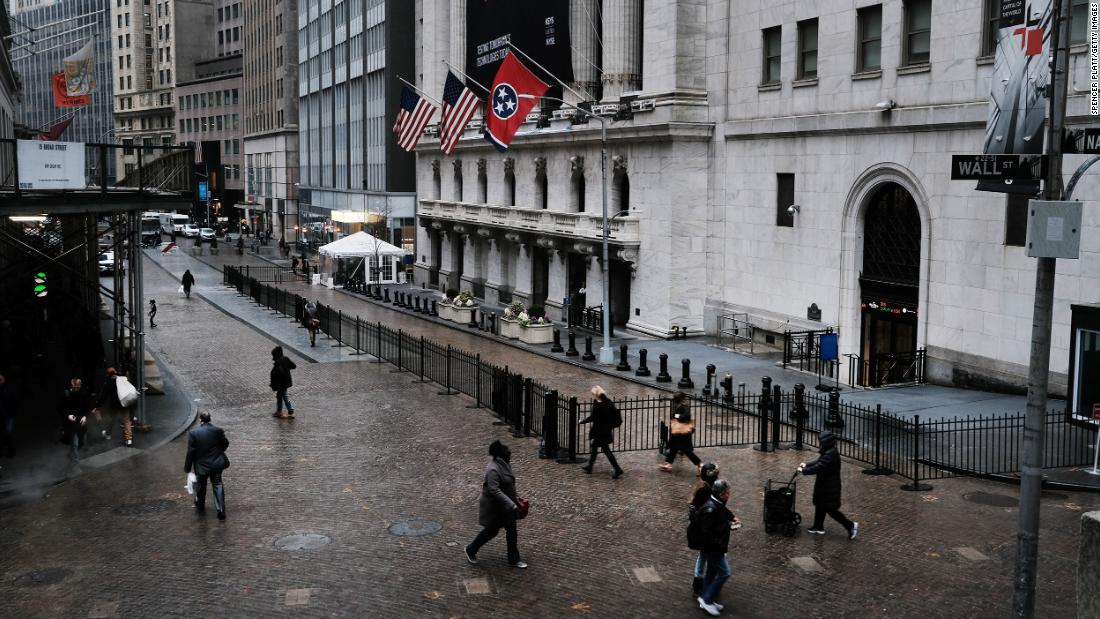
The yield on the 10-year Treasury yield, meanwhile, fell below 0.5% — a record low. The yield was last slightly above that mark.
The panic began after Saudi Arabia shocked oil markets by launching a price war against onetime ally Russia. The Saudi kingdom is pressuring the country and trying to retake market share after Russia refused to go along with OPEC’s efforts to rescue the coronavirus-battered oil market by cutting production.
US oil prices crashed nearly 33% overnight and were last trading at $27.59 a barrel, while the global benchmark Brent crude was down 30%, trading at $31.66 a barrel.
‘Complete pandemonium’
Investors are waking up “shell shocked,” wrote Stephen Innes, chief market strategist at AxiCorp, in a Monday research note. He described the panic as “complete pandemonium.”
The one-two punch of Saudi Arabia’s oil price war and the deepening coronavirus fears in Europe added “another level of unwanted panic to a market already thick with fear,” Innes said, noting that investors have begun piling into safe haven assets. The Japanese yen surged against the US dollar to its strongest level in more than three years, while gold briefly traded above $1,700 per ounce and hit its highest levels since 2012.
Innes warned that the oil market could remain under pressure for the foreseeable future. And he said it seems inevitable that US cases of the coronavirus will keep climbing, “possibly in an explosive way” once testing is rolled out on a large scale.
China’s slow recovery
Dismal data out of China is also painting a gloomy picture for the world’s second-largest economy. China’s exports fell 17% in the January-to-February period compared to a year before, according to customs data released over the weekend. Imports fell 4%. The government blamed the declines on the Lunar New Year holiday and the coronavirus outbreak.
China also recorded its first trade deficit since its trade war with the United States began two years ago.
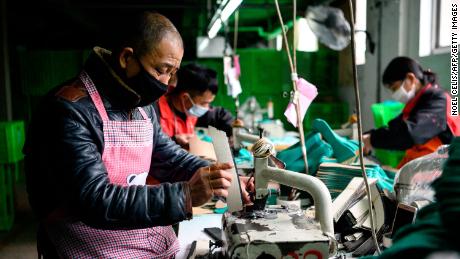
“The return to economic normality in China has been very slow since the coronavirus outbreak,” wrote Louis Kuijs, head of Asia Economics at Oxford Economics, in a research note, pointing to the poor trade data and last week’s surveys of activity in the country’s manufacturing and services sector.
Oxford Economics now expects China’s economic growth to contract 2% in the first quarter compared to the prior quarter, though Kuijs wrote that there should be a “robust recovery” through the rest of the year.
Kuijs wrote that the situation should “turn the corner” soon as people return to work and companies catch up on lost activity.
But others pointed to the spread of the coronavirus overseas as a continued cause for concern.
“China may slowly be returning to work, but manufacturers will now likely be facing an international fall in demand,” wrote Jeffrey Halley, senior market analyst for Asia Pacific at Oanda.
— Matt Egan contributed to this report.







