

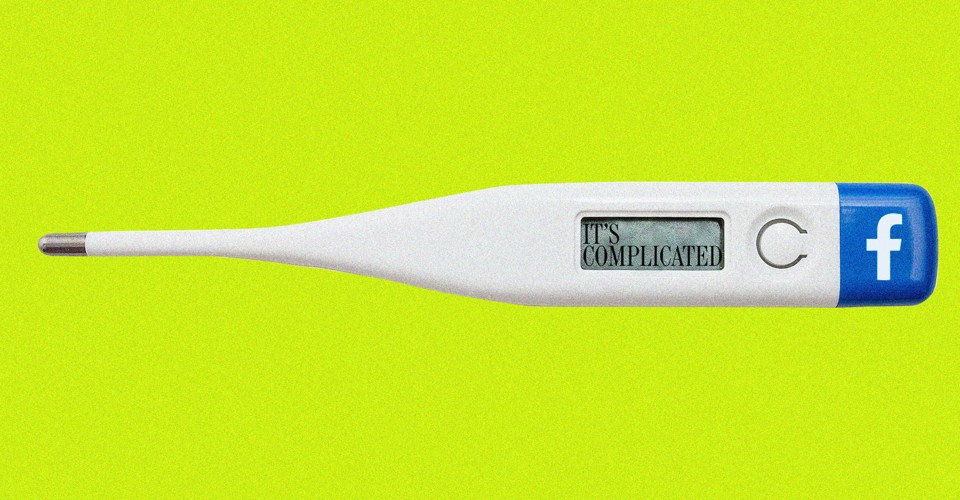
Facebook Preventive Health targets users in broad strokes using only two data points: age and gender. If you opt in to the feature, Facebook will send you checkup-reminder notifications and suggest nearby sites for flu shots, cancer screenings, and blood-pressure tests, among others. In an October blog post, Abnousi said the feature will also suggest free clinics for the uninsured.
Read: Google’s totally creepy, totally legal health-data harvesting
A spokesperson for Facebook denied that the Preventative Health tool is related to the Building 8 data-sharing proposal. Preventative Health, like many of the health initiatives led by Silicon Valley, doesn’t fall under the purview of HIPAA, the 1996 federal law protecting private patient information. Many experts say HIPAA is outdated, because its narrow definition of data collection does not cover the way tech companies collect and process health information.
“Physicians swear an oath to keep an individual’s data confidential,” Jesse Ehrenfeld, chair of the American Medical Association Board of Trustees, told me over email. “There’s currently no such obligation for technology companies and data aggregators or the data brokers to whom they might sell information.”
When reached for comment, Facebook referred me to two October blog posts explaining that the Preventative Health tool’s data are never shared or sold to third parties. (A notable exception, however, is if users “like” a specific health-care provider, drug, or hospital. Those data are added to the company’s ad-targeting machinery.)
But for Facebook, the real value of the tool isn’t in direct monetization. It’s in becoming an integral part of yet another facet of users’ lives. Historically, this appears to be Facebook’s operating strategy: Move into a largely unregulated space, leverage the platform’s unmatched ubiquity to create a highly convenient product within that space, and then turn convenience into dependence into more time spent on the platform. Facebook hastened its ascent by monetizing social data and turning likes into massive ad revenue. Then it launched new products like Messenger, and grew its empire by acquiring Instagram and WhatsApp, both of which generated ever more data. What started as a spin on an online yearbook became new products, which attracted new users, and on and on it went. As Facebook moves into health care, its future success will probably look like its past success.
The Preventative Health tool is launching at a time when not nearly enough people have consistent access to preventative care. Many people usually wait until they’re sick before seeing a professional. As recently as 2015, only 8 percent of adults received the recommended “high priority” health screenings, according to a study from the Department of Health and Human Services’ Agency for Healthcare Research and Quality. Most people get some essential screenings, but very few receive all of them. The poorest Americans, especially those living in rural communities, have the least access.







