There’s a subscription service for everything these days – or at least, that’s how it seems.
Subscription services and direct-to-consumer models are currently all the rage as established brands and start-ups alike realise they can cut out the middleman by delivering a personalised, tailored product directly to the consumer – and in a way that builds long-term customer loyalty and revenue.
From snack boxes to razors, beauty products to streaming services, if you can think of it, there’s probably a subscription service for it. Over the past ten years, the subscription market has gone from primarily playing host to small, inventive start-ups to a thriving, booming sector that includes a number of major brands. Recent entrants into the subscription market include Nike, which recently launched Adventure Club, a subscription service for children’s shoes; and Tesco, which is launching a new subscription scheme, Clubcard Plus, in connection with its Clubcard loyalty programme.
But does every product work as a subscription service? What makes a subscription service worth paying for, and what can you do to make a subscription service attractive to consumers? I recently attended a panel at Ecommerce Expo in Olympia, London, where Sally Scott, UK Managing Director at Birchbox, and Laurent Guillemain, UK CEO at HelloFresh, discussed the unique characteristics of subscription services, how they make them work in their respective businesses, and whether subscription models could be the future of ecommerce.
Here are some highlights from the discussion.
What makes a viable subscription service?
Panel chair Tom Morgan, Director of Digital at the Spectator, asked Scott and Guillemain what they each thought makes something a viable subscription service. Can anything be sold as a subscription?
Guillemain stated that not every product type is suitable for a subscription; to make something work as a subscription, there has to be a “regular incentive to buy”. He and Scott also drew a distinction between products that you need – for example, food and toiletries – and products that you want – which might be something like a wine subscription or beauty products.
HelloFresh is an example of the former: it’s a recipe box subscription service, and everyone needs to eat meals. However, not everyone might have time to cook, or feel incentivised to, so the added value that HelloFresh’s subscription service provides – and similar recipe box subscription services like Gousto or Mindful Chef – is in taking the effort out of shopping for ingredients, looking up recipes, and preparing them.
With that said, the necessity is combined with an element of “want”, because subscribers to HelloFresh likely also want healthy, freshly-cooked food, and are willing to pay a little extra to have that delivered to them.

Birchbox, as a beauty subscription box, falls more squarely into the “want” category. Scott said that she believes a good subscription product is about personalisation and providing something that is unique to the customer every month – which is how subscription services like Birchbox persuade customers to subscribe rather than simply buying makeup and hair products in the shops or online. Birchbox’s goal, said Scott, is to “surprise and delight” its subscribers with every box.
Birchbox also provides its customers with beauty products that they can’t get access to normally. The majority of Birchbox’s UK subscribers are regional, with only 7% based in London, because the subscription service makes products available to them that they can’t buy in their area.
Once you’ve identified a viable concept for a subscription business, setting the right price point can also be a challenge. During a Q&A session with the panellists, one audience member who runs an underwear and sock subscription business asked for advice on how to keep customers from unsubscribing. Her company offers a subscription for £10 per month, but customers regularly stated that the product was too expensive when they unsubscribed. Guillemain advised her to try A/B testing different price points and offers until she found a price that people were willing to stick with.
However (and this is a personal opinion, not an opinion expressed by either of the panellists) it might also be that certain products just don’t work well as a subscription service. Underwear and socks are a tricky proposition for a subscription, because people only need them semi-regularly, but they also don’t work as a rental item, which is how other clothing subscriptions like Rent the Runway succeed with a subscription model. They also aren’t something that you might want curated for you, unlike a subscription service like Thread, which offers a personalised styling service for men’s clothing.
Even major brands can encounter this problem: Nike’s Adventure Club hopes to persuade parents to pay for monthly, bi-monthly or quarterly shoe deliveries for their children aged two to 10 – but per the American Orthopaedic Foot & Ankle Society, children over the age of three only need new shoes two or three times per year, which could prove an obstacle for Nike’s subscription service in future.
Of course, even when your subscription service has the right price point and a viable business case, customers will still unsubscribe. Scott noted that the top reason for customers unsubscribing from Birchbox is product fatigue: they feel as though they have too many products, or the products aren’t new and exciting enough for them to feel like the service is worthwhile.
To combat this, Birchbox allows customers to be flexible with their deliveries, with options to skip a box or take a break rather than unsubscribing altogether. It also looks for ways to add value to the service that will persuade customers that it’s worth staying subscribed.
Adding value to a subscription: personalisation is the key
Personalisation has evolved to become one of the core elements of many subscription services, as brands seek to go the extra mile to tailor a product to their customers and make it valuable to them. This arrangement is a win-win for both customer and brand: over the course of learning about a customer’s tastes, the brand gathers all kinds of invaluable customer data, which it can then pour back into improving the customer experience even further.
Brands like Graze (a snack box subscription service) will encourage customers to rate their boxes, continually giving feedback on new snacks as they’re added to the range. Similarly, digital subscription services like Netflix and Spotify have earned a reputation for using data from a customer’s viewing or listening history to tailor recommendations and create a personalised stream of media. Because a customer with a subscription has a long-term relationship with a brand, that data can be built up and refined over time.
Scott explained that Birchbox asks new subscribers to fill out a ‘beauty profile’ that will dictate which products get put into their box – everything from hair and skincare routine to the type of makeup they prefer using. Based on this survey, there are around 60 different combinations of products that can be assembled in a box and sent to the customer.
Birchbox is also attentive to customer feedback: Scott reported that Birchbox customers tend to be “very vocal” about their subscriptions, which helps the brand to learn about how they use their products.
Panel chair Tom Morgan raised the question of subscription fatigue: is there a cap at what constitutes good value for money when customers have so many different active subscriptions?
Scott answered that a lot of the value in Birchbox comes from “opening up a box that’s made just for you and sharing it with your friends.” Her own Birchbox subscription provides her with “me time” and an excuse to pamper herself a little. Birchbox also puts a lot of thought into its box presentation – “people care about the box design as much as what goes in it,” said Scott.
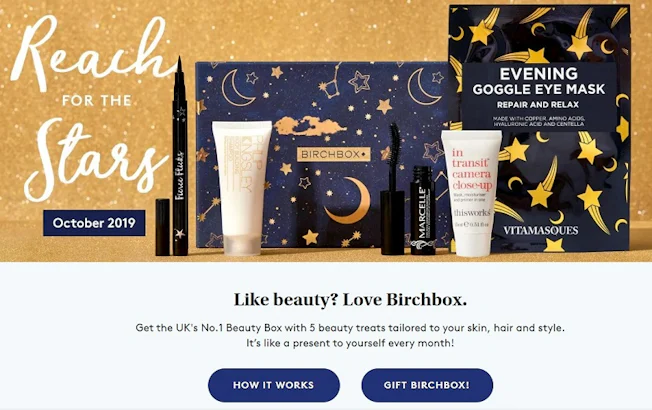
“It’s like a present to yourself every month!” Birchbox aims to “surprise and delight” customers with their beauty box, giving them an experience that they can’t get by simply buying beauty products off-the-shelf.
These are the kinds of ‘added extras’ that subscription services offer that they hope will keep customers invested in their product and persuade them to maintain their subscription.
Subscription brands have other obstacles to overcome that don’t affect brands with a ‘regular’ retail model to the same degree. One audience member pointed out that consumers today are increasingly environmentally conscious and might be more selective about the subscription products they choose due to concerns about the environmental impact.
Of course, subscription brands have thought of that, too: numerous ‘eco-friendly’, sustainable and ethical subscription services have sprung up to cater to consumers who are concerned about their impact on the planet. These include the likes of Authentic House, a UK-based subscription service that offers sustainable clothes, cosmetics and homeware, and aims to educate customers about ethical living; or Shorebox, a “zero-waste” subscription box that helps customers to cut down on single-use plastics. Many of these services also make their products available in online shops for customers to buy ‘normally’, using the subscription box as a way of introducing customers to their brand and product range.
Ultimately, the ability to evolve their retail model might be what dictates whether a subscription service can survive in an increasingly competitive market. Birchbox’s business model revolves in part around leading customers to buy full-size products from their online shop, and the brand has multiple revenue streams.
Similarly, Graze has diversified from a pure subscription model to selling multipacks of its signature snacks in its online shop (with discount vouchers offered to subscribers on a regular basis) and offering its products in supermarkets. On the other side, brands like Nike and Tesco are launching subscription products to accompany an existing retail offering.

Overall, it seems clear that there are numerous advantages to launching a subscription service as long as the right product is being offered, and the brand puts sufficient care and energy into delivering a service for customers that they can’t just get off the shelf. Kirsten Green, Founding Partner of Forerunner Ventures, told Fast Company in an interview that to her as an investor, “the real question is whether the subscription enhances the experience of that particular product. If it doesn’t, then it is ultimately just a gimmick.”
While brands who launch a subscription service simply to “cash in” on a booming trend likely won’t go far, there seems to still be plenty of room in the market for well-thought-out subscription services that are prepared to learn from their customers and adapt their business accordingly.