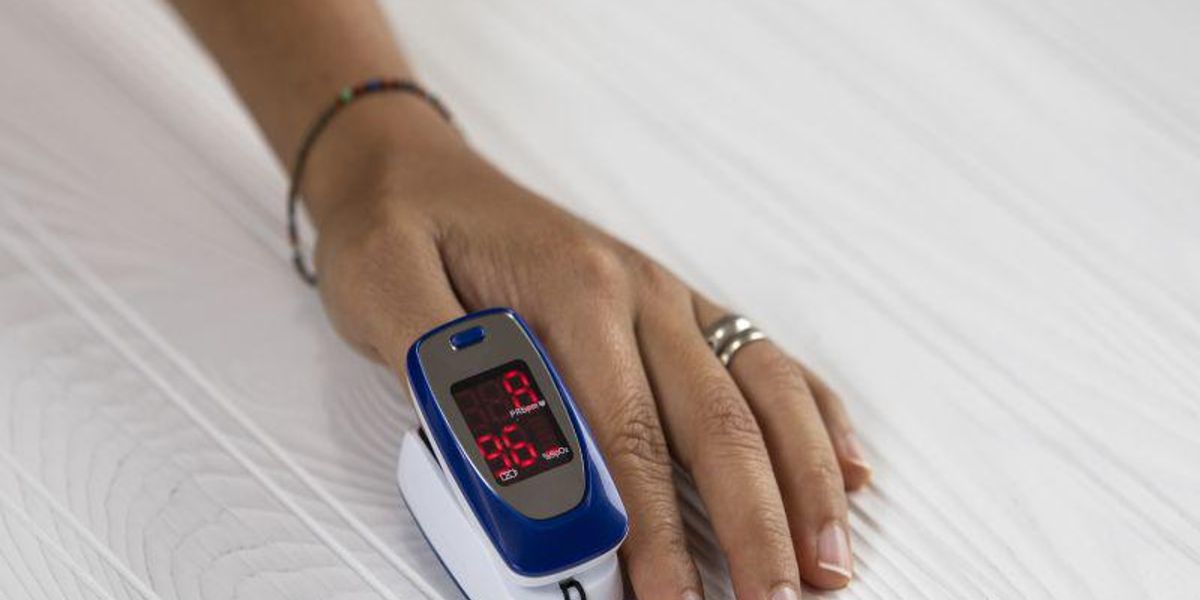
FRIDAY, Dec. 18, 2020 (HealthDay News) — The fingertip devices that hospitals use to monitor patients’ oxygen levels might be less accurate in people with dark skin, a new study suggests.
At issue are pulse oximeters — small medical devices that clip onto a fingertip and estimate how much oxygen is making it into the blood. They are routinely used in hospitals to help providers make treatment decisions.
And during the COVID-19 pandemic, pulse oximeters have increasingly made their way into the hands of lay people. Fairly cheap home devices are available, and people with milder cases of COVID have used them to monitor their oxygen levels.
But the new study suggests that Black patients are at greater risk of having a falsely reassuring reading on pulse oximetry than white patients are.
Researchers at the University of Michigan Hospital found that in cases where Black patients appeared to have adequate oxygen levels on pulse oximetry, their blood oxygen was actually low 12% of the time.
In contrast, the mismatch happened in white patients less than 4% of the time, the researchers report in the Dec. 17 issue of the New England Journal of Medicine.
“It really surprised us all,” said lead researcher Dr. Michael Sjoding, an assistant professor of internal medicine at Michigan Medicine.
The impetus for the study was, like so many things in medicine, the pandemic.
Early on, when Sjoding and his colleagues were seeing more and more COVID patients — many of whom were Black — they noticed a recurring discrepancy: Some patients’ pulse oximetry readings were not matching up with arterial blood gas tests, which sample patients’ blood to directly gauge oxygen saturation.
To dig further, the doctors looked back at over 10,000 instances where patients had nearly simultaneous pulse oximetry and arterial blood gas measurements. The readings came from 1,333 white patients and 276 Black patients treated between January and July of this year.
Overall, the study found, discrepancies were nearly three times more common among Black patients than white patients.
Sjoding’s team then looked at data from intensive care units at 178 other hospitals, collected in 2014 and 2015. The same pattern emerged: Among Black patients with normal pulse oximetry readings, arterial blood gas measurements were abnormal 17% of the time.
That compared with 6% among white patents.
The notion of a racial bias in pulse oximetry is not new. Back in 2005, a small study found that the devices tended to overestimate oxygen levels in dark-skinned patients.
But the finding did not “permeate” practice, Sjoding said, and many providers may not be aware of the issue.
Dr. Albert Rizzo is chief medical officer of the American Lung Association. He said there are various well-known limitations of pulse oximeter readings. Factors ranging from heart rate to blood circulation in the fingers to nail polish can affect measurements from the finger-clip devices.
This study, Rizzo said, “does point out that there is limited data regarding accuracy, depending on racial groups.”
As for why skin tone would matter, Sjoding explained the basic theory: Pulse oximeters work by emitting certain wavelengths of light, and skin pigment may absorb some of that light.
Both he and Rizzo stressed that hospital staff need to consider factors other than pulse oximetry numbers.
“Pulse oximetry is not a stand-alone result or value,” Rizzo said, “but needs to be used in the patient context.”
The same goes for people using a home device to monitor a milder case of COVID.
Sjoding said that anyone with worsening breathing problems should heed those symptoms, rather than going by a seemingly “good” pulse oximetry reading.
The findings also point to a broader issue, Sjoding said. Historically, medical devices have been developed using studies of mostly white individuals. And the discrepancies seen with pulse oximetry illustrate the shortcomings of that.
“We need to double down in evaluating these technologies, to make sure they work equally well for all of the patients we treat,” Sjoding said.
More Information
The U.S. Centers for Disease Control and Prevention has more on monitoring COVID-19 at home.
SOURCES: Michael Sjoding, MD, assistant professor, internal medicine, division of pulmonary and critical care medicine, University of Michigan Medical School, Ann Arbor; Albert Rizzo, MD, chief medical officer, American Lung Association, Chicago; New England Journal of Medicine, Dec. 17, 2020