

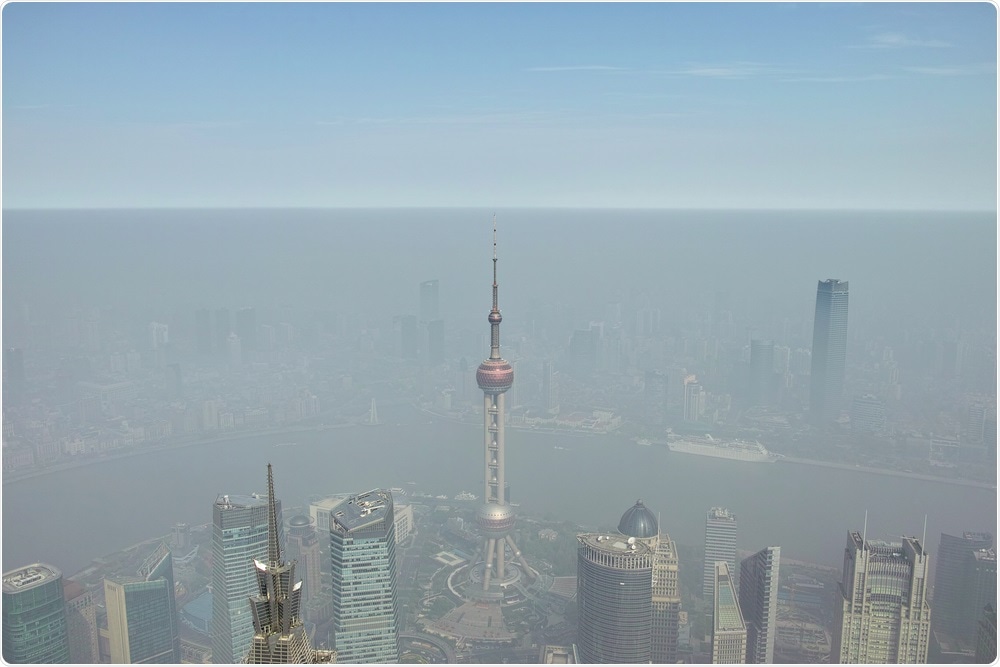
Evidence from China indicates that higher air pollution could lead to increased transmission of severe acute respiratory syndrome coronavirus 2 (SARS-CoV-2), leading to more COVID-19 cases.
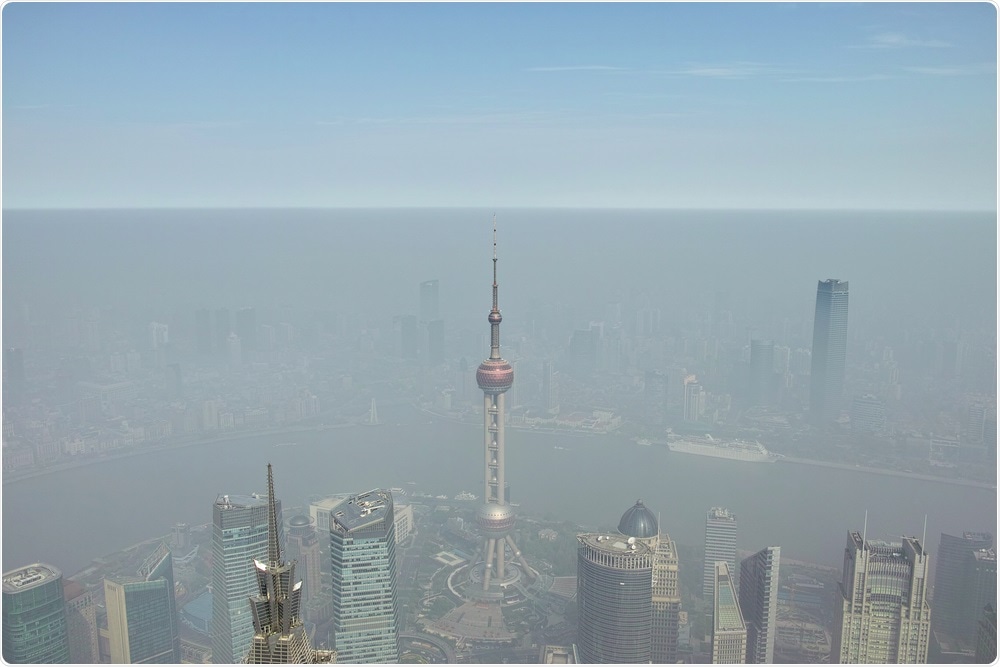
The rapid spread of the SARS-CoV-2 virus across the globe has led to much effort to understand virus transmission. Some factors identified include age, gender, and comorbidities.
One factor that can affect virus transmission is air pollution. However, much less is known about how it can affect SARS-CoV-2 virus transmission.
Air pollution can spread the virus by increasing infection susceptibility, impairing the immune system, and making it difficult to resist infection. In addition, aerosols in the air can help the virus live longer and increase the chances of infection.
Several recent studies have linked air pollution with the spread of the SARS-CoV-2 virus. However, most studies use linear regression models to relate air pollution and COVID-19 cases and deaths. But, virus transmission is exponential, and not taking this into account may give inaccurate estimates.
For COVID-19, a second challenge is implementation prevention strategies, because lockdowns, social distancing, and other interventions not only change transmission dynamics but also air pollution levels.
In a new study published on the preprint server medRxiv*, researchers have estimated the effect of air pollution on the transmission of COVID-19 in China, which has very high levels of air pollution.
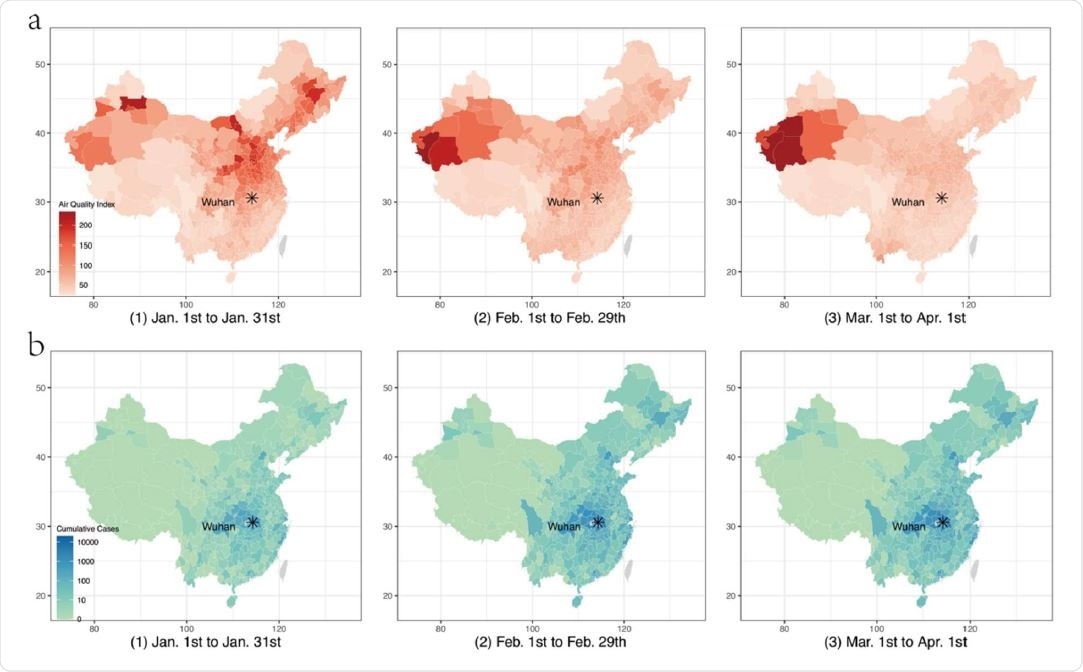
Data on COVID-19 infections and air pollution in China. A. The trend of the Air Quality Index (AQI). Higher AQI means worse air pollution. AQI is a comprehensive measure of air pollution: the index is constructed using PM2.5, PM10, SO2, CO, O3, and NO2 concentrations (See Methods Materials). B. The Confirmed COVID-19 cases. The grey color denotes the no-data area.
Modeling effect of air pollution
The researchers from the Hong Kong University of Science and Technology chose the Susceptible-Infectious-Recovered-Deceased (SIRD) model, widely used to describe the transmission of infectious diseases, and adapted it to account for the exponential epidemic growth.
Using the Instrumental Variable (IV) approach and thermal inversion, they separated air pollution from other confounding variables. Thermal inversion occurs when a layer of warm air lies on top of a layer of cooler air. The low density warmer air traps pollutants, leading to increased pollution. Since thermal inversion is a complicated meteorological phenomenon that occurs randomly, the authors were able to remove the effects of interventions on the transmission.
For the analysis, the researchers used COVID-19 occurrence data and air quality data at a day-by-city level from January 1 to April 1 2020, in China.
They found thermal inversion to be a strong predictor of pollutant particle concentration. Using the predicted air pollution, they modeled the virus transmission rate.
Pollution increases COVID-19
The researchers found that increased air pollution increased virus transmission. A 14.3% increase in the air quality index (AQI) increases transmission 2.8 percentage points two to 13 days after exposure to pollution. This result remained even after including lockdown periods and data from Wuhan, where the outbreak originated.
They found that if the AQI increases by 10, the infection doubling time would decrease to 2.5 days from about 2.8 days.
The authors also modeled the results for specific air pollutants like sulfur dioxide, NOx, carbon monoxide, PM2.5, PM10. They found the results were similar to those of the combined air pollution model.
A 10% increase in PM2.5, sulfur dioxide and carbon monoxide increased the virus transmission rate by 1.4, 1.1, and 3 percentage points, and they found the results to be statistically significant.
However, with an increase in ozone concentrations, they found a slight decrease in virus transmission, but the result was not statistically significant. This could be because ozone concentrations often negatively correlate with other pollutants, or the ozone changes the virus structure.
Furthermore, the researchers also estimated excess COVID-19 cases due to air pollution. For this, they hypothetically used an AQI of less than 100. In China, when the daily AQI is below 100, the city is considered to have good or moderate air quality.
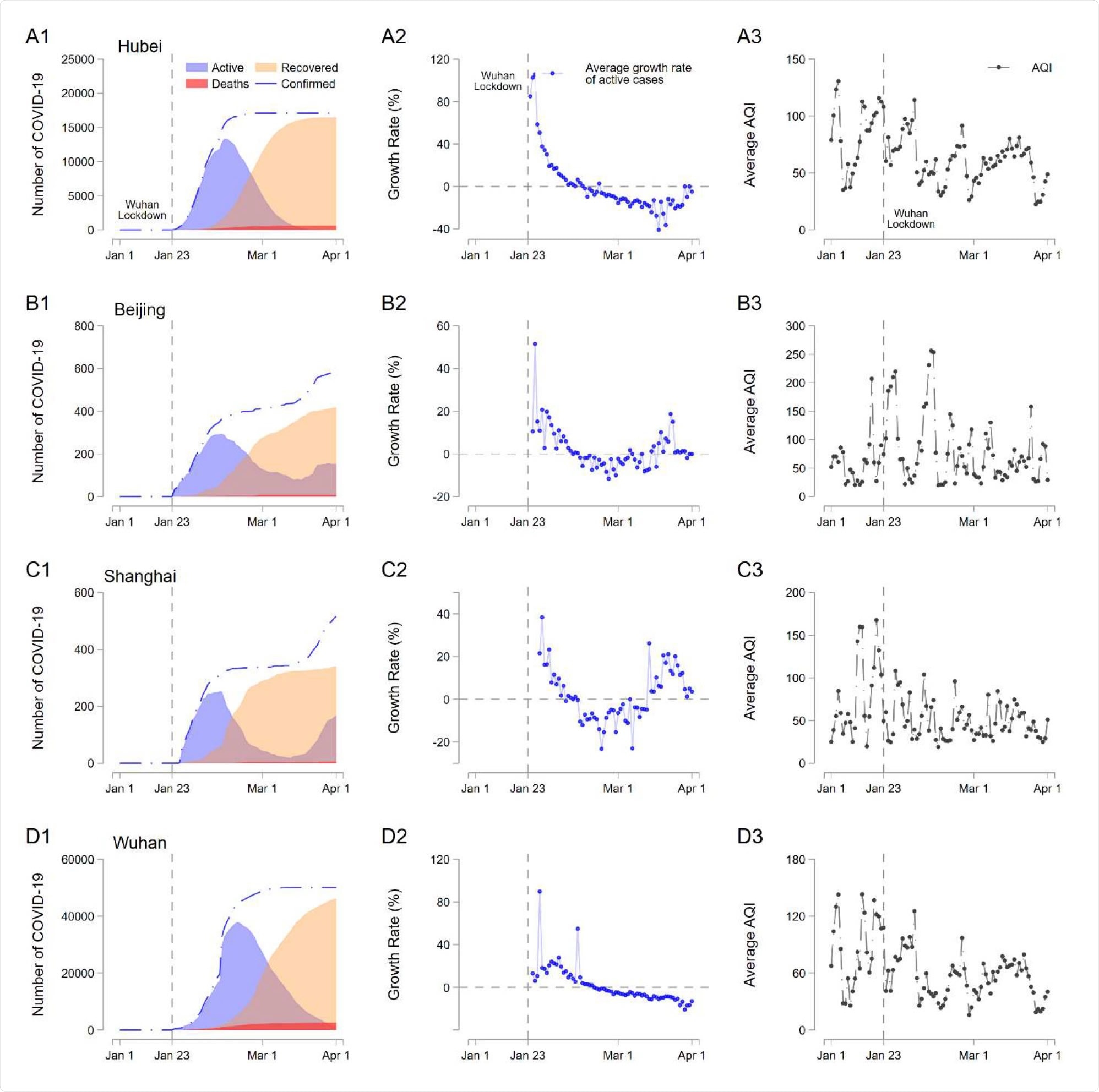
COVID-19, its growth rate, and the Air Quality Index in Hubei Province, Beijing, Shanghai, and Wuhan. These graphs show the COVID-19 outbreak (number of active, recovered, and deceased from COVID-19), the infection growth rate, and AQI in each region.
Reducing air pollution may lower COVID-19 cases
They found that the daily virus growth rate could have been reduced by about 2% if all the cities had maintained an AQI of 100. For example, the highest active number of infections recorded in China on February 14 was 21,855, which could have dropped to 16,714, a decrease of almost 25%, if the air quality was better. The total number of cases could have been reduced by almost one-fourth if there was reduced pollution.
The authors note a few limitations of the study. They used confirmed active cases in their model, which could be lower than the actual number of cases and may not be the true picture of the outbreak transmission. Furthermore, there is fewer data to correlate deaths from COVID-19 and air pollution, and the authors have not studied that.
How pollution increases COVID-19 infection is particularly relevant for countries like India, Indonesia, and Pakistan that have higher pollution levels from coal, manufacturing, and other related economic activities. “Policymakers should thus consider adopting more stringent pollution control policies in their war to combat COVID-19,” write the authors.
*Important Notice
medRxiv publishes preliminary scientific reports that are not peer-reviewed and, therefore, should not be regarded as conclusive, guide clinical practice/health-related behavior, or treated as established information.






