

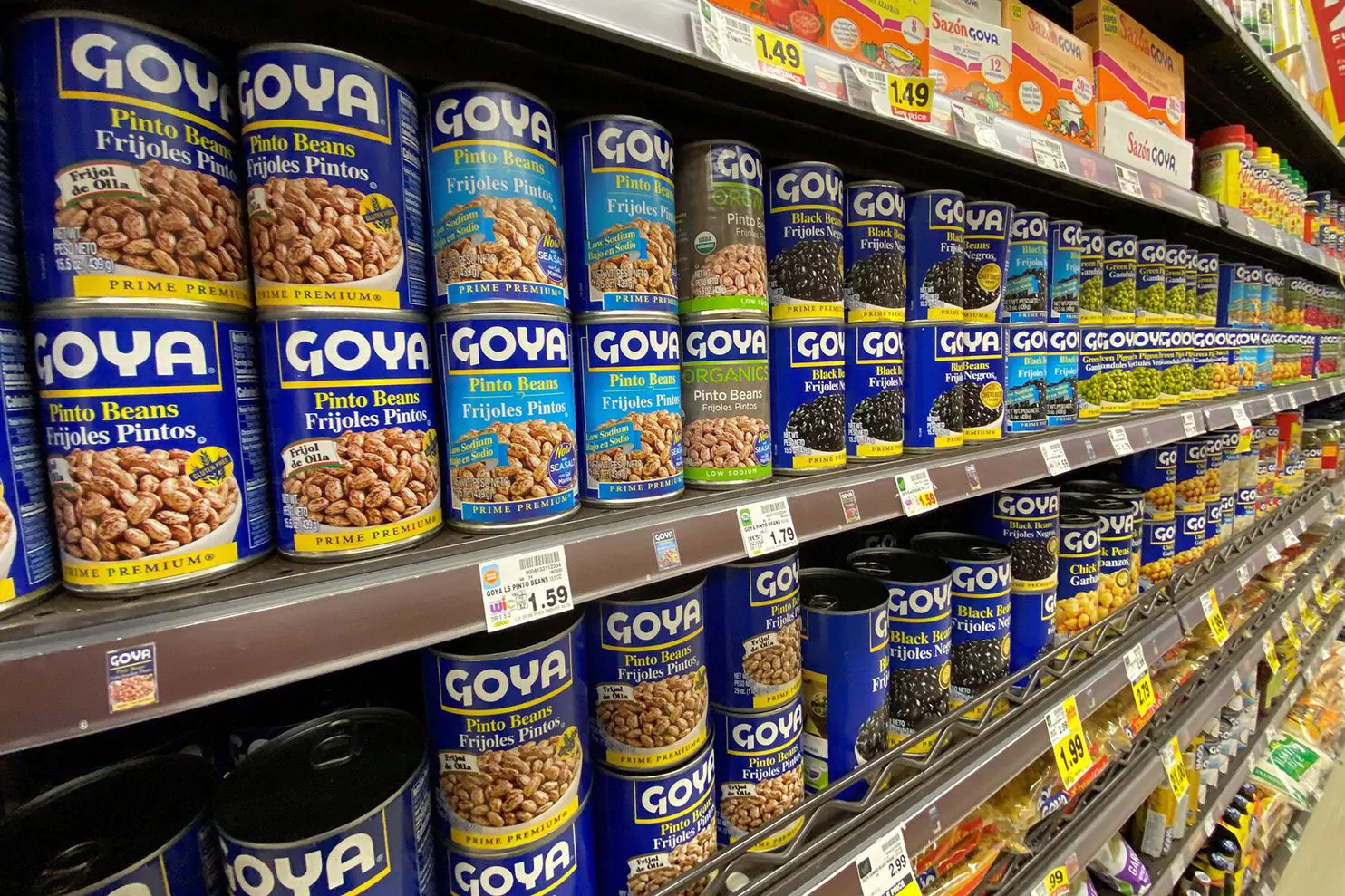
First came the boycott of Goya foods after the company’s CEO, Robert Unanue, appeared this month at a White House event and praised President Trump.
[A Goya boycott has people sharing alternatives for adobo, sazón and more pantry staples]
That was swiftly followed by a “buycott,” the reaction from Trump supporters who pledged to buy up the brand’s products — a movement egged on by Trump and his daughter, Ivanka, who posed with Goya beans in photos posted on social media.
It’s unclear whether either is affecting the private, family-owned company’s sales, or if they are canceling each other out. But experts say that, historically, consumer boycotts typically don’t operate that way. So, how do they work?
As consumers think more about who they are buying their food from, whether they’re bypassing the industrial system and purchasing directly from farmers or directing their dollars to black-owned restaurants, it’s a timely question.
[Bacardi targeted women with its new reduced-alcohol vodkas. It went over as well as you’d expect.]
Brayden King, a professor at Northwestern University’s Kellogg School of Management, says that, first of all, boycotts can be effective. In a 2011 study, he found that about a quarter of boycotts that got national media attention got the targeted company to make some concessions. “That might seem low,” he says. “But compared to everything else that activists do, that’s success.”
But even boycotts that get lots of attention on social media and in the news typically don’t affect sales significantly, some experts note.
“The number of people who actually boycott is just not going to be that high,” says Julie Irwin, a professor at the McCombs School of Business at the University of Texas at Austin. That may be because some people who publicly support a boycott were never consumers of the product in the first place. And then there are people who say they’re boycotting, but don’t.
“There is some research that people say they aren’t buying a product, but they actually do,” Irwin says. “This is a case where what people say is more important than what they do.”
That seems to run counter to the very idea underpinning a boycott, but consumers’ wallets might matter less than their megaphones. King says the power of a boycott comes down to companies fearing “reputational harm,” which is business-speak for a very bad look, one that could affect a company in the short and long runs.
[The Goya boycott is something much more than cancel culture]
A ding to a publicly traded company’s reputation could cause its stock price to dip, he notes. Boycotts can attract the attention of lawmakers or turn off a potential buyer for a company that is hoping to be acquired. And they can make it more difficult for a company to attract top employees.
Sometimes, they can get in the way of business plans. That was the case for Chick-fil-A, which was the subject of a 2012 boycott after its chief executive made comments disparaging same-sex marriage. At the time, the fast-food chain was expanding into new markets from its stronghold in the South, and the boycott led the mayors of Chicago, San Francisco and Boston to tell Chick-fil-A it wasn’t welcome. While conservatives led a campaign in support of the company, it ultimately stopped giving money to charities that had angered the LGBT community.
So what would success look like for those boycotting Goya?
Activists have said they hoped Unanue would tone down his support of Trump, but he only doubled down on it in a Fox News interview the day after his Rose Garden remarks. Since then, the company has not addressed the issue, instead using social media channels to share recipes for mango ice pops and bean salad, and to promote its charitable efforts. A representative for Goya did not return a call seeking comment.
Meanwhile, a GoFundMe campaign organized by Chase Harper, a producer for the Trump-aligned Sinclair Broadcasting, has raised more than $325,000 to purchase Goya goods and donate them to food pantries. “I want to thank everyone again so much for your generosity and willingness to stand up to cancel culture!” Harper wrote in an update to donors last week.
[Trader Joe’s removing ‘racist packaging’ after online petition]
Consumers, aided by hashtags and online petitions, have been effective recently in moving food companies to act. The Trader Joe’s grocery chain announced last week that it would speed up the removal of labels with stereotypical names such as Trader Jose’s and Trader Ming’s after a high school student’s Change.org petition gained attention. And after a PR pitch for its new Plume & Petal line of vodka “for women” was widely mocked on social media, Bacardi toned down the gender-specific branding.
Suneal Bedi, an assistant professor at the Kelley School of Business at Indiana University, says that whether they hit companies’ bottom lines or not, boycotts are an important way for people to counter corporations’ outsize influence.
“In the marketplace of ideas, it feels like the scales are tipped to these big companies,” Bedi says. “A boycott is a way the consumer can tip the scales or at least even them out.”
More from Voraciously:
Amid accusations of discrimination, Bon Appétit staff vows to ‘dismantle racism’







