

Still some elected officials have questions. Last week, as Ohio lawmakers discussed whether to declare the public health crisis, Republican state Sen. Steve Huffman wondered aloud if more black residents were getting COVID-19 because they have poor hygiene.
“Could it just be that African Americans or the colored population do not wash their hands as well as other groups? Or wear a mask? Or do not socially distance themselves?” said Huffman, who is an emergency room doctor. “Could that be the explanation for why the higher incidence?”
Huffman clarified that he meant to say “people of color” rather than “the colored population,” and that he had asked the question to further his understanding. His employer, TeamHealth, subsequently fired him.
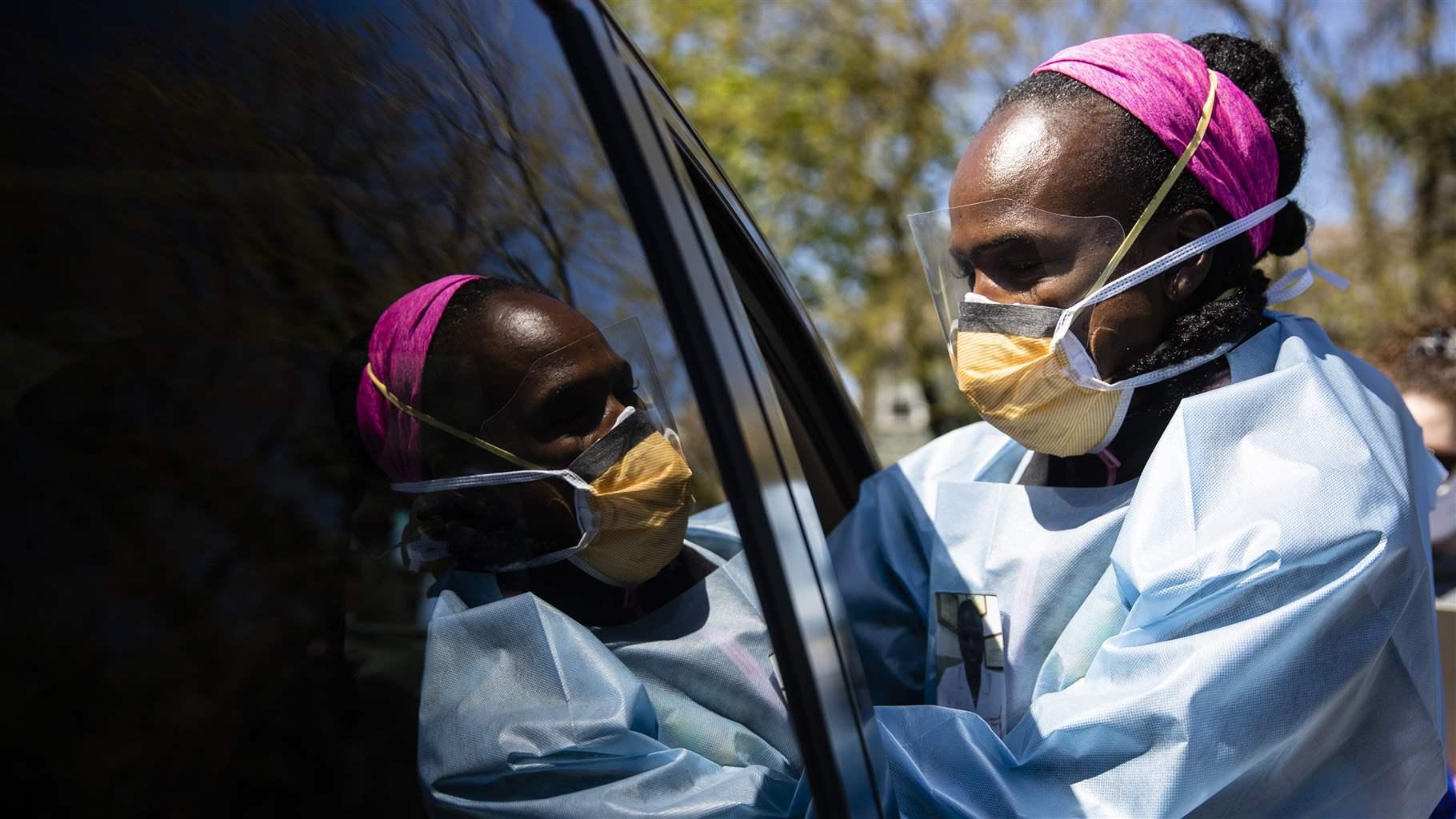
The COVID-19 pandemic, according to one study, is killing African Americans at a far greater rate than white Americans. Underlying conditions such as heart disease, diabetes and asthma make people more vulnerable to the virus, and black Americans are more likely to have those diseases than white Americans.
Higher rates of poverty, unemployment, poor housing and toxic environmental exposure, as well as less access to quality medical care also contribute to poor overall health in black communities.
But after class and poverty are accounted for, African Americans still have worse health outcomes than white Americans.
Public health studies have shown that the racism African Americans experience in their daily lives creates stress that affects their internal organs and overall physical health. This results in a higher prevalence of chronic diseases such as high blood pressure, asthma and diabetes, and a shorter lifespan.
The health equity gap between wealthy African Americans and well-to-do whites is even wider. A 2018 study by researchers at Ohio State University found that “racial disparities in health tend to be more pronounced at the upper ends of the socioeconomic spectrum.” The cause? “Acute and chronic discrimination,” the researchers said.
Naming the Problem
By all accounts, Wisconsin was the first state where local governments declared racism a public health emergency.
In 2017, the University of Wisconsin Population Health Institute began talking to the Wisconsin Public Health Association about urging local governments, health care organizations and individuals to declare racism a public health emergency and commit to fighting it. The first to do so was Milwaukee County, home to Milwaukee, which has been deemed one of the most segregated cities in the country.
According to Nicole Brookshire, director of the county’s Office on African American Affairs, more than 4,000 county employees, including judges and police, have received racial equity training since last year’s declaration. The county also has developed a budgeting tool its agencies must use to ensure that expenditures, budget cuts and capital investments are racially equitable.
Paula Tran Inzeo, director of community engagement for the University of Wisconsin institute, said she considers the initiative a success because local governments, hospitals and other organizations continue to sign on. “That’s a measure of progress, because you can’t sign on unless you commit to taking action.”
In Maryland last week, Councilmember Will Jawando asked the Montgomery County Council to declare racism a public health emergency.
“People tend to think of racism as an individual thing that’s regrettable,” he said in an interview with Stateline. “But they don’t connect the 400-plus years of systemic, legal racism that leads to death for many black people.”
Jawando said he plans to follow up with a proposal to change police regulations by raising the standard for justifiable use of deadly force and requiring police to intervene if they see another officer wrongfully using force.
“Whether it’s police-involved killings or disparate health outcomes where black patients can’t get treatment because they’re not seen as being sick, or financial redlining in certain ZIP codes, food deserts, or people of color getting hit by cars more often because their communities aren’t walkable, it’s ultimately due to racism,” Jawando said.
At least 1 in 4 COVID-19 deaths in Montgomery County have been black residents, Jawando said. Of the roughly 1 million county residents, 20% are black. As in other parts of Maryland, the county is deploying mobile coronavirus testing units to highly affected, primarily black communities in response to the unequal death toll.
The county’s health director, Dr. Travis Gayles, said the public health emergency declaration is intended to go beyond combatting blatant racism to address the implicit bias that he said exists in every sector of the government, as well as in health care.
In a separate effort, the county health agency is asking OB-GYNs to treat pregnant black women as high-risk patients, just as they would older pregnant women of any race, Gayles said. The high-risk designation, he said, ensures additional testing and office visits, which could result in lower black mortality, regardless of any implicit bias the doctor may have.
“I don’t think implicit bias will magically disappear,” Gayles said. “But the legislation forces the conversation to be had.”
Benjamin, the public health association director, said the rising tide of local public health declarations across the country could mark the beginning of better health outcomes for people of color.
“You can’t solve a problem until you define it,” he said. “So, the first step, the first thing you must do is name racism. Name it when you see it, you’ve got to call it for what it is. If it hurts people, if it kills people, it’s a public health issue.”







