
GLOBAL RESEARCH SYNDICATE
No Result
View All Result
  • Login
  • Latest News
  • Consumer Research
  • Survey Research
  • Marketing Research
  • Industry Research
  • Data Collection
  • More
    • Data Analysis
    • Market Insights
  • Latest News
  • Consumer Research
  • Survey Research
  • Marketing Research
  • Industry Research
  • Data Collection
  • More
    • Data Analysis
    • Market Insights
No Result
View All Result
globalresearchsyndicate
No Result
View All Result
Home Data Collection

Campaigners call for tougher approach after no change in UK salt intake in decade | Food Industry News

globalresearchsyndicate by globalresearchsyndicate
March 26, 2020
in Data Collection
0
Campaigners call for tougher approach after no change in UK salt intake in decade | Food Industry News
0
SHARES
5
VIEWS
Share on FacebookShare on Twitter

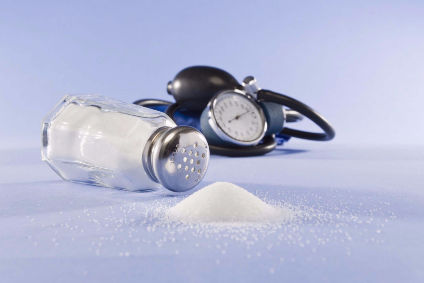
Salt - levels higher than PHEs target

Salt – levels higher than PHE’s target

The UK government has failed to meet its own salt reduction guidelines, leading a campaign group to call for “stricter and more comprehensive targets”.

The 2018/19 National Diet and Nutrition Survey from the government body Public Health England (PHE) has revealed that estimated salt intake for adults aged 19 to 64 years was 8.4g a day, which is 40% higher than the government recommended maximum of 6g a day.

Additionally, the report revealed there were no “statistically significant changes in salt intake” between 2014 and 2018/19 and no progress over a ten-year period.

“For men and women combined, the linear trend from 2008/09 to 2018/19 was close to zero, indicating no change in estimated population salt intake over this period,” it said.

PHE points out that there is an established relationship between salt intake and risk of high blood pressure (hypertension), which is a risk factor in the development of cardiovascular disease (CVD), such as heart disease and stroke.

The fact that salt intake for adults remains at a level thought too high by the organisation in charge of its reduction has angered the campaign organisation Action on Salt.

In a statement responding to the PHE report, it said: “Whilst the findings from Public Health England’s latest 2018/19 survey are not surprising, they areĀ nonethelessĀ disappointing – with noĀ significantĀ change reportedĀ since 2014.Ā 

“This is a direct consequence of a coherent salt reduction programme not being enforced by the government and general non-compliance by some of the food industry.”

Action on Salt has called for a tougher response. It said: “The government has renewed its commitment to salt reduction in their Prevention Green Paper, so onceĀ the coronavirus pandemic has eased we urge them toĀ enforce stricter and more comprehensive salt reduction targets and create a fair and level playing fieldĀ acrossĀ the whole sector.”

A spokesperson told just-food: “The continued message to the government is to implement more robust salt reduction targets –Ā with proper enforcement.”

The organisation is also calling for food retailers to stock shelves with healthier ranges where possible.

But in a statement sent to just-food, Tim Rycroft, chief operating officer of the Food and Drink Federation (FDF), which represents the UK food industry, said FDF members have “led the way” in voluntarily reducing salt in food.

He said: “Compared to four years ago, FDF member products contribute 14% less salt to the average shopping basket, continuing to build on two decades of steady reformulation work following successive voluntary targets.

“A huge amount of work has already been completed over a long period of time by food manufacturers. Most ingredients in food perform a wide range of functions, and go well beyond adding flavour, such as providing texture or shelf-life. This means taking anything out of food (through reformulation), be it salt, sugar or calories, is not straightforward.

“When reflecting on today’s data and the future work programme for salt, [the] government needs to seriously consider the role that the out-of-home sector can now play in helping to further drive down intakes.”


Related Posts

How Machine Learning has impacted Consumer Behaviour and Analysis
Consumer Research

How Machine Learning has impacted Consumer Behaviour and Analysis

January 4, 2024
Market Research The Ultimate Weapon for Business Success
Consumer Research

Market Research: The Ultimate Weapon for Business Success

June 22, 2023
Unveiling the Hidden Power of Market Research A Game Changer
Consumer Research

Unveiling the Hidden Power of Market Research: A Game Changer

June 2, 2023
7 Secrets of Market Research Gurus That Will Blow Your Mind
Consumer Research

7 Secrets of Market Research Gurus That Will Blow Your Mind

May 8, 2023
The Shocking Truth About Market Research Revealed!
Consumer Research

The Shocking Truth About Market Research: Revealed!

April 25, 2023
market research, primary research, secondary research, market research trends, market research news,
Consumer Research

Quantitative vs. Qualitative Research. How to choose the Right Research Method for Your Business Needs

March 14, 2023
Next Post
Polyamine Market Research Reports Analysis by 2040 – Instant Tech Market News

Large Power Transformers Market Research Reports Analysis by 2026 – Monroe Scoop

Categories

  • Consumer Research
  • Data Analysis
  • Data Collection
  • Industry Research
  • Latest News
  • Market Insights
  • Marketing Research
  • Survey Research
  • Uncategorized

Recent Posts

  • Ipsos Revolutionizes the Global Market Research Landscape
  • How Machine Learning has impacted Consumer Behaviour and Analysis
  • Market Research: The Ultimate Weapon for Business Success
  • Privacy Policy
  • Terms of Use
  • Antispam
  • DMCA

Copyright Ā© 2024 Globalresearchsyndicate.com

Welcome Back!

Login to your account below

Forgotten Password?

Retrieve your password

Please enter your username or email address to reset your password.

Log In
This website uses cookies to improve your experience. We'll assume you're ok with this, but you can opt-out if you wish. Cookie settingsACCEPT
Privacy & Cookies Policy

Privacy Overview

This website uses cookies to improve your experience while you navigate through the website. Out of these cookies, the cookies that are categorized as necessary are stored on your browser as they are essential for the working of basic functionalities of the website. We also use third-party cookies that help us analyze and understand how you use this website. These cookies will be stored in your browser only with your consent. You also have the option to opt-out of these cookies. But opting out of some of these cookies may have an effect on your browsing experience.
Necessary
Always Enabled
Necessary cookies are absolutely essential for the website to function properly. This category only includes cookies that ensures basic functionalities and security features of the website. These cookies do not store any personal information.
Non-necessary
Any cookies that may not be particularly necessary for the website to function and is used specifically to collect user personal data via analytics, ads, other embedded contents are termed as non-necessary cookies. It is mandatory to procure user consent prior to running these cookies on your website.
SAVE & ACCEPT
No Result
View All Result
  • Latest News
  • Consumer Research
  • Survey Research
  • Marketing Research
  • Industry Research
  • Data Collection
  • More
    • Data Analysis
    • Market Insights

Copyright Ā© 2024 Globalresearchsyndicate.com



