

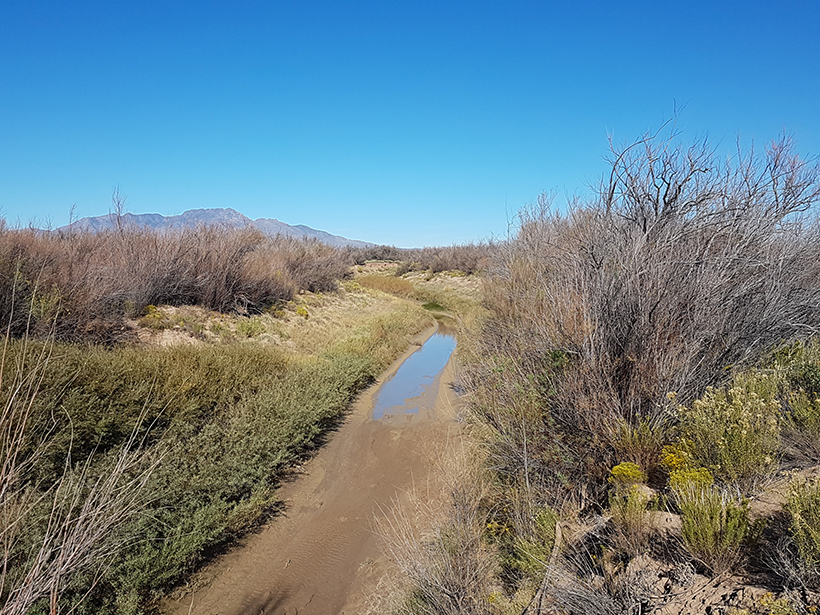
Australia’s third-longest river, the Darling, normally experiences periods of medium to low flow, punctuated by flood events. But vast stretches of the river in New South Wales have been bone dry for the past two summers, and in 2019 the river was dry by early spring.
The lack of flows has left communities along its banks in dire straits, with many trucking in water to serve even basic domestic water requirements. Millions of dollars have been spent building pipelines to distant reservoirs, while groundwater resources have also been put under increased stress to fill gaps. River ecosystems have also felt the impacts acutely, with mass fish deaths being just one example.
Periods of drought are partly responsible for the diminishing flows in the Darling. More important, however, are increasing water withdrawals over several decades that have taken a toll on this river, whose flow has been heavily altered by damming and diversion for irrigation.
The challenges posed by the increasing frequency and duration of no-flow periods in rivers are not unique to arid regions: Over half of the world’s streams and rivers are dry for some part of the year, and the geographic extent of nonperennial waterways is forecast to increase because of climate change and increasing water use. Headwaters in humid regions typically also dry out for part of the year because they drain such small regions. These streams, too, are being affected by climate change.
Altered patterns of drying and flow create hardships in societies (and ecosystems) that use nonperennial waterways for drinking water, irrigation, and other services. Water policies can thus have substantial repercussions for the management of waterways, potentially irreversibly damaging the freshwater ecosystems needed to support human well-being.
Despite scientists’ clear calls for enhanced legislative protection of the flows and ecosystems of nonperennial rivers and substantial research efforts to understand and communicate the ecological implications of drastic variations in flow, legal protections of these waterways have actually decreased in recent years in many places. As a case in point, in the United States a 2015 update of the Waters of the United States (WOTUS) rule would have qualified both perennial and nonperennial waterways for water quality protections, but implementation of this update was halted in 2019 (and a new regulation further scaling back the definition of WOTUS was signed in January).
How can scientists and others turn this trend around and help accelerate the adoption of science-based legal protections for nonperennial rivers? At a recent workshop of the Dry Rivers Research Coordination Network, hydrologists, ecologists, and biogeochemists identified three crucial areas to act upon to protect and restore nonperennial rivers. These include identifying key knowledge gaps to create science-based solutions; developing a common language defining nonperennial river systems; and collaborating with social scientists, water managers, and policy makers to facilitate the translation of knowledge into policy action.
Filling Data Gaps for Nonperennial Rivers
Our understanding of how nonperennial rivers function is still largely in its infancy. Over the past 2 decades, scientific interest in this field has , resulting in conceptual advances, such as in improved understanding of streamflow generation mechanisms, the importance of streamflow periodicity to ecological communities, and the characteristics of certain flow regimes (patterns of flow over time and space). These advances have not only improved scientific models but also highlighted where data gaps hamper improvements in science-supported policy.
One thing is clear: Sufficient data are vital for understanding river networks and human impacts on them. River flow measurements are the most crucial type of data; science-based solutions to respond to effects of global climate change and to altered hydrologic and ecological conditions in river systems will be realized only if flows in all types of waterways are represented. Long-term data on nonperennial rivers in particular are critical to supporting hydrometric networks that guide the allocation of resources to support human and ecosystem water needs and for forecasting drought risk to societies.
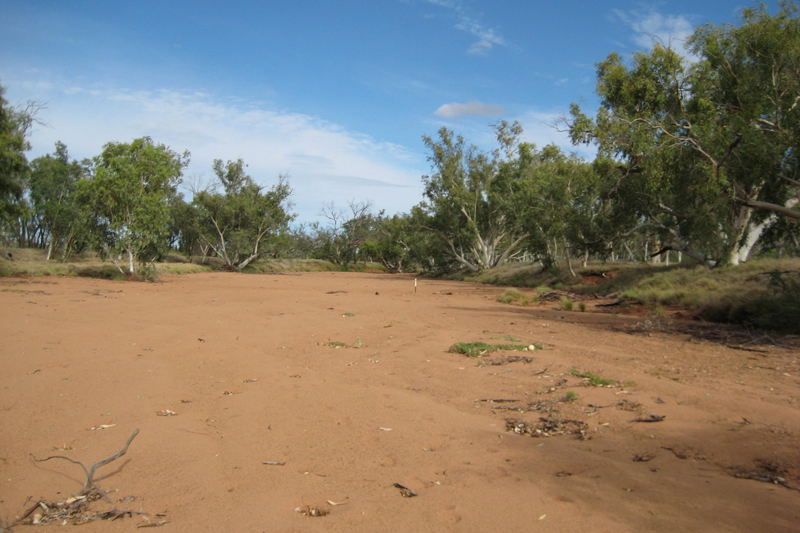
Yet globally, gauges on perennial river systems far outnumber those on nonperennial rivers. This is largely because stream gauges were installed for flood protection or to ensure reliable water supplies. There are some exceptions, though. In Australia, where 70% of the country’s rivers are nonperennial, the gauge network includes high-quality measurements of flow in nonperennial streams and rivers.
Although we know that nonperennial rivers are naturally common over large areas of several continents, we still lack information about the climatic and human drivers of no-flow periods. Our current understanding of aquatic ecosystems is mainly based on research in perennial streams and may not reflect patterns and processes relevant to the management of intermittent waters. Only with a strong foundation in interdisciplinary, data-driven science can nonperennial waterway policies effectively manage these rivers’ important flow regimes—providing water to both people and the aquatic environment when it’s most needed—as well as aquatic wildlife, biogeochemical reactions (e.g., a river’s ability to clean itself), and important cultural and archaeological features along the rivers’ corridors.
Common Language, Collective Action
Over the past 20 years, scientists have drawn attention to strong cultural and societal links to local nonperennial waters, including, for example, their prominence in Aboriginal Dreamtime stories in Australia, their historical use as cultural and transportation highways, and their value for recreation and reconnecting with the outdoor world. To encourage protection of these resources at national levels, we require a common, accepted terminology. Language shapes public and political discourse. Only with shared language can we begin to evaluate human-induced deviations from natural flow regimes and efforts to ameliorate the consequences. Yet we still lack a common definition of nonperennial rivers. Is an intermittent river the same as one that is seasonal or temporary or ephemeral?
Early efforts to rally the scientific community around a set of definitions and a common terminology were not adopted by scientists, so the confusion among definitions continues. Without agreement on terminology, science-based policy decisions can lead to legal challenges and public confusion. And unclear definitions of terms like intermittent and ephemeral may give rise to ambiguity in the purview of legal protections offered. For example, the proposed 2015 update of WOTUS attempted to legislate differently for intermittent versus ephemeral waterways. For this kind of policy to be scientifically based, though, scientists must first agree on what these terms mean.
Other changes to terminology are under consideration in legislation around the world. Therefore, we need a renewed, global effort to better understand and classify nonperennial waterways within a global terminology. We expect that this shared language will be based on commonalities and differences in hydrological, ecological, and biogeochemical functioning of waterways and will improve understanding and communication across systems and disciplines.
Interdisciplinarity Beyond the Natural Sciences
There is a growing movement toward interdisciplinary research on nonperennial streams, in which different types of scientists work together to bridge conceptual and knowledge gaps related to these systems. Multiple collaborative, interdisciplinary groups focused on understanding and protecting nonperennial rivers have coalesced in recent years, resulting in considerable successes.
The 1000 Intermittent Rivers Project, for example, brings together ecologists, biogeochemists, and hydrologists from around the world to understand the biodiversity of nonperennial rivers and streams; this group has already shown how nonperennial rivers contribute to the global carbon cycle. Similarly, the European Science and Management of Intermittent Rivers and Ephemeral Streams project gathered a diverse team of more than 350 scientists from 31 European Union (EU) countries to compile and analyze available EU data sets on nonperennial waterways and improve their management within the EU Water Framework Directive. These projects were initiated by an international, multidisciplinary team of 12 nonperennial stream experts from the United States, the European Union, and Australasia, which developed the first international database on nonperennial streams.
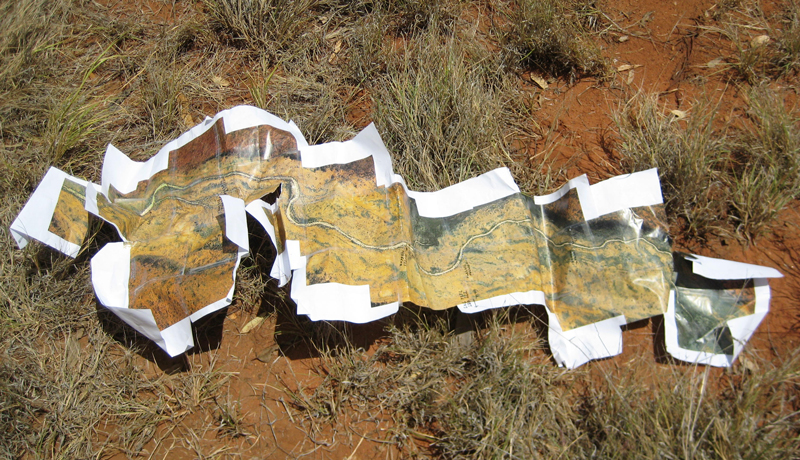
In the United States, the National Science Foundation–funded Dry Rivers Research Coordination Network has assembled scientists spanning disciplines and from three continents to identify overarching scientific knowledge gaps and to develop conceptual models that merge multiple data sets to promote the future sustainability of nonperennial streams.
Yet acceptance and adoption of scientific understanding will require changes in the public mindset and changes in water management regulations. It also will require dialogue among natural scientists, social scientists, policy makers, and water managers. Only by bringing natural and social scientists together can we change, for example, the misconceptions, documented in Europe and the United States, that the only “valuable” river is one that is flowing and that nonperennial rivers are simply drainage ditches for removing unwanted stormwater. Scientists have begun this effort by improving visualizations of the water cycle and engaging directly with citizen scientists, but more work is needed.
Another reason more dialogue among these groups is needed is the increasing frequency and severity of drought in more temperate regions, which are altering the extent of protection needed to keep these systems healthy at a far faster pace than that at which policy typically functions. This is apparent even in Australia, where the value of nonperennial rivers is broadly accepted yet widespread ecological degradation of river systems continues.
Policy makers and the public must start placing the sustainability of river ecosystems first, so that the rivers can continue to sustain us in the long term. To achieve this change in mindset, scientists must effectively partner with members of these groups to promote broad uptake of scientific understanding in public discourse and in science-based regulations for the improved health of river systems. We call for the formation of a global, collaborative network led by the scientific community and intended to foster emerging interdisciplinary links among scientists and to accelerate such promotional efforts.
Acknowledgments
The Dry Rivers Research Coordination Network, of which the authors are part, is supported by funding from the U.S. National Science Foundation (DEB-1754389).
Author Information
Margaret Shanafield ([email protected]), Flinders University, Adelaide, S.A., Australia; Sarah Godsey, Idaho State University, Pocatello; Thibault Datry, French National Institute for Agriculture, Food and Environment (INRAE), Villeurbanne, France; Rebecca Hale, Idaho State University, Pocatello; Samuel C. Zipper, Kansas Geological Survey, University of Kansas, Lawrence; Katie Costigan, University of Louisiana at Lafayette; Corey A. Krabbenhoft, University at Buffalo, N.Y.; Walter K. Dodds, Kansas State University, Manhattan; Margaret Zimmer, University of California, Santa Cruz; Daniel C. Allen, University of Oklahoma, Norman; Michael Bogan, University of Arizona, Tucson; Kendra E. Kaiser, Boise State University, Idaho; Ryan M. Burrows, Australian Rivers Institute, Griffith University, Brisbane, Queensl.; John C. Hammond, Maryland–Delaware–D.C. Science Center, U.S. Geological Survey, Baltimore, Md.; Michelle Busch, University of Oklahoma, Norman; Stephanie Kampf, Colorado State University, Fort Collins; Meryl C. Mims, Virginia Polytechnic and State University, Blacksburg; Amy Burgin, Kansas Biological Survey, University of Kansas, Lawrence; and Julian D. Olden, University of Washington, Seattle







