
GLOBAL RESEARCH SYNDICATE
No Result
View All Result
  • Login
  • Latest News
  • Consumer Research
  • Survey Research
  • Marketing Research
  • Industry Research
  • Data Collection
  • More
    • Data Analysis
    • Market Insights
  • Latest News
  • Consumer Research
  • Survey Research
  • Marketing Research
  • Industry Research
  • Data Collection
  • More
    • Data Analysis
    • Market Insights
No Result
View All Result
globalresearchsyndicate
No Result
View All Result
Home Data Collection

Black Friday: How to avoid scams when shopping online

globalresearchsyndicate by globalresearchsyndicate
November 28, 2019
in Data Collection
0
Black Friday: How to avoid scams when shopping online
0
SHARES
6
VIEWS
Share on FacebookShare on Twitter

TORONTO —
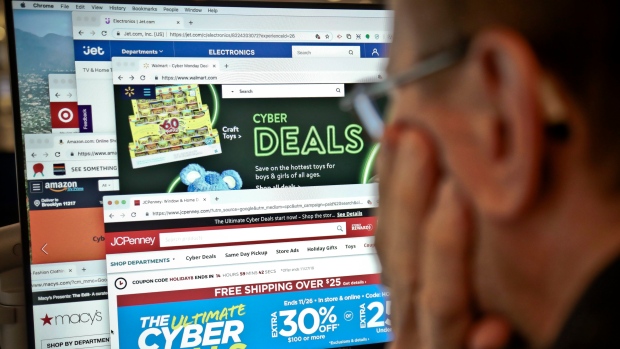
Black Friday may be a bargain-hunter’s dream, but experts say it’s also a perfect opportunity for hackers and scammers to steal your personal information.

According to recent research from cybersecurity firm McAfee, 33 per cent of Canadians have lost $500 or more in online scams so far this year, with an additional 40 per cent having been exposed to online phishing scams.

Worse yet, 36 per cent of those surveyed admitted to not checking an email sender or retailer’s website for authenticity before making an online purchase.

“The most danger comes from these customized emails that target people,” Prof. Ali Dehghantanha, director of the Cyber Science Lab at the University of Guelph, told CTVNews.ca by phone Thursday.

“From emails that suggest you’ll get a special discount, to someone claiming someone has used your Apple ID to buy something.”

Dehghantanha says these targeted campaigns prey on those who aren’t paying enough attention to the emails coming into their inbox. But by following a few simple steps, the average consumer should be able to weed out the real deals from the fake.

Here’s how to avoid falling victim to an online scam while shopping online this year:

MAKE SURE THE WEBSITE YOU ARE ORDERING FROM IS LEGITIMATE

A common trick cybercriminals use to trick people into handing over their credit card information is to set up a fake website that mimics a real retailer.

Before entering any personal information, make sure to double check the URL in your web browser. Often times, these websites will look nearly identical to popular shopping sites, but might misspell the retailer name in the web address.

Dehghantanha says consumers should also be sure to check for a secure connection before checking out.

Sites with a secure connection will display a lock symbol in the left hand side of the URL bar in your web browser. Secure sites will also start with “https” (the “s” stands for secure).

“If you don’t see the lock, don’t enter anything private,” said Dehghantanha.

Christine Beauchamp, spokesperson for Canadian Centre for Cyber Security, recommends that consumers take a critical eye to any website they come across via email or on social media.

“They are often very rushed and may not look very professional,” Beauchamp says of the quality of fake websites.

Be sure to keep an eye out for poor spelling and grammar, poor picture quality, and poorly copied corporate logos.

CHECK LINKS BEFORE CLICKING

Scammers will often use a legitimate web address in the hyperlinked text of the email, but once you click on the link it takes you to a malicious website.

Before you click on any links in a suspicious email — especially those with offers that seem too good to be true — hover your mouse over the link to check the URL. A small yellow box will appear showing the actual web address the link will take you to.

If the link doesn’t match the hyperlinked text, it’s likely malicious.

Also be sure to double check the spelling of the website. Attackers will often use a URL that has one misplaced letter – for example, linking to “CVTNews.ca” instead of “CTVNews.ca.”

STOP USING THE SAME PASSWORDS FOR EVERY ONLINE ACCOUNT

One of the easiest ways to fall victim to a data breach is to re-use your passwords. One hack can gift criminals with thousands of passwords, which they can use to try to access multiple accounts.

While you’re at it, make sure your passwords are secure.

Experts say passwords that use eight to 10 upper- and lower-case letters mixed with numbers are proven to be more secure. When choosing numbers to add to your password, be sure not to use anything that is easily identifiable, such as your address or date of birth.


Related Posts

How Machine Learning has impacted Consumer Behaviour and Analysis
Consumer Research

How Machine Learning has impacted Consumer Behaviour and Analysis

January 4, 2024
Market Research The Ultimate Weapon for Business Success
Consumer Research

Market Research: The Ultimate Weapon for Business Success

June 22, 2023
Unveiling the Hidden Power of Market Research A Game Changer
Consumer Research

Unveiling the Hidden Power of Market Research: A Game Changer

June 2, 2023
7 Secrets of Market Research Gurus That Will Blow Your Mind
Consumer Research

7 Secrets of Market Research Gurus That Will Blow Your Mind

May 8, 2023
The Shocking Truth About Market Research Revealed!
Consumer Research

The Shocking Truth About Market Research: Revealed!

April 25, 2023
market research, primary research, secondary research, market research trends, market research news,
Consumer Research

Quantitative vs. Qualitative Research. How to choose the Right Research Method for Your Business Needs

March 14, 2023
Next Post
Flexible Fire Resistant Sealant Market Entry Strategies, Countermeasures, Economic Impact and Flexible Fire Resistant Sealant Marketing Channels to 2028 – The Bay State Herald

Flexible Fire Resistant Sealant Market Entry Strategies, Countermeasures, Economic Impact and Flexible Fire Resistant Sealant Marketing Channels to 2028 – The Bay State Herald

Categories

  • Consumer Research
  • Data Analysis
  • Data Collection
  • Industry Research
  • Latest News
  • Market Insights
  • Marketing Research
  • Survey Research
  • Uncategorized

Recent Posts

  • Ipsos Revolutionizes the Global Market Research Landscape
  • How Machine Learning has impacted Consumer Behaviour and Analysis
  • Market Research: The Ultimate Weapon for Business Success
  • Privacy Policy
  • Terms of Use
  • Antispam
  • DMCA

Copyright © 2024 Globalresearchsyndicate.com

Welcome Back!

Login to your account below

Forgotten Password?

Retrieve your password

Please enter your username or email address to reset your password.

Log In
This website uses cookies to improve your experience. We'll assume you're ok with this, but you can opt-out if you wish. Cookie settingsACCEPT
Privacy & Cookies Policy

Privacy Overview

This website uses cookies to improve your experience while you navigate through the website. Out of these cookies, the cookies that are categorized as necessary are stored on your browser as they are essential for the working of basic functionalities of the website. We also use third-party cookies that help us analyze and understand how you use this website. These cookies will be stored in your browser only with your consent. You also have the option to opt-out of these cookies. But opting out of some of these cookies may have an effect on your browsing experience.
Necessary
Always Enabled
Necessary cookies are absolutely essential for the website to function properly. This category only includes cookies that ensures basic functionalities and security features of the website. These cookies do not store any personal information.
Non-necessary
Any cookies that may not be particularly necessary for the website to function and is used specifically to collect user personal data via analytics, ads, other embedded contents are termed as non-necessary cookies. It is mandatory to procure user consent prior to running these cookies on your website.
SAVE & ACCEPT
No Result
View All Result
  • Latest News
  • Consumer Research
  • Survey Research
  • Marketing Research
  • Industry Research
  • Data Collection
  • More
    • Data Analysis
    • Market Insights

Copyright © 2024 Globalresearchsyndicate.com



